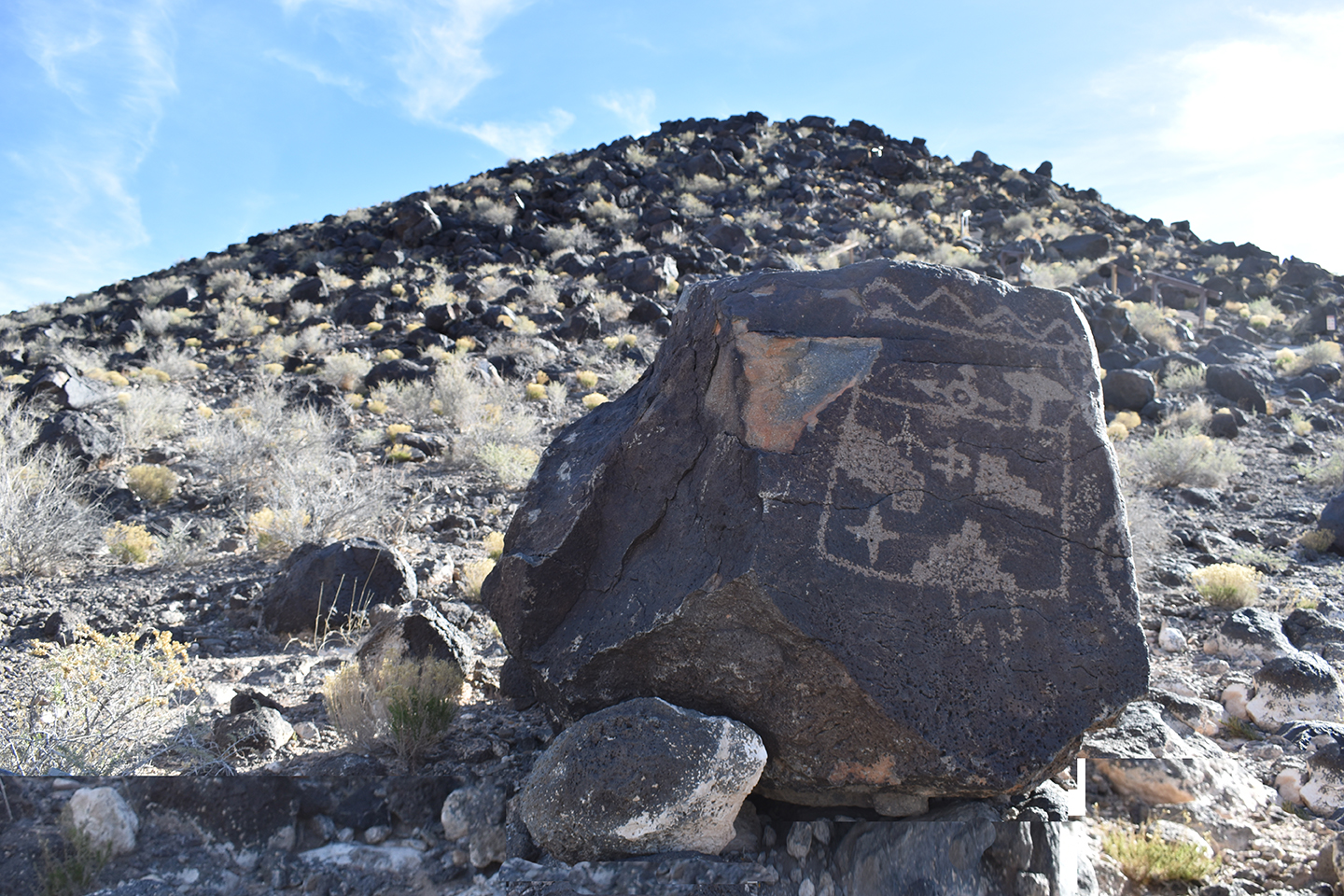
Along seventeen miles of the escarpment west of Albuquerque, New Mexico, in the Rio Grande valley, an estimated 24,000 petroglyphs, images carved into rock by ancient Pueblo peoples are protected in this preserved park. I have read dates for these rock carvings as far back as 5,000 to as recent as 400 years ago. The National Monument was established in 1990.
Many Native groups, an estimated nineteen Pueblos and ten Tribes, have roots in this area. They still come to see the “messages” left by their ancestors, leave offerings, and perform ceremonies of dance and prayer.
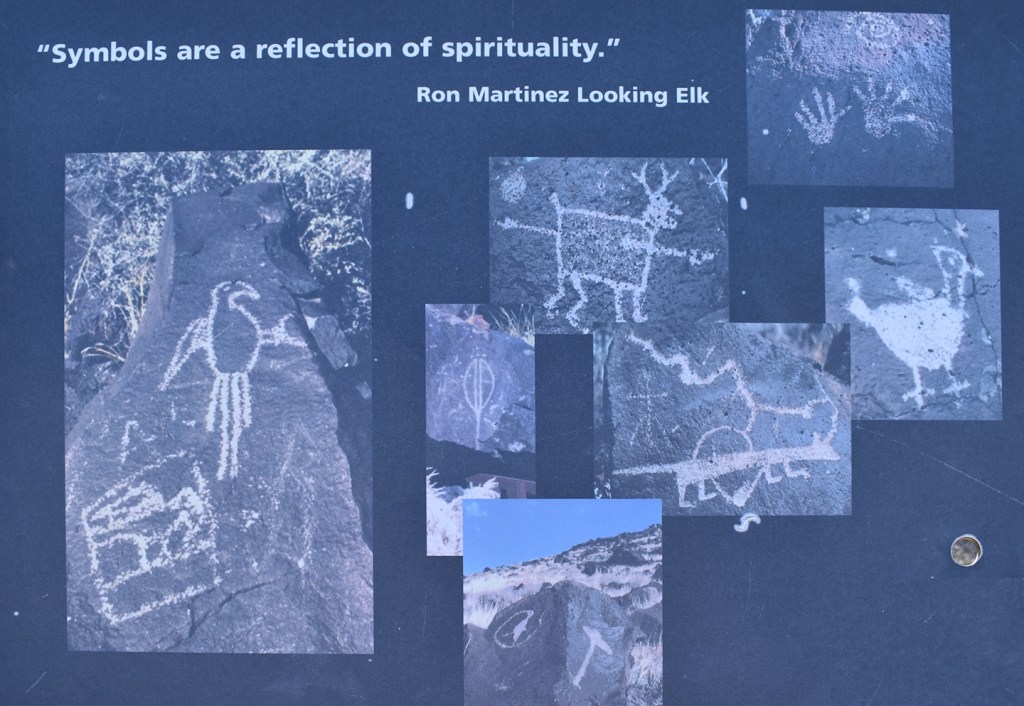
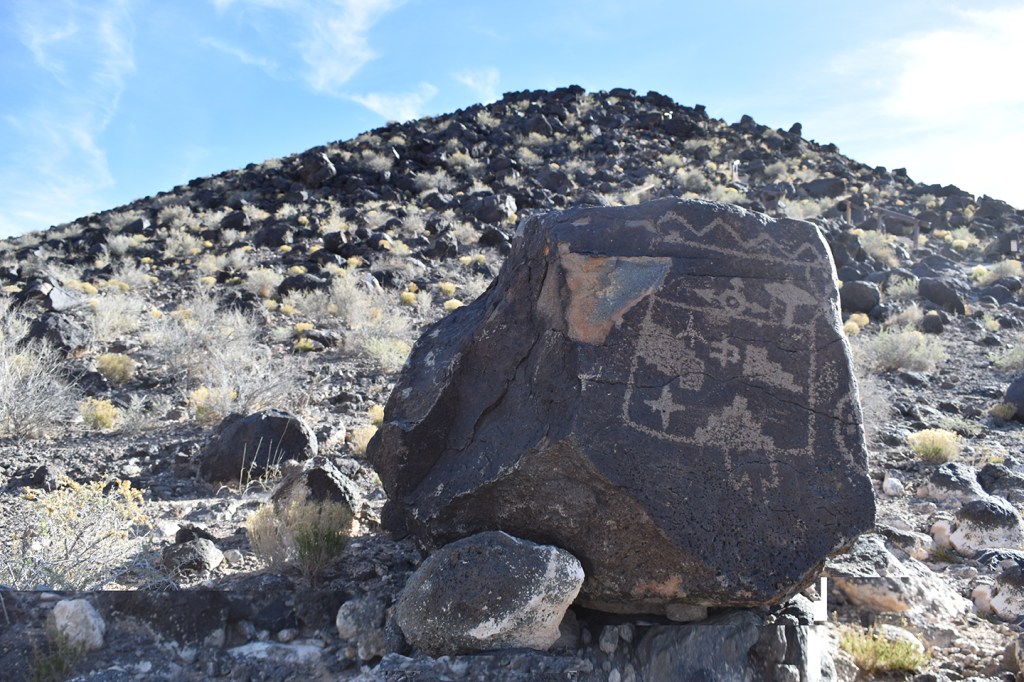
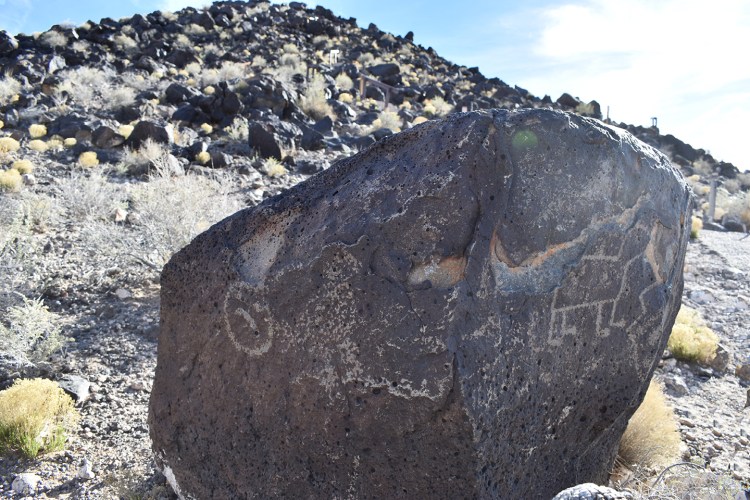
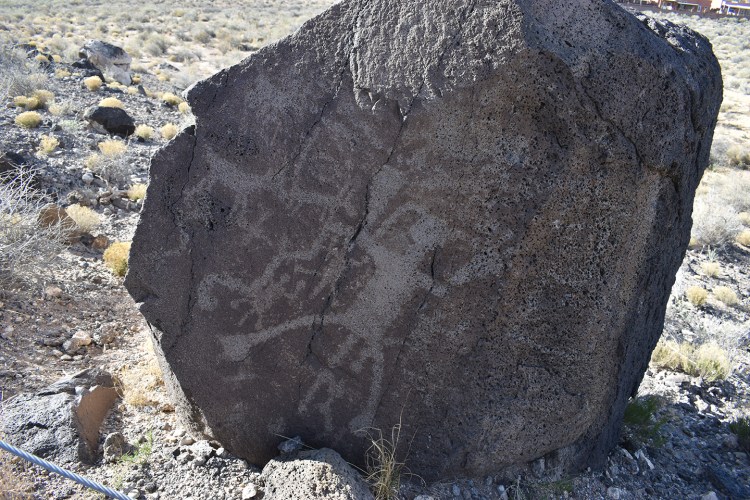
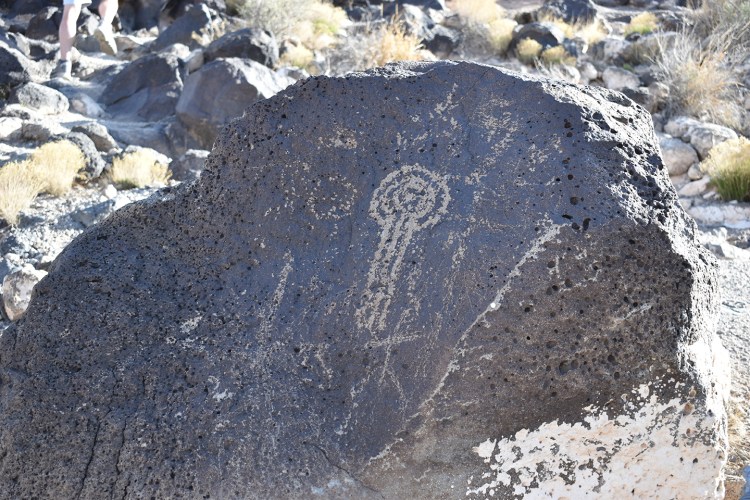
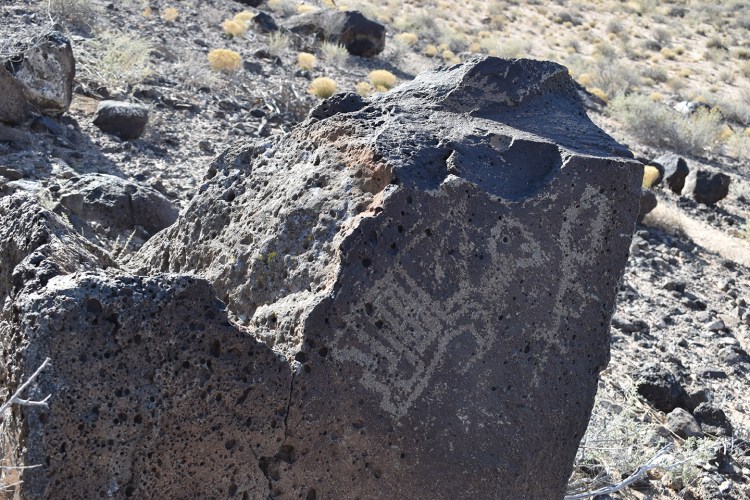
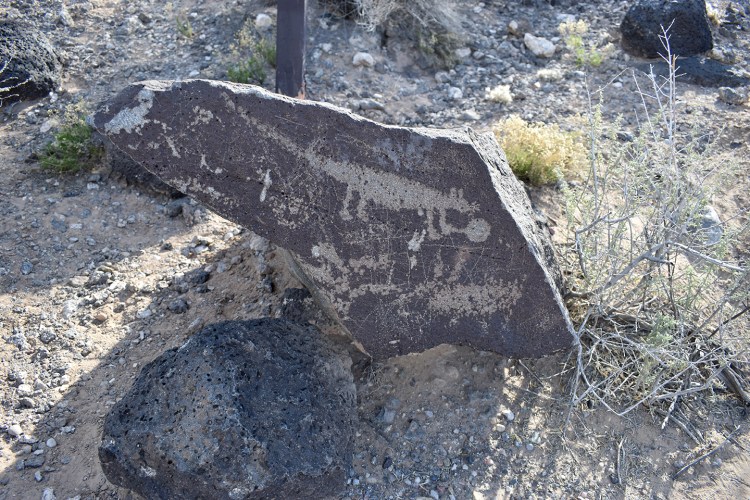
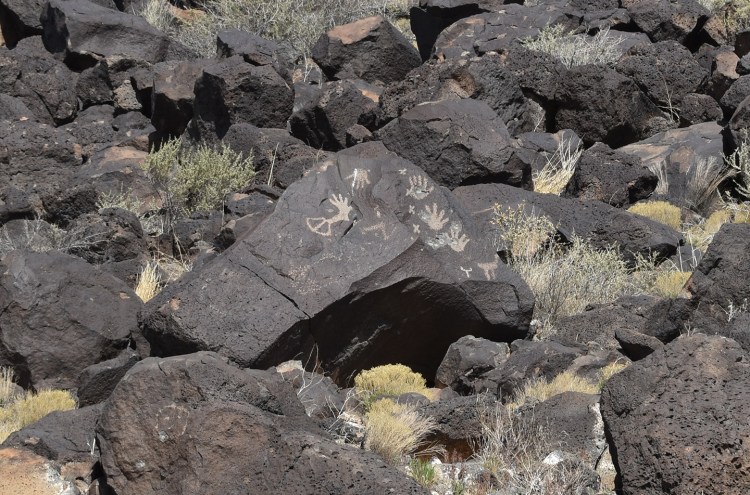
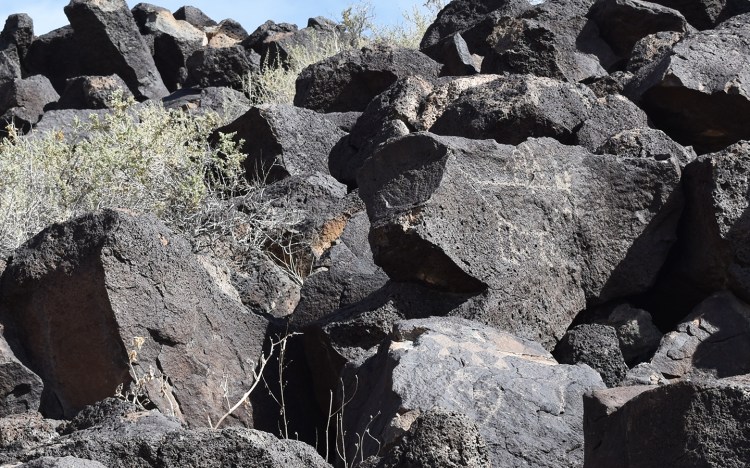
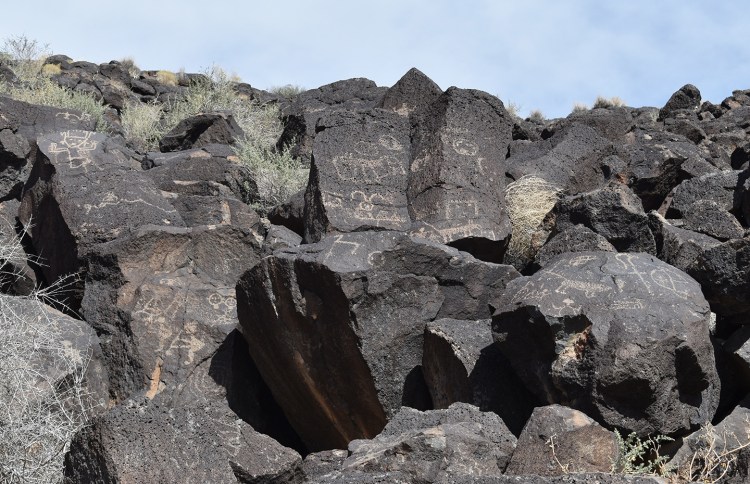
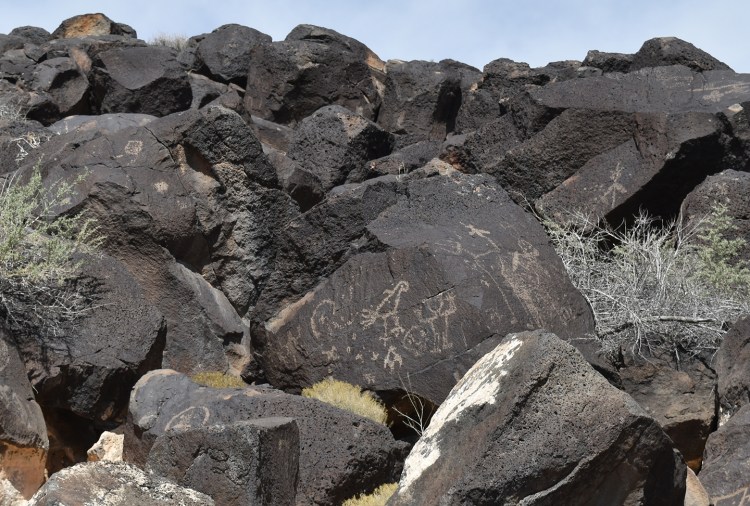
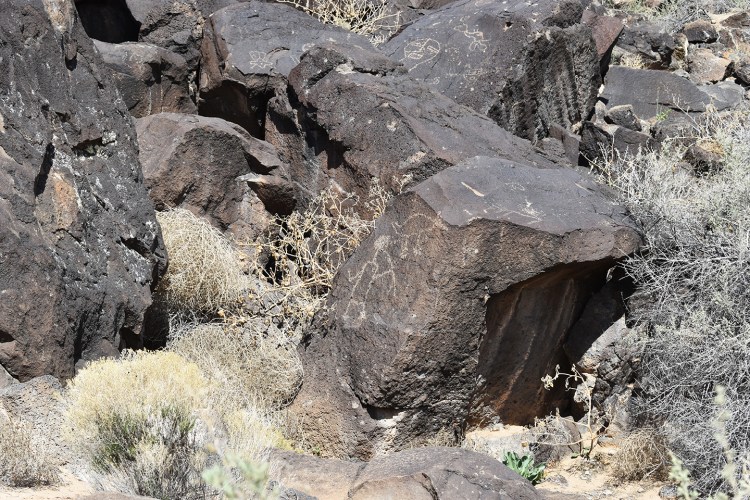
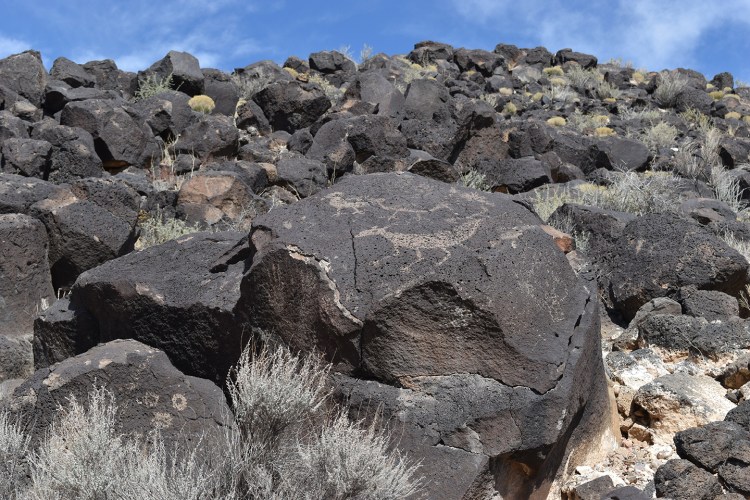
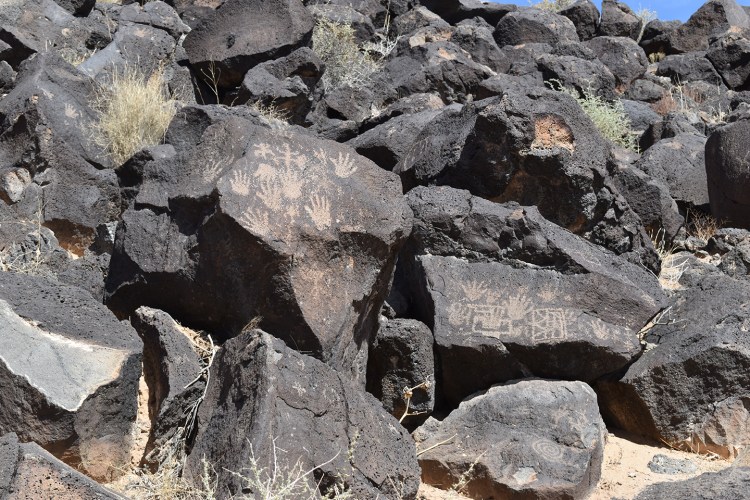
One of the largest petroglyph sites in North America, the area is marked by piles and piles of basalt boulders due to volcanic activity long ago. Just one or several petroglyphs may appear on one rock. The rocks cover a much broader area than the trails maintained to view them access. So these carvings appear farther back than the tourist eye can see. I was surprised by the landscape, and by the difference between these images and the way that petroglyphs are generally seen in Colorado (link below). Many images are often carved in one flat rock there, perhaps telling a story or adding new pictures over time.
Desert animals, birds, snakes, hands and human figures, some with a headdress or a flute, are among the petroglyphs, as well as what are believed to be sun and water representations. Some of the images are ones that have been found on pottery or rugs. As I hiked down the trail closest to the Visitor Center, this image was the first I saw.
Click the arrows to scroll through the images
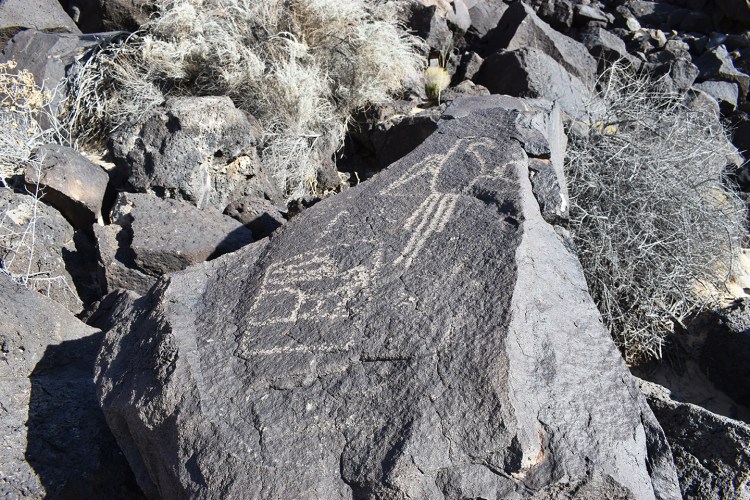
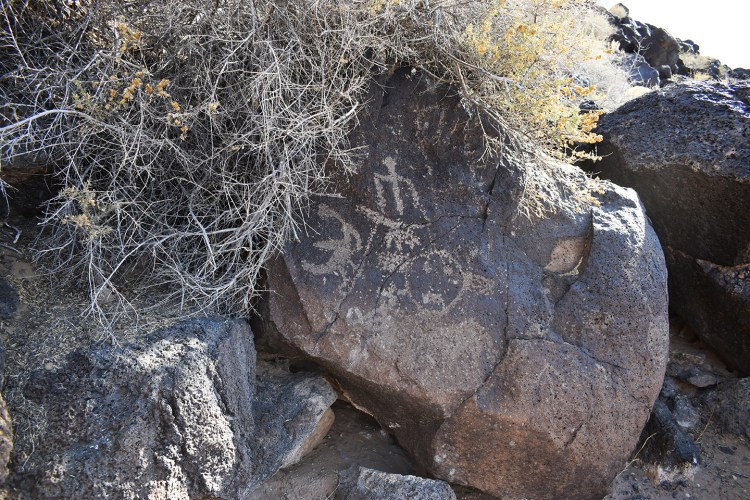
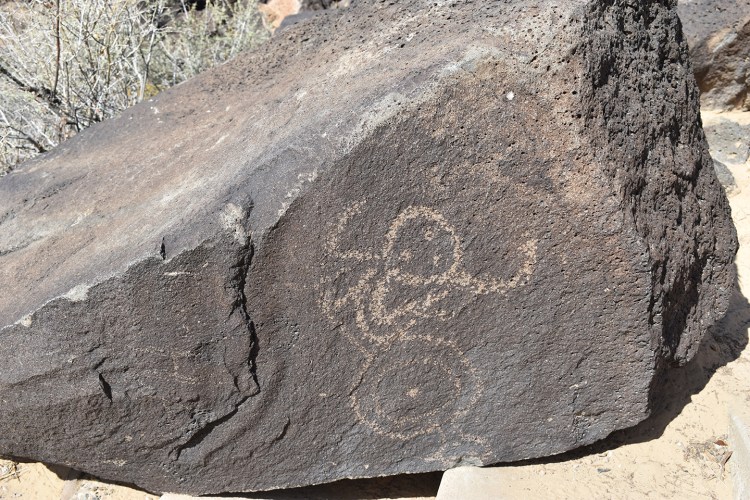
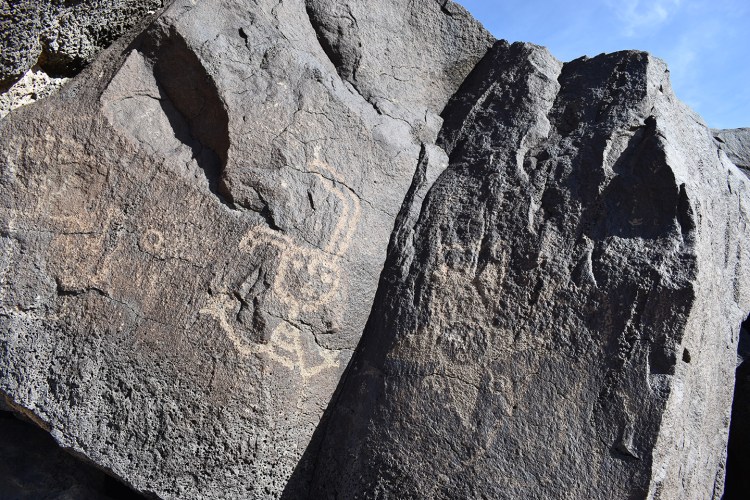
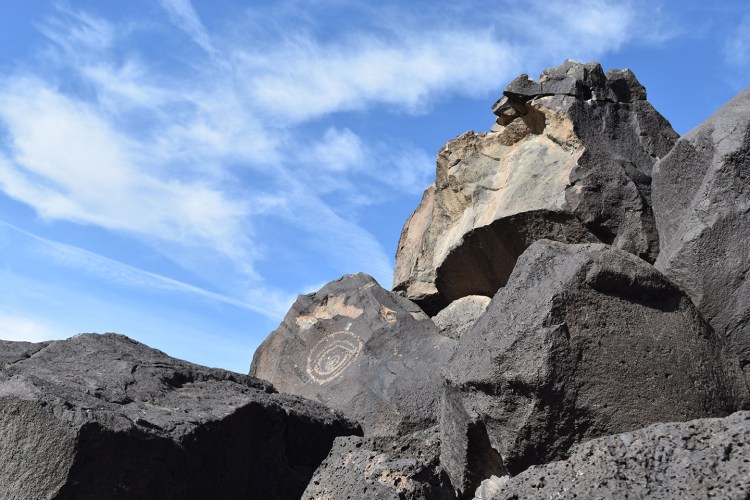
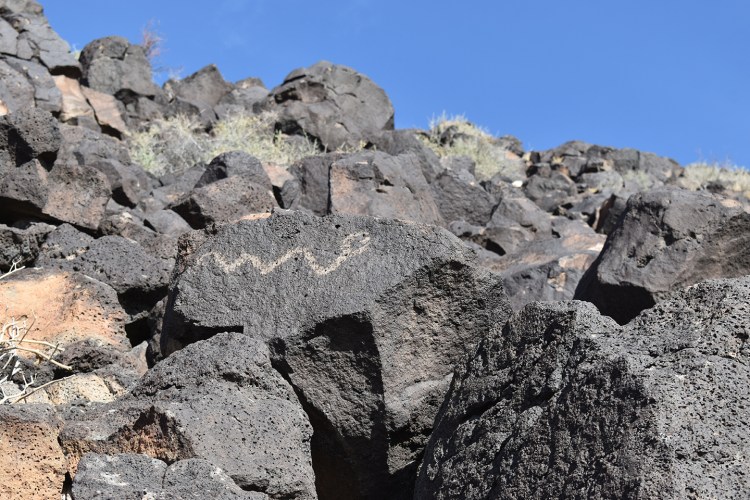
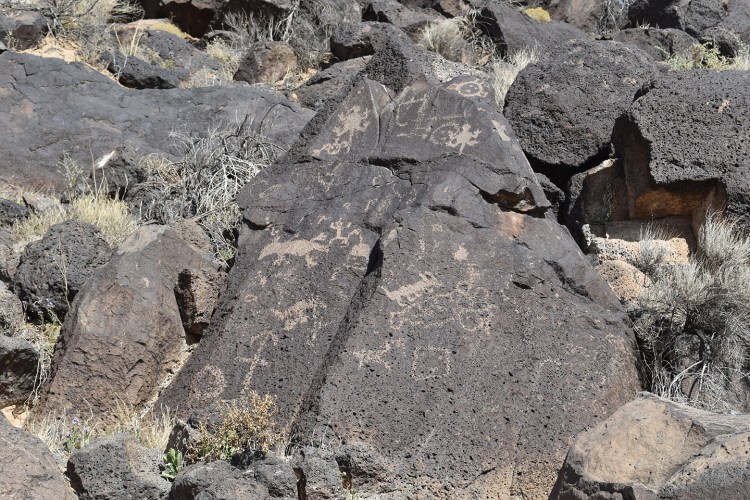
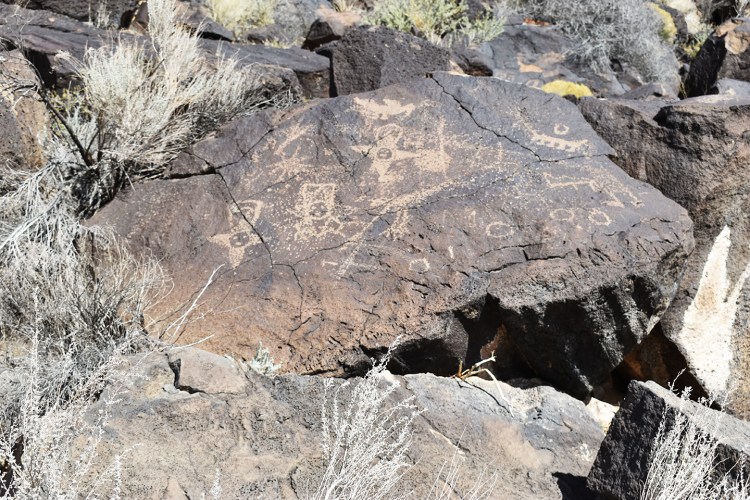
A hike in western Colorado to view petroglyphs: Dominguez Canyon
Southwest road trip: Road trip, Arches, Monument Valley, Horseshoe Bend, Antelope Canyon, Chaco Canyon, Old Town Albuquerque, Petroglyph National Monument
Please do not download or reproduce images from this site. ©
Your comments are welcome!
Popular posts/stats/categories/map
Email me at: Ruth@RuthRosenfeld.com
Follow me on: Facebook Instagram BlueSky Blog


I really enjoyed your photos and find petroglyphs fascinating. I have also hiked some of Dominguez Canyon and have seen some of the ones you photographed. I read the book called Tracing Time by Craig Childs, a local author, about the rock art in the Colorado Plateau. It was quite interesting. Thanks for sharing!
LikeLiked by 1 person
You’re welcome! I’m glad this post resonated with you. Petroglyphs make me think about the lives of the people who lived there and left those images, unaware, I’m sure, that we would be finding them so many years later. I’ll have to look for that book.
LikeLike
These are amazing artifacts. They illustrate how far back in time people have recorded experiences in their lives. They awaken our awareness of continuity.
LikeLiked by 1 person
I was moved by the fact that modern day Native peoples still visit and celebrate their ancestors there.
LikeLiked by 1 person
They are heirs to ancient civilizations. I’m sure they feel honored to preserve such a heritage.
LikeLiked by 1 person
I wonder what they would think knowing we were trying to interpret them hundreds of years later!
LikeLiked by 1 person
Being human, I imagine they would be amused!
LikeLike
We visited Petroglyph National Monument a few years ago. It’s pretty amazing just how many petroglyphs there are and that some of them are still in such great shape. Based on your pictures it looks like we hiked some of the same trails.
LikeLiked by 1 person
I think most visitors walked those same trails. And many of the petroglyphs were made over centuries of time.
LikeLiked by 1 person
Amazing place. Stark and full of history.
LikeLike
Wow, these petroglyphs are truly amazing, dear Ruth, and this certainly looks like a wonderful place to spend a day or two, enjoying New Mexico’s rich history and culture as well as geological and human history. Thanks for sharing, and have a good day 🙂 Aiva xx
LikeLiked by 1 person
You’re welcome and thanks for your visit and conment. Glad you enjoyed this post, Aiva.
LikeLike
Isn’t this place amazing? I couldn’t believe the sheer number of petroglyphs. And like you, the format of them was a surprise. This was fun to look through all your images – I think I actually recognized a few of the petroglyphs from my visit.
LikeLiked by 1 person
It was quite impressive. Glad to know you’ve been there, Diana, and you enjoyed this post.
LikeLiked by 1 person
Gorgeous! I’ve yet to see petroglyphs on my visits to that part of the country, and it’s so fascinating that they’ve survived for hundreds, if not thousands, of years!
LikeLiked by 1 person
Thanks, Rebecca! It’s a reminder that there were civilizations here before us and they had their own ways of communication.
LikeLiked by 1 person
These are incredible. It’s fascinating about how humans have always found ways to express themselves.
LikeLiked by 1 person
Yes, and fortunately for us some of those have survived for us to appreciate in the current day.
LikeLiked by 1 person
So many petroglyphs in one area, and many in good condition. What an interesting park, I’ll keep it in mind. Maggie
LikeLiked by 1 person
Glad you found this spot interesting, Maggie.
LikeLike
I find petroglyphs fascinating and there are some wonderful examples in your slideshow! Thank you for sharing them. I can’t imagine how we overlooked this National Monument on our New Mexico road trip but somehow we managed to miss it completely 😦
LikeLiked by 1 person
There are many places to find petroglyphs in the southwest. This place is not as popular or well known as the national parks, but it had been on my radar for a while. Thanks, Sarah!
LikeLiked by 1 person