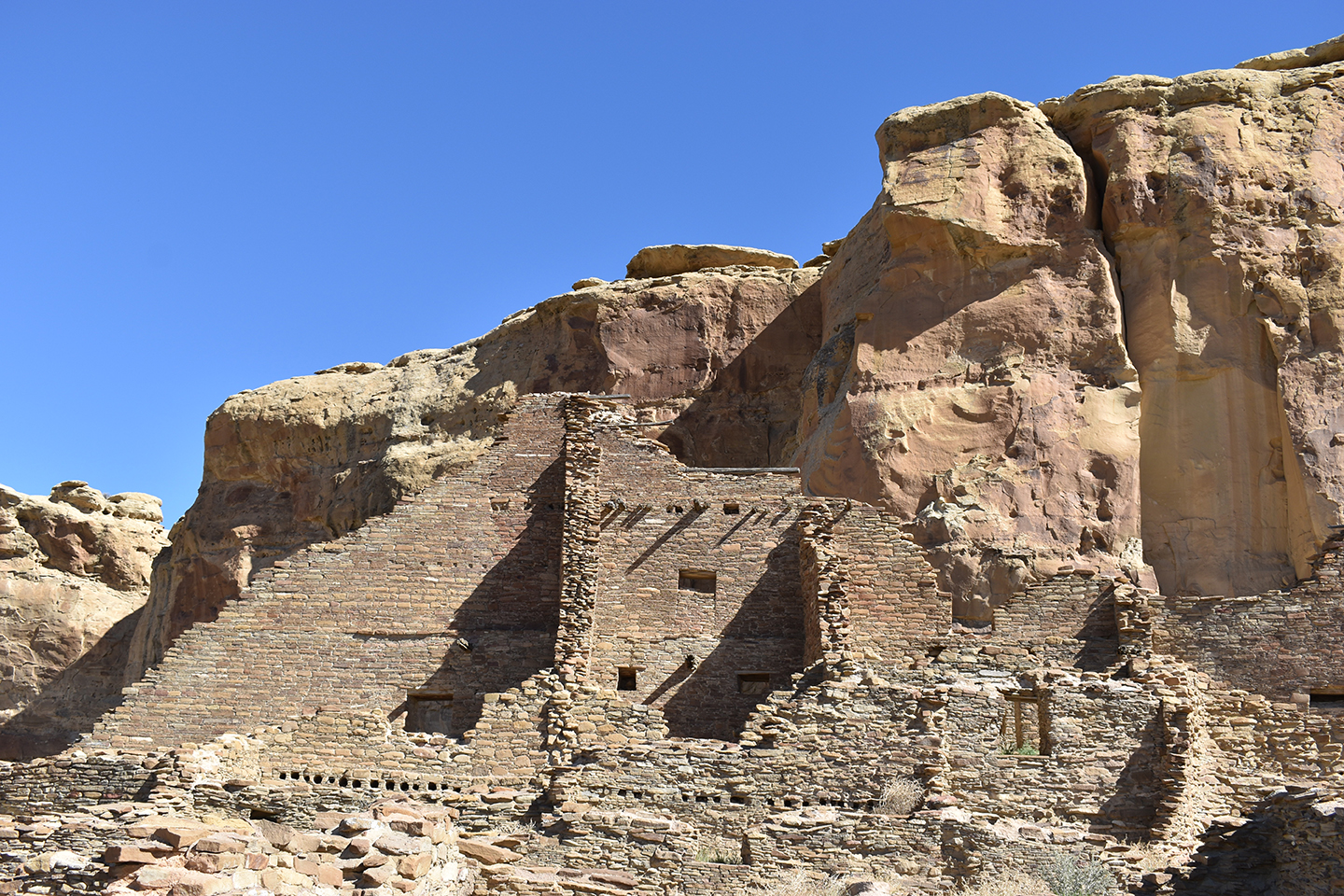
The historic civilizations of the Americas have left many of their structures to tell their stories. Chaco Canyon has been well excavated and preserved in what is now called Chaco Culture National Historic Park in New Mexico, situated in Navajo country. Created in 1907, the park was declared a UNESCO World Heritage Site in 1987. This area was a hub for commerce, spirituality, and a sprawling social community of Puebloan culture, also known as Anasazi, between 850 and 1250 CE (AD). Walking among the walls, rooms, and kivas, constructed of sandstone blocks, where they lived and thrived, brings to mind the busy life that once inhabited these spaces, with people in colorful dress adorned by animal hides, feathers, and creative artifacts.
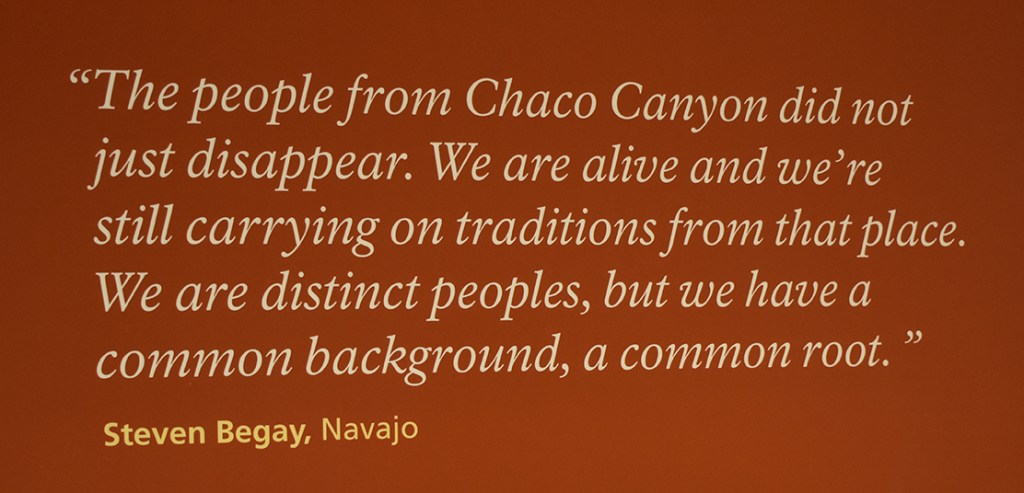
There are no lodging or restaurants close to the park, just camping sites, so I drove from Farmington, New Mexico, an hour and a half drive. The last few miles to the park are on sandy dirt roads with evidence that they are washed out periodically by flooding.
The many Great Houses of Chaco Canyon are accessible by trails, once connected by early roads, throughout the region. Some are shown below, but there are many other outlying areas on longer trails. The placement of the structures and markers on those houses appear to have optimized the light of the sun and moon at certain times of the year. The most well known is the Fajada Butte, visible from the Visitor Center. A spiral petroglyph is illuminated through a crevice to create a “sun dagger”, a shaft of light, that bisects it during the summer solstice.
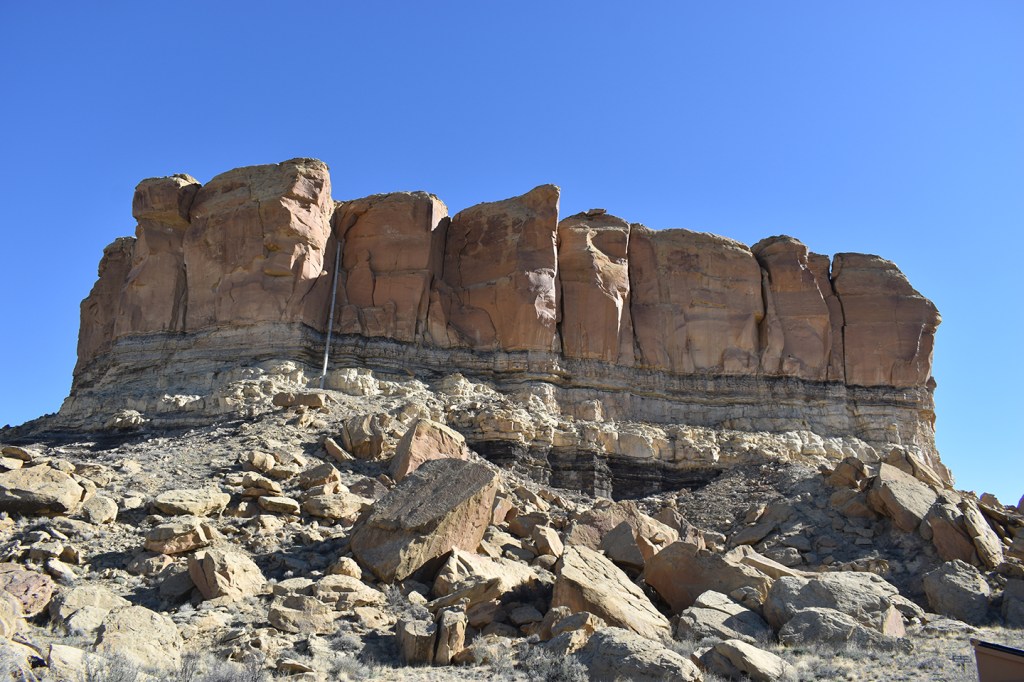
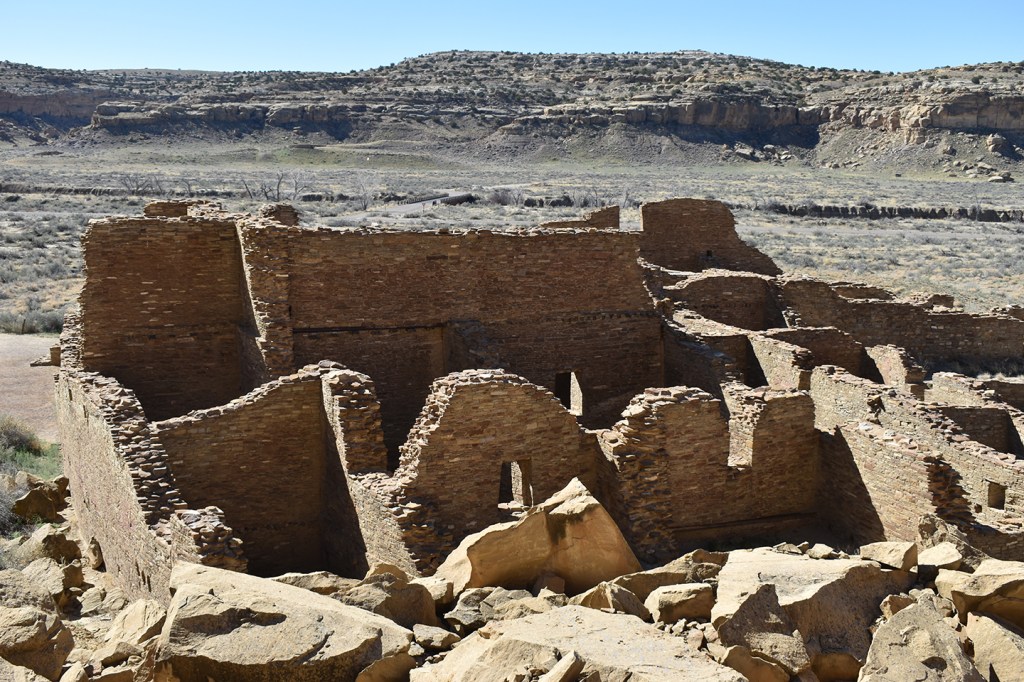
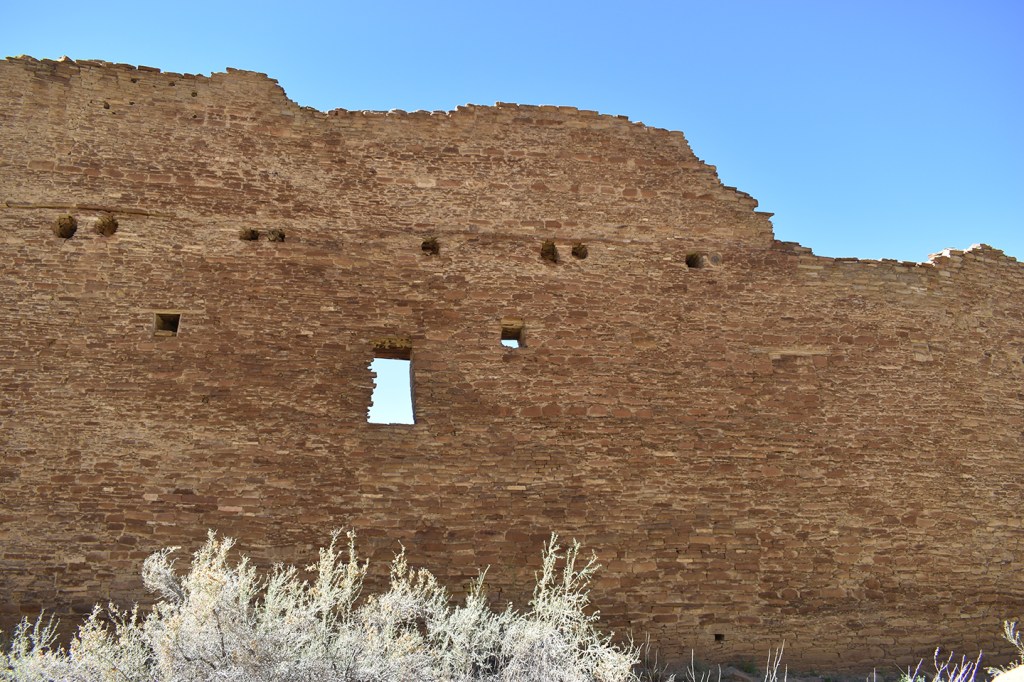
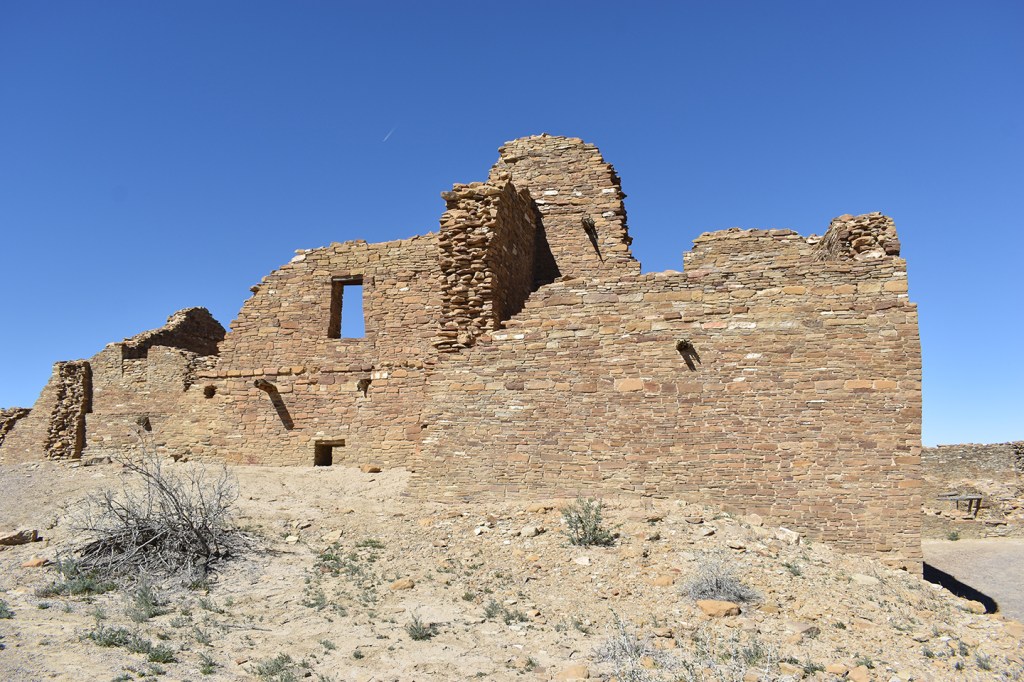
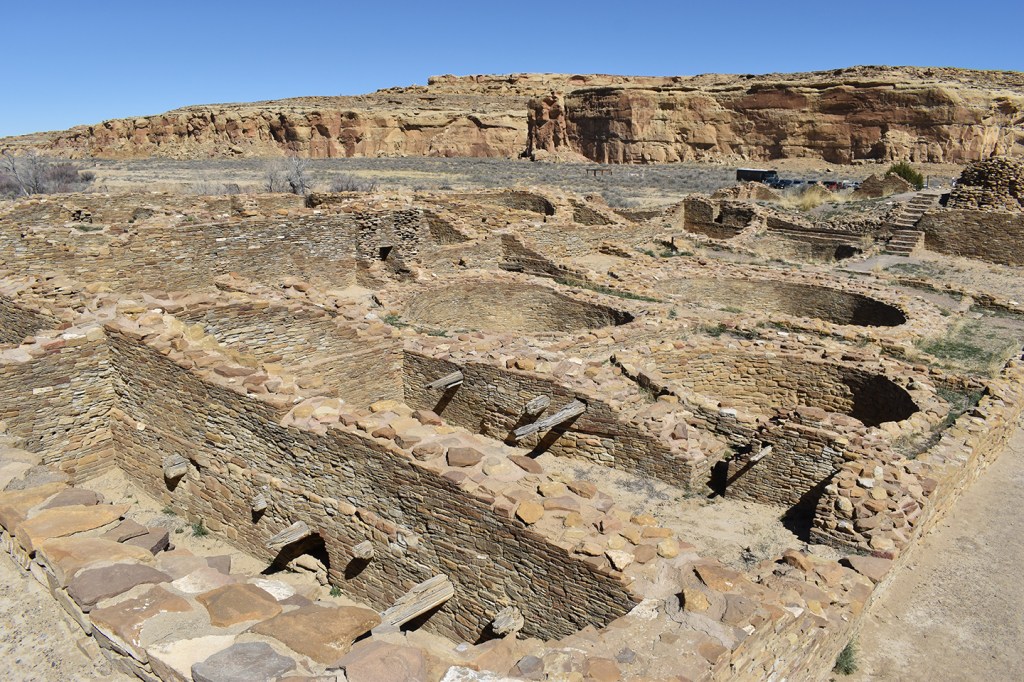
Pueblo Bonita
Occupied 850-1250s. The largest Great House and the central core of the Chaco complex. The Pueblo reached four stories high with over 600 rooms and 40 kivas, the round structures used for spiritual practices. Visitors can walk through parts of the city ruins, getting more of a feel of its complexity. Areas have been identified that line up with solar and lunar movements.
In 1921, fourteen burials were discovered in one room of Pueblo Bonita. They are believed to be bodies of the ruling elite over generations, buried with turquoise, shells, flutes, ceremonial staffs – 30,000 artifacts in all. Recent DNA testing found that they are all descended from a matrimonial line, leading archaeologists to speculate that the Pueblo, and perhaps multiple cities in the area, were ruled by a maternal dynasty. Another room nearby held over one hundred jars containing traces of cacao.
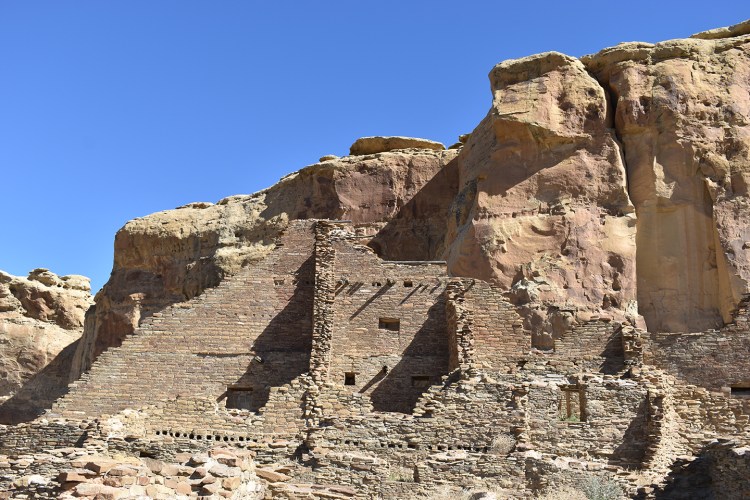
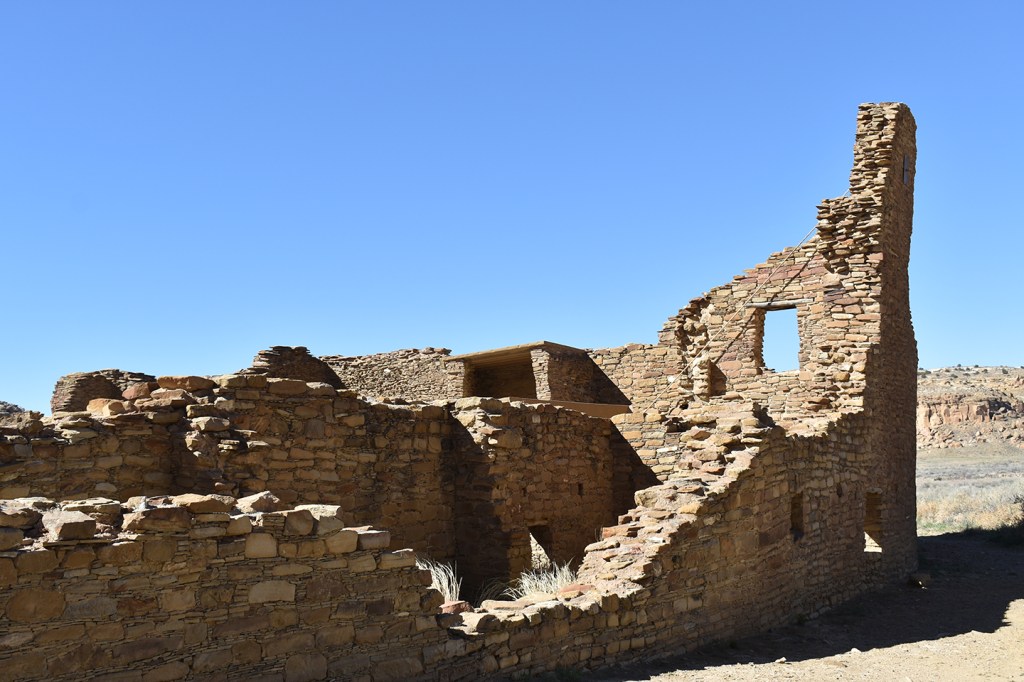
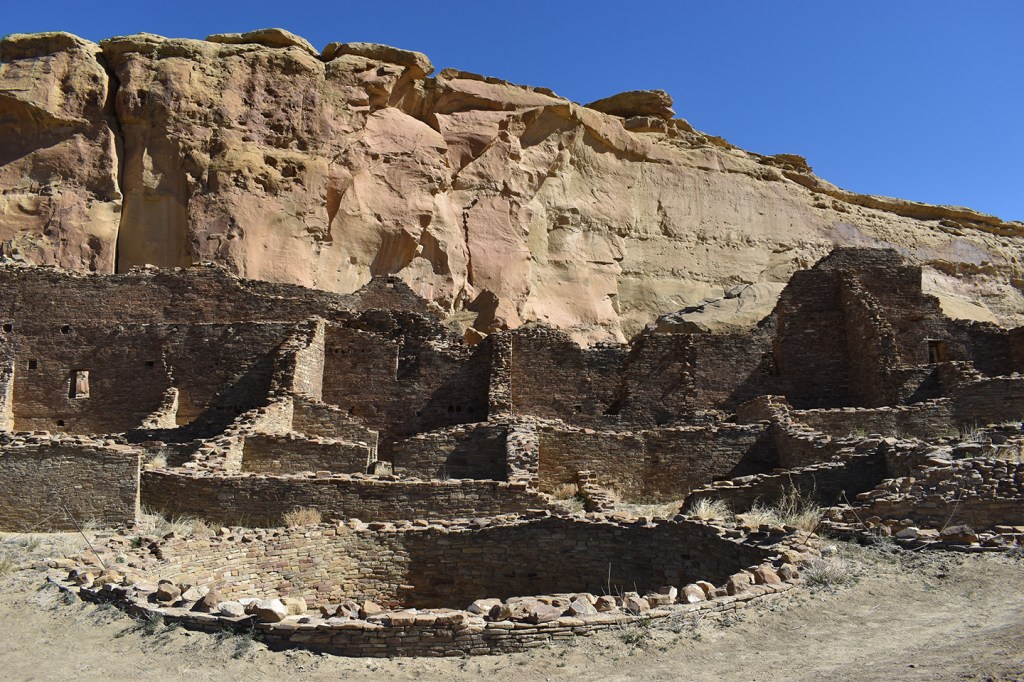
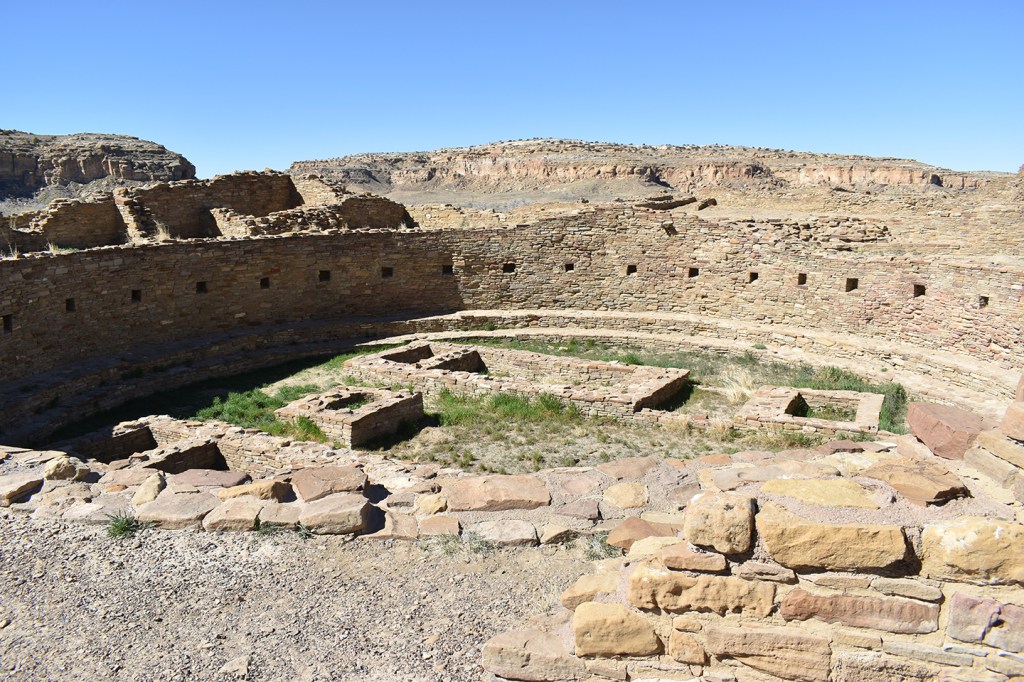
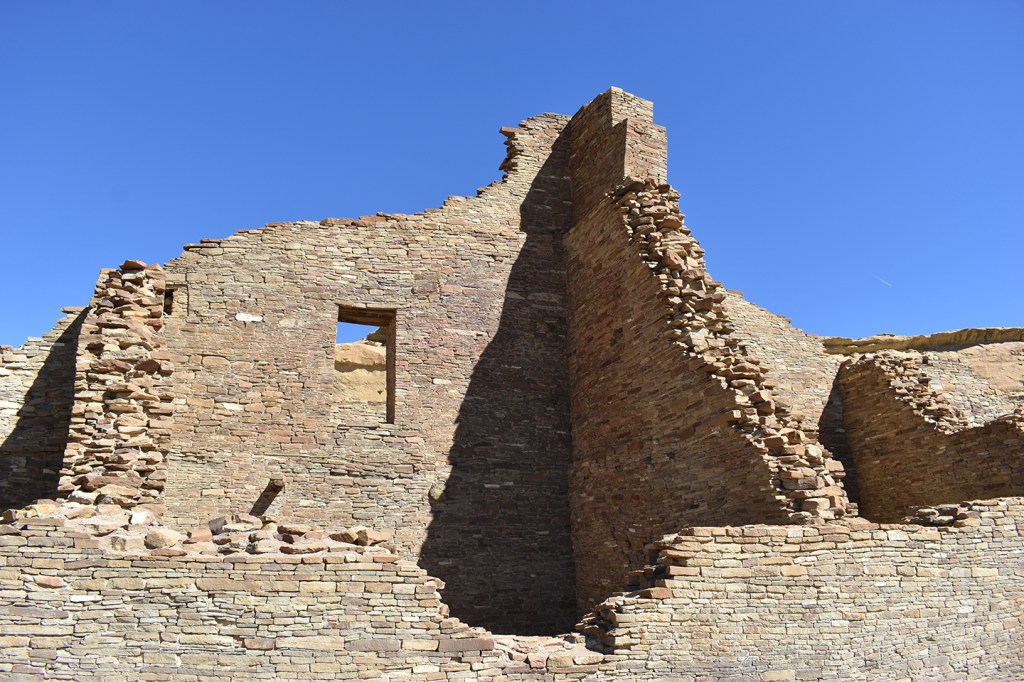
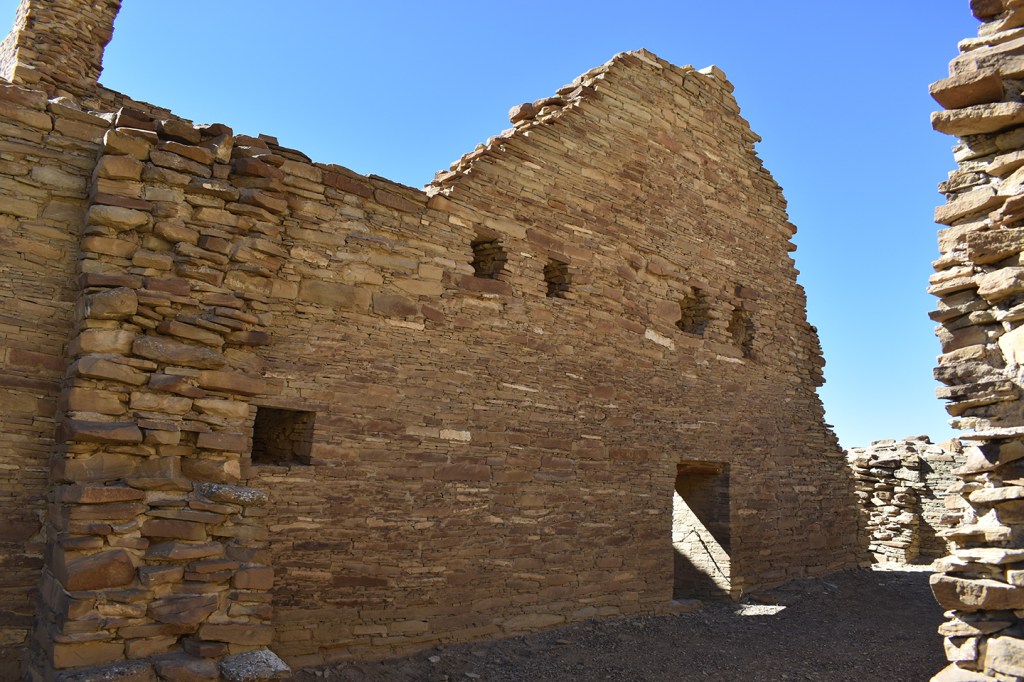
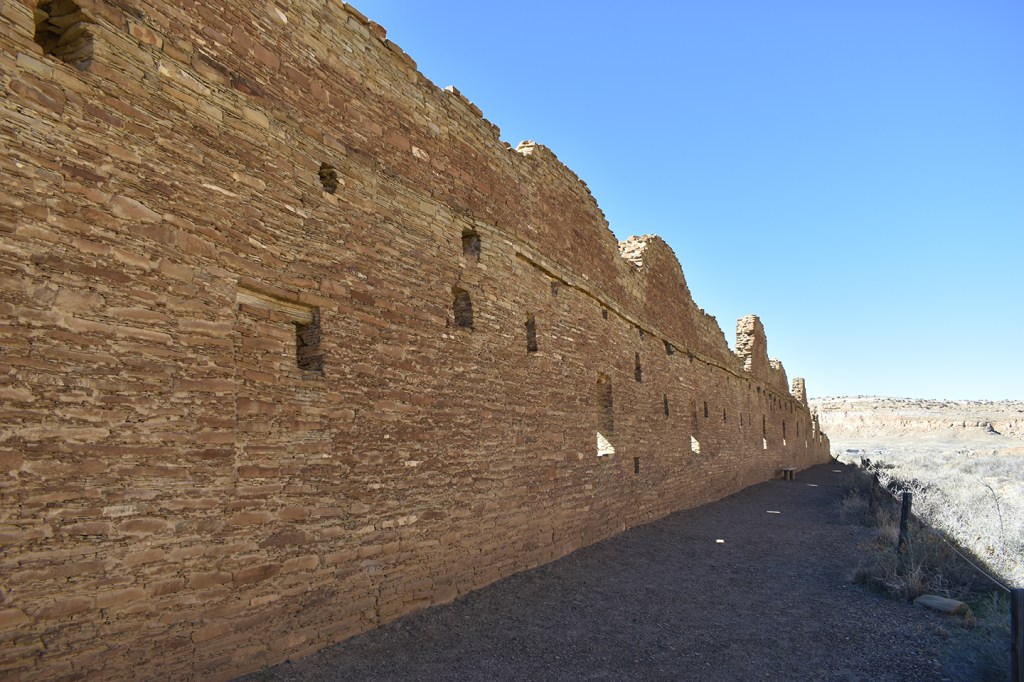
Chetro Ketl
Occupied 950-1250 CE. It once held over 400 rooms, multiple kivas, and an elevated plaza. The outer walls show that it’s configured in a D-shape, or half-circle, like many of the Great Houses.
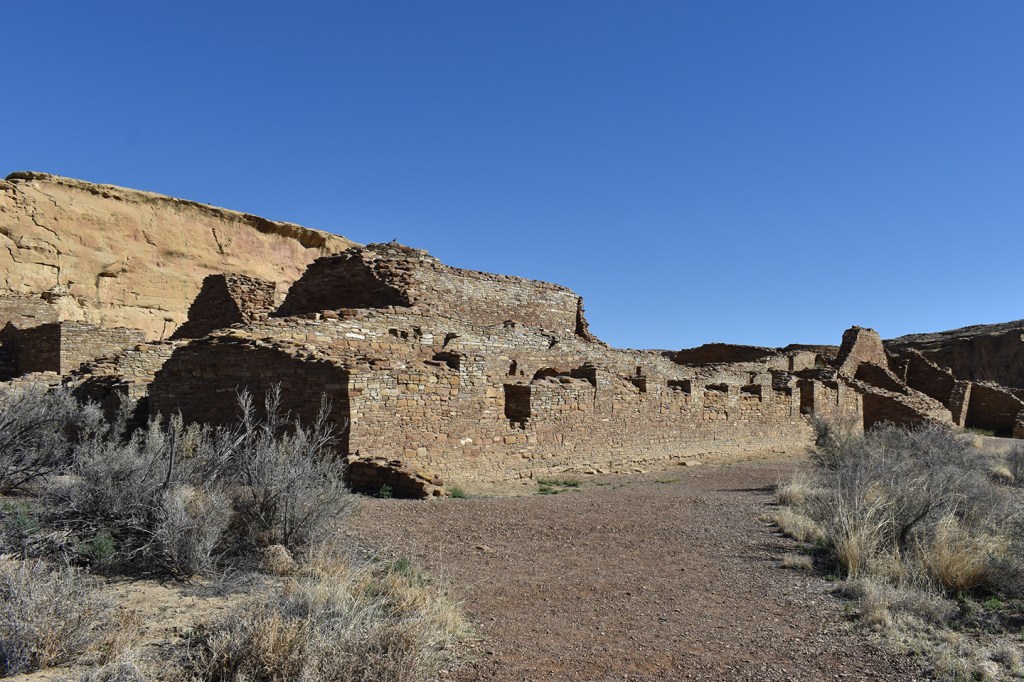
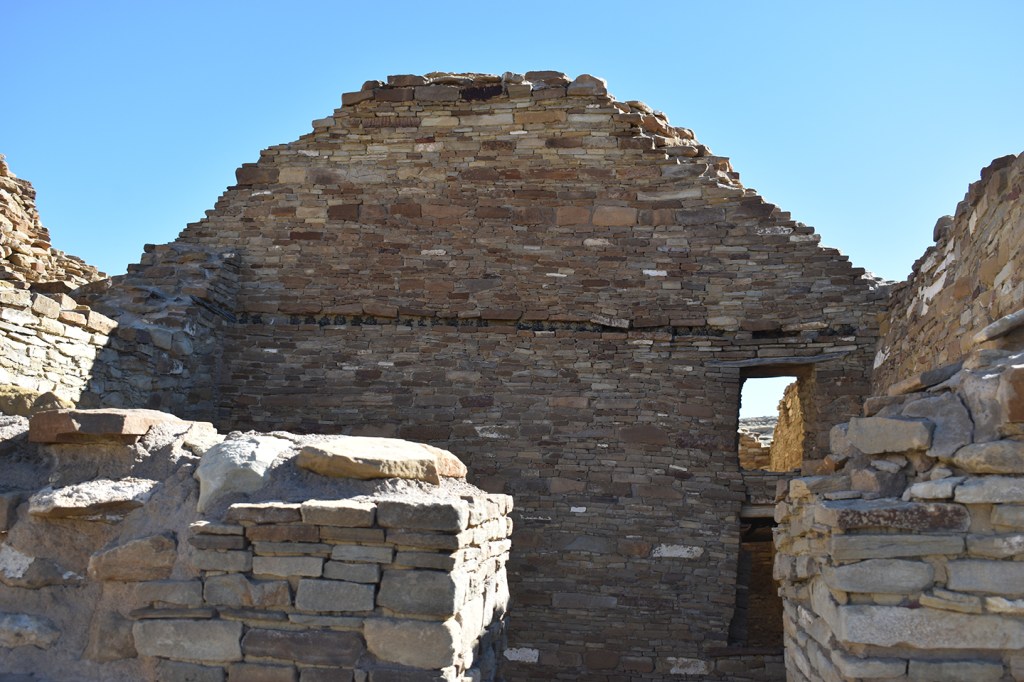
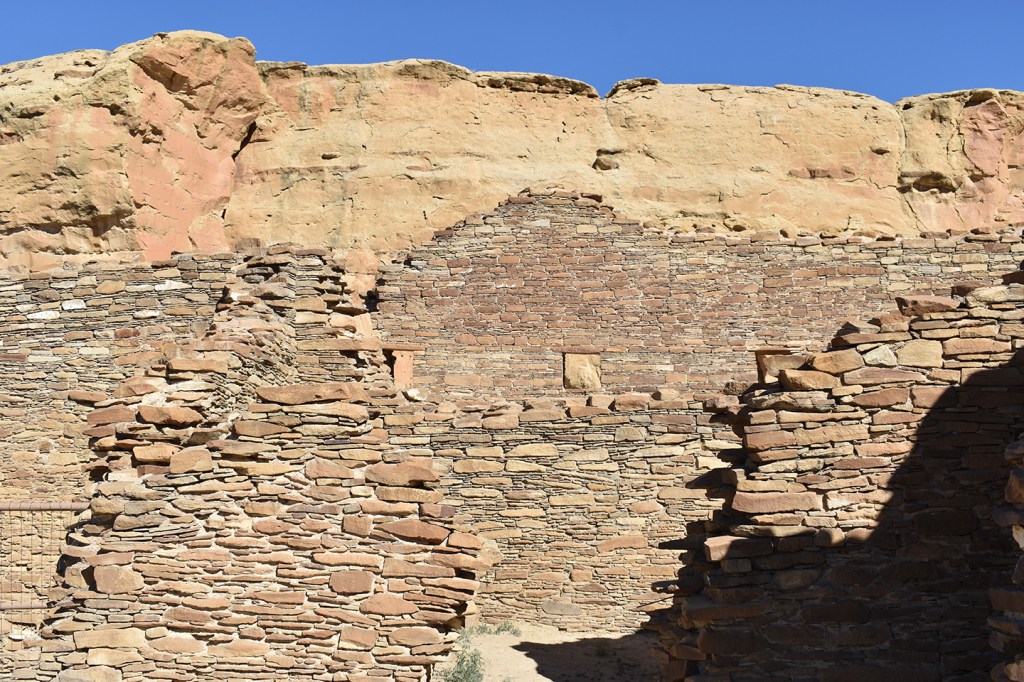
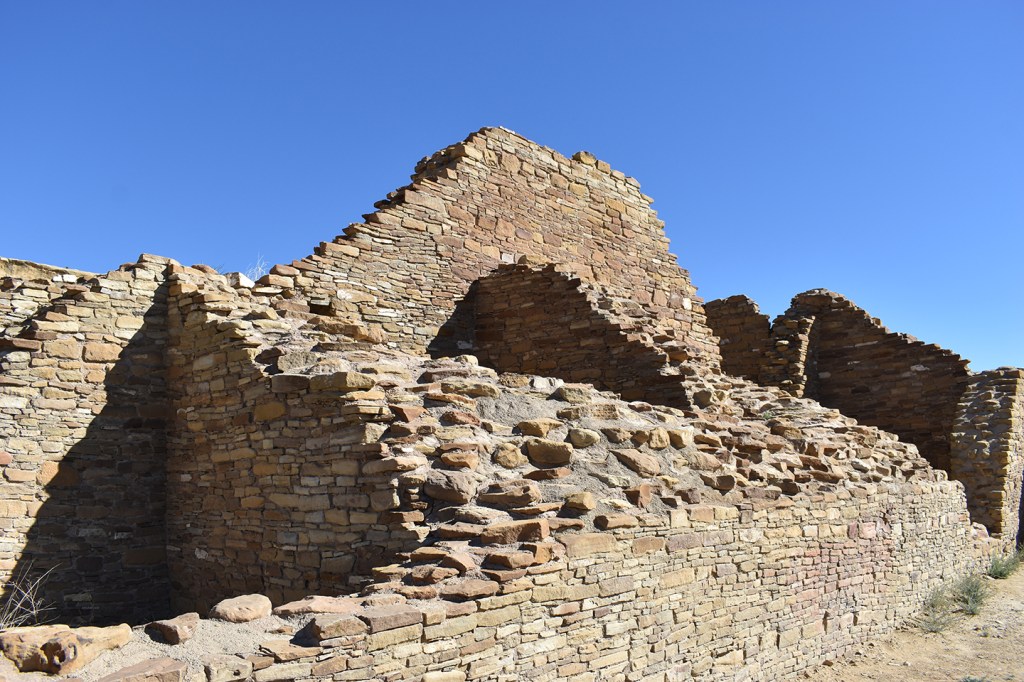
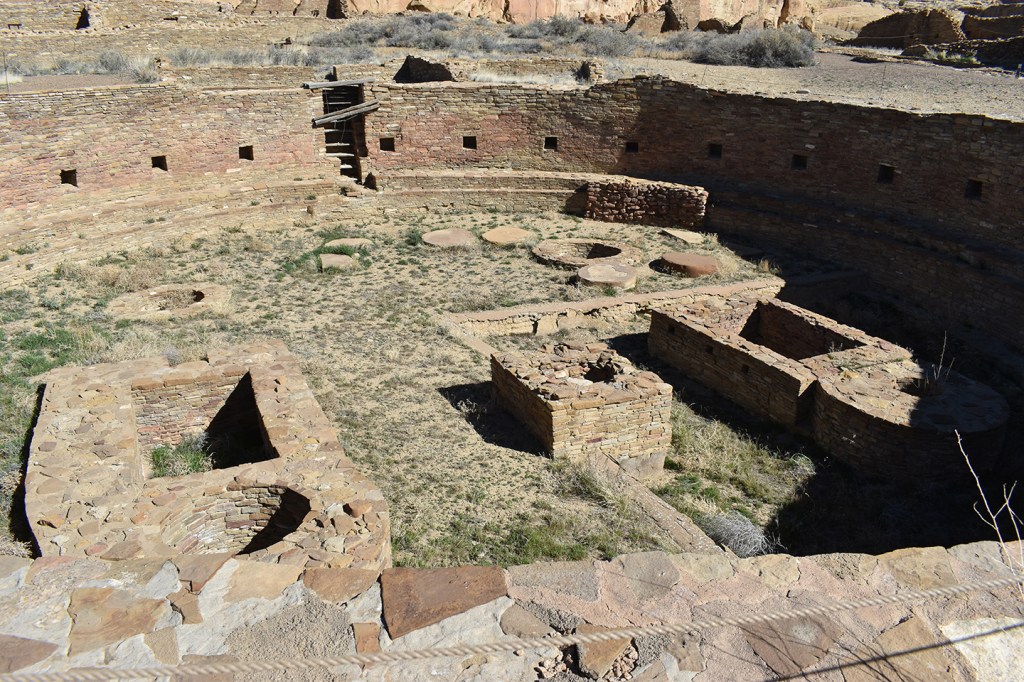
Hungo Pavi
Occupied 1000 to 1250s CE. Located by natural drainage and springs, it encompassed 150 rooms, an enclosed plaza, and kiva.
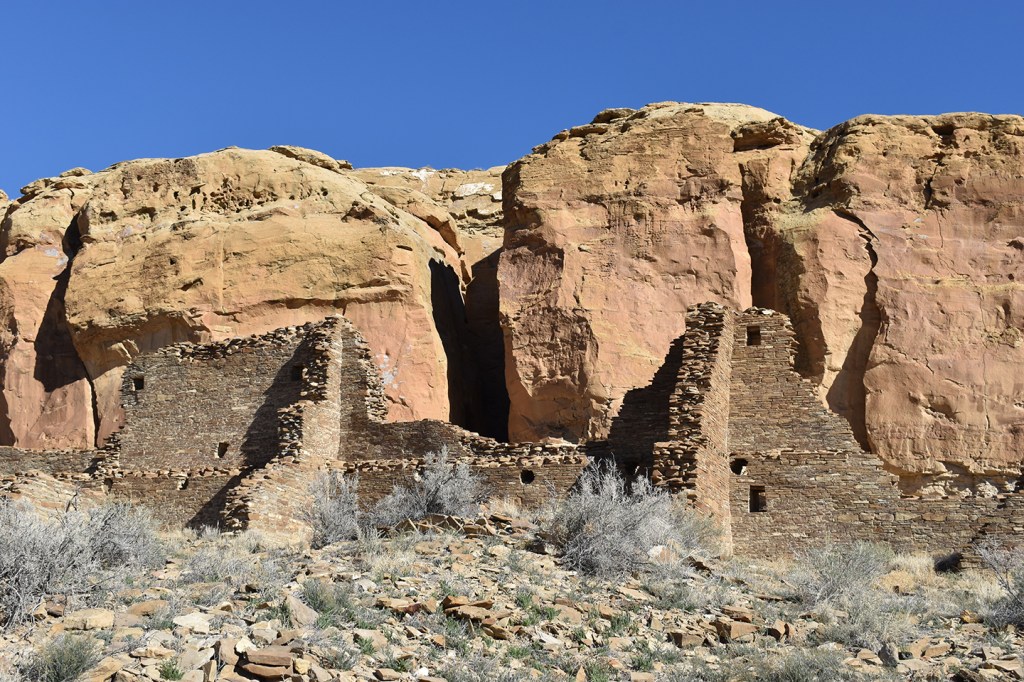
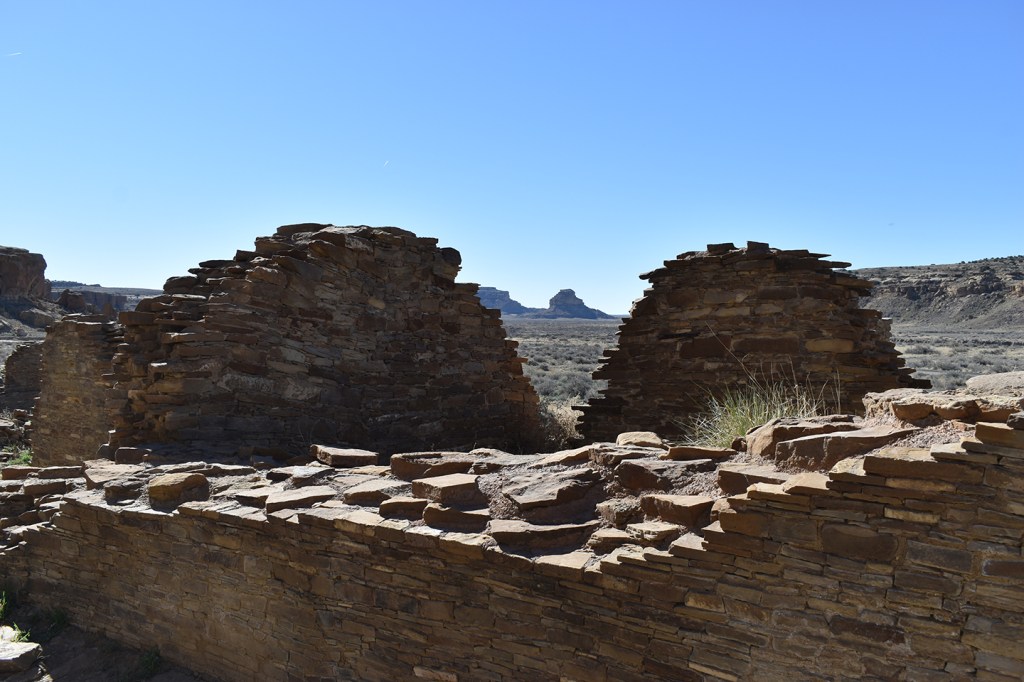
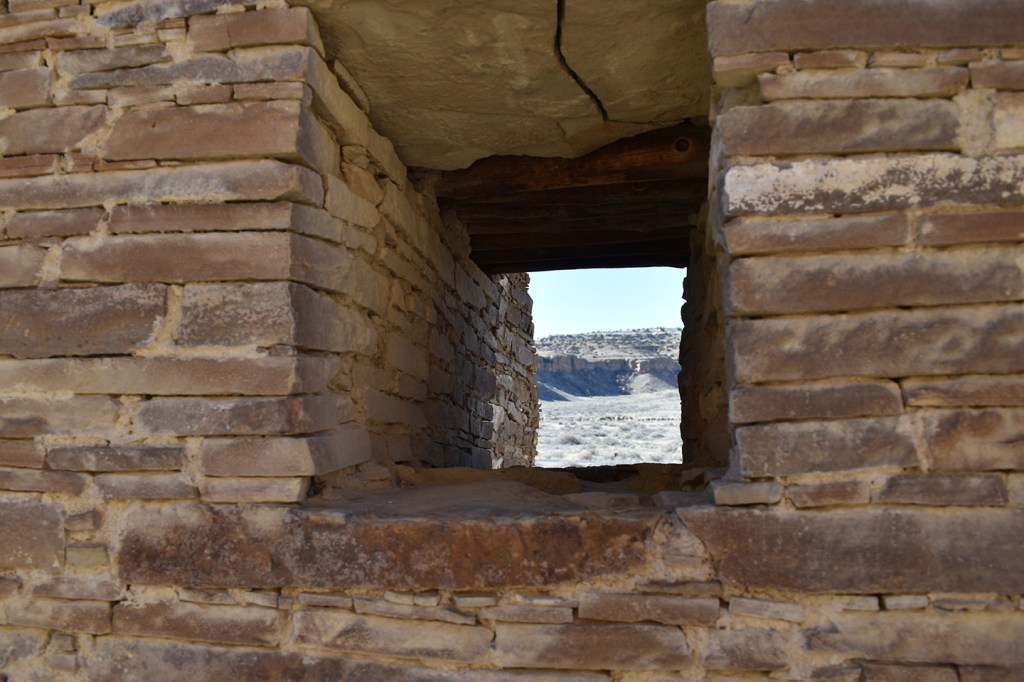
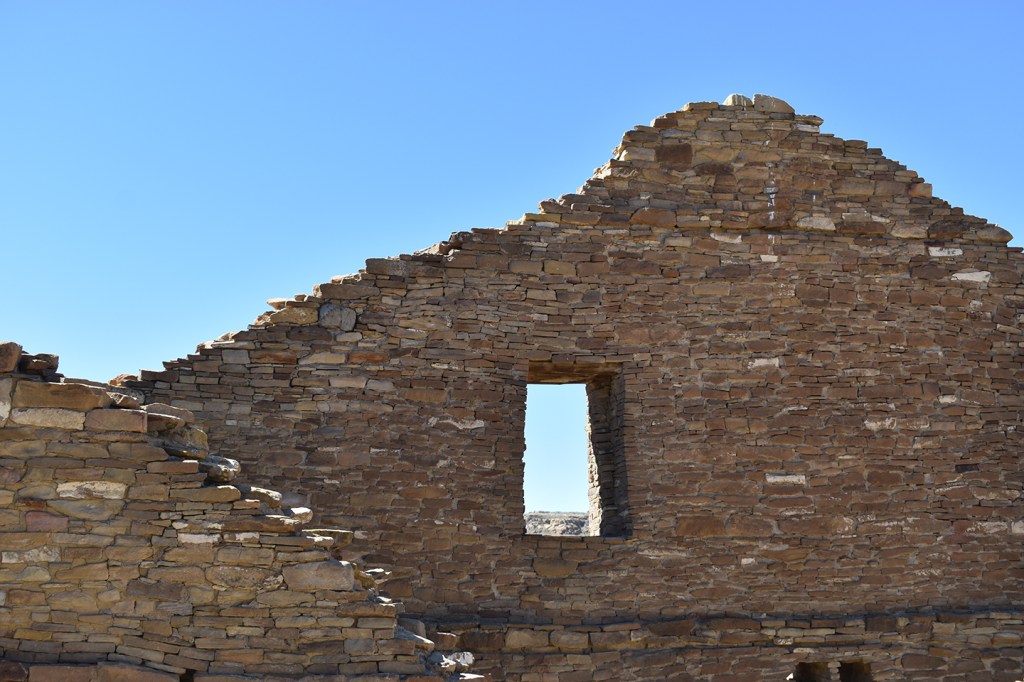
Pueblo del Arroyo
Occupied 1075-1250s. Named in Spanish for “Village by the Wash.”
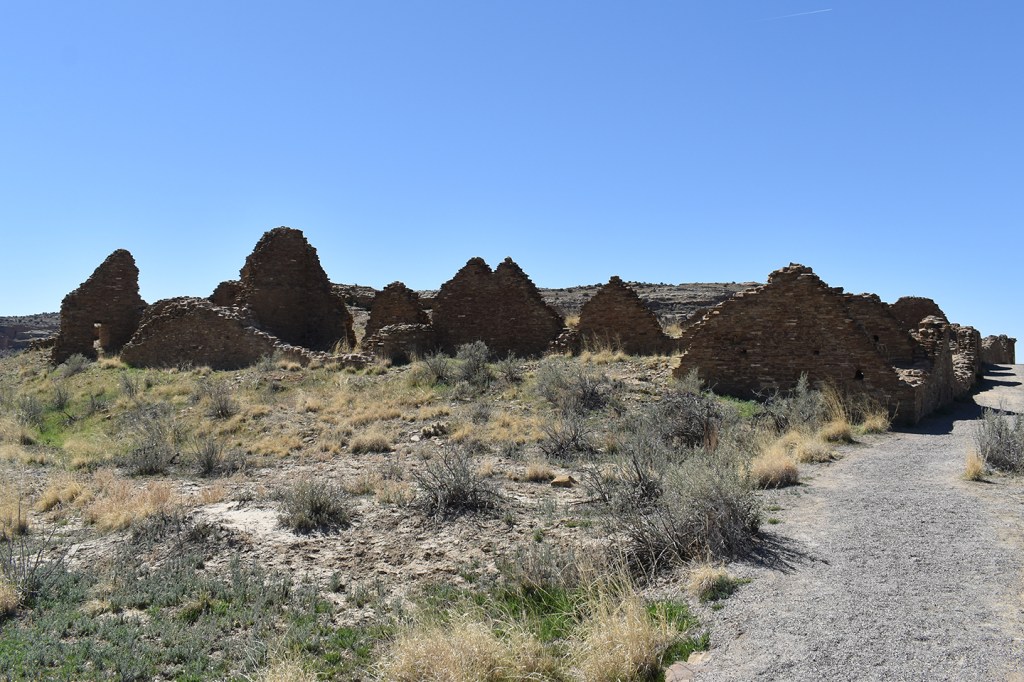
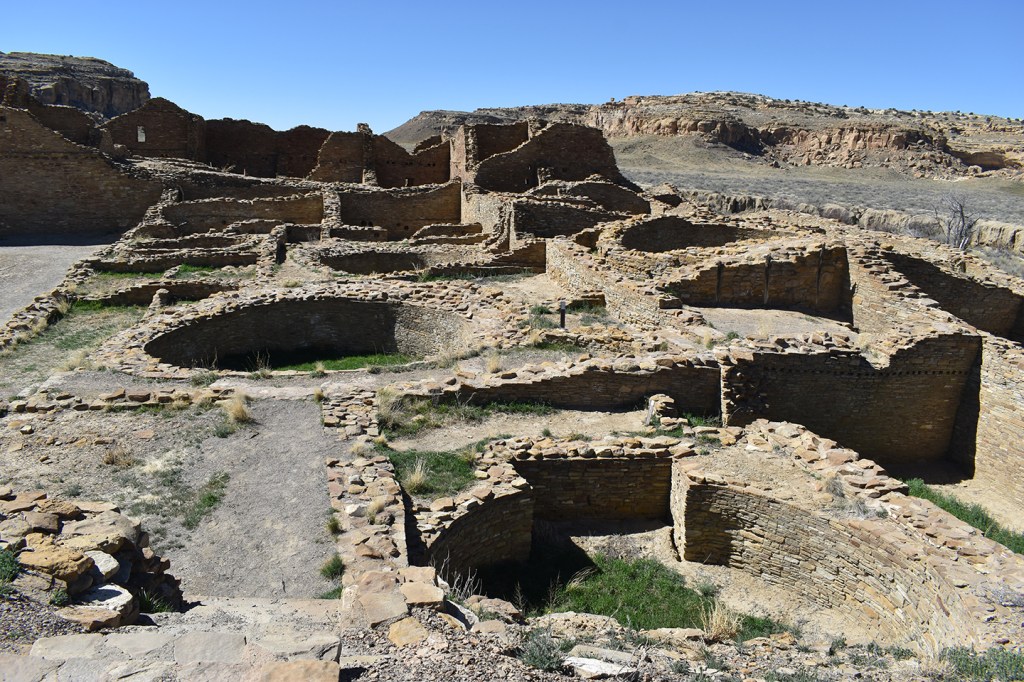
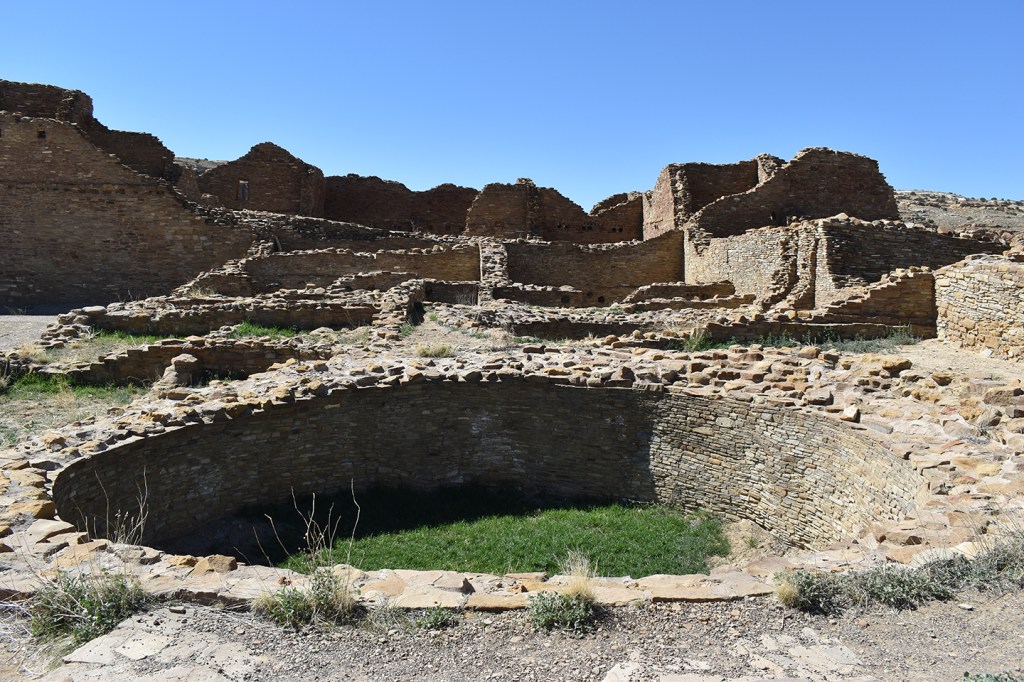
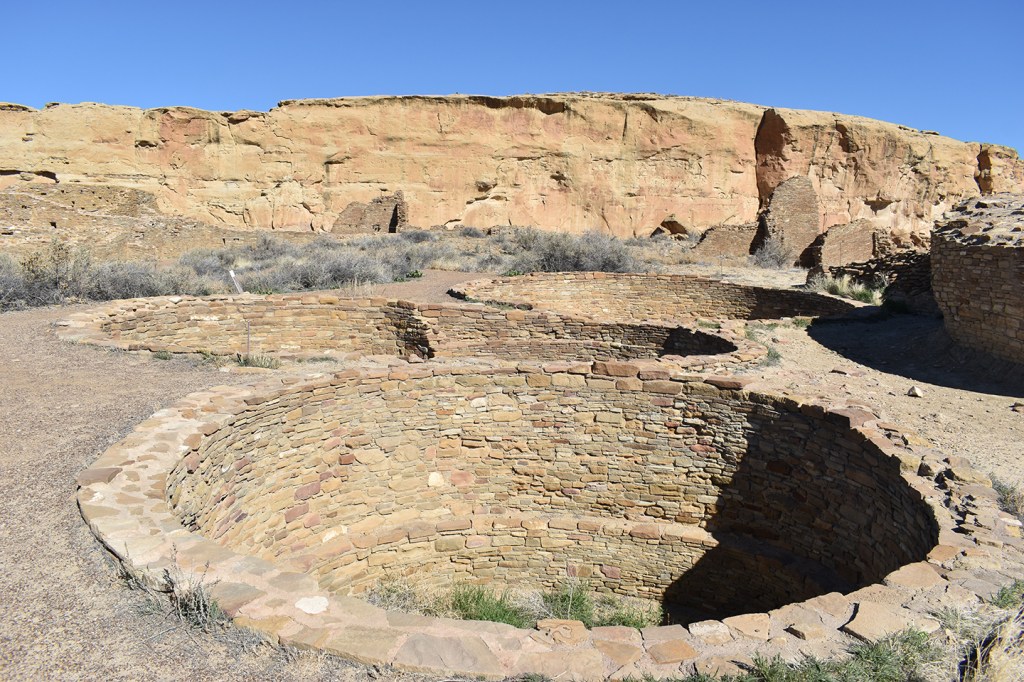
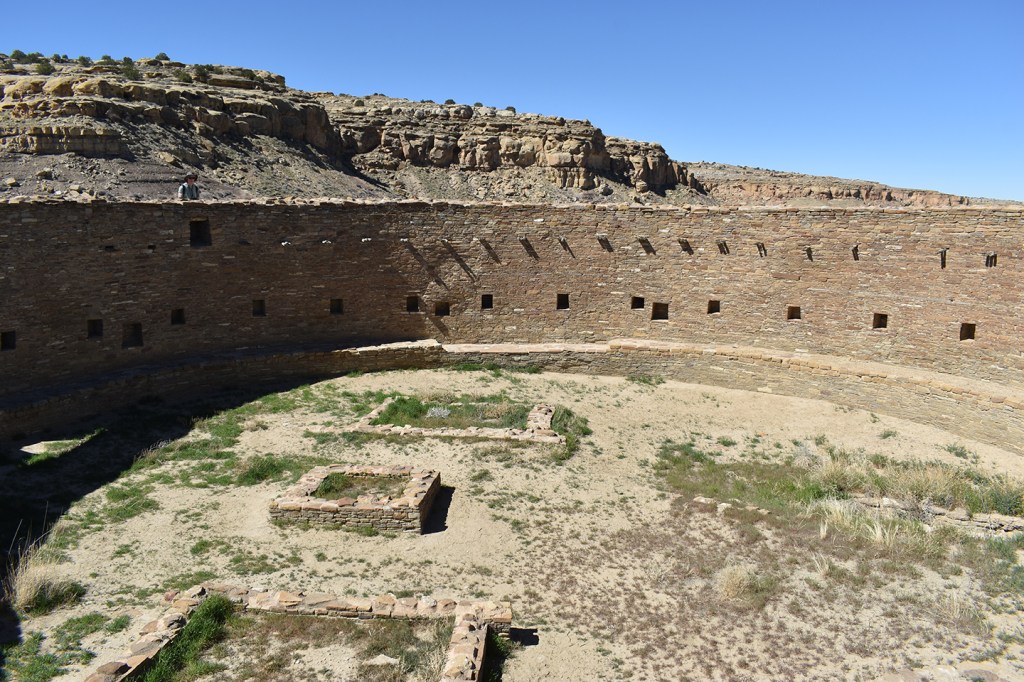
Casa Rinconada
Occupied 1075-1250s. This casa is the largest excavated great kiva in the park. This circular space was most likely used for ceremonial purposes, since it aligns with both the summer solstice and fall equinox.
Petroglyph Trail
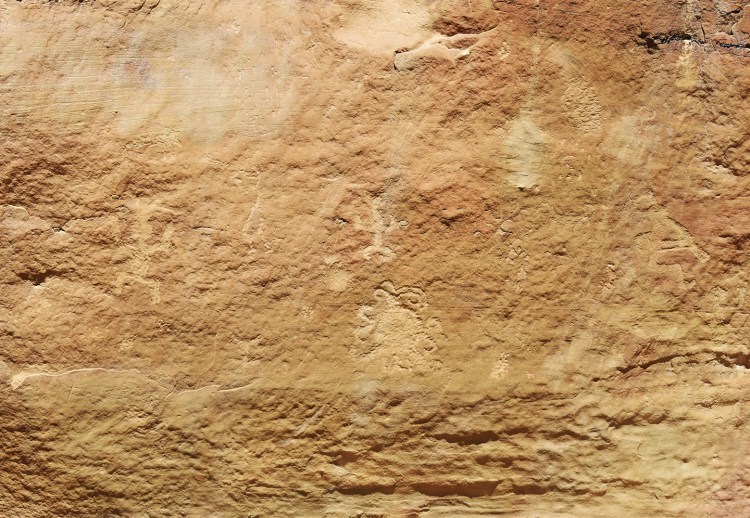
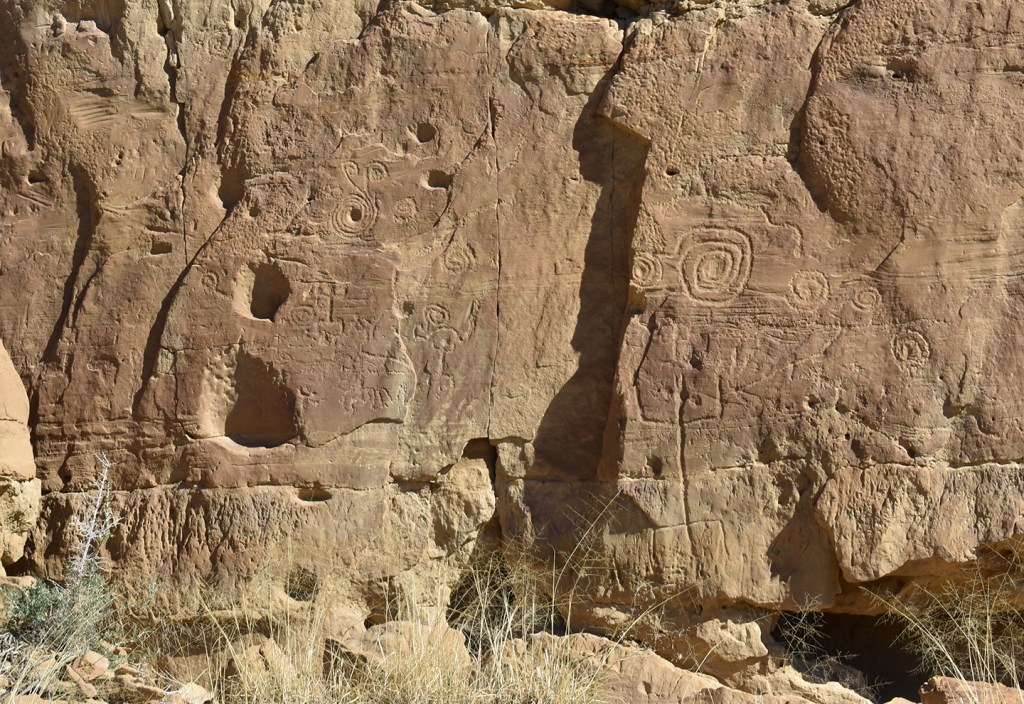
Between Pueblo Bonita and Chetro Ketl, some petroglyphs can be seen along a trail up against the rock wall and in a few other places by the Great Houses. The flowery looking image below is believed to represent an eclipse of the sun.
Southwest road trip: Road trip, Arches, Monument Valley, Horseshoe Bend, Antelope Canyon, Chaco Canyon, Old Town Albuquerque, Petroglyph National Monument
Please do not download or reproduce images from this site. ©
Your comments are welcome!
Popular posts/stats/categories/map
Email me at: Ruth@RuthRosenfeld.com
Follow me on: Facebook Instagram BlueSky Blog


Wow, so many fascinating Pueblo ruin in such close proximity. Looks like a great canyon. Maggie
LikeLiked by 1 person
It must have been quite a metropolis at one time.
LikeLiked by 1 person
Such unforgiving terrain. It’s amazing to me that people thrived in places such as this.
LikeLiked by 1 person
Imagine herds of animals and probably a bit more moisture than we have now.
LikeLiked by 1 person
The details about Pueblo Bonita were fascinating—over 600 rooms and 40 kivas is staggering. But the idea of a possible maternal dynasty emerging from the DNA evidence makes it feel even more complex and intriguing. And those jars with traces of cacao! It’s such a small detail, but it opens up a whole network of connections far beyond the canyon. I loved the way you imagined the “busy life” of the Puebloan community among the sandstone walls.
LikeLiked by 1 person
Thanks so much, Leighton, for reading all those details! It was a fascinating and complex civilization. The cacao does tell of trade far and wide. People tend to think of the early Americas as mostly empty, but there were populations more advanced than we could have imagined.
LikeLiked by 1 person
Chaco Canyon looks like a remarkable place, especially for those who are fans of archaeological sites. I love the remoteness of the site and how it helps to keep it special and protect the spirit of the area. Thanks for sharing, and have a good day 🙂 Aiva xx
LikeLiked by 1 person
One of the most remarkable things is that it was not at all remote for them, it was a busy population center that stretched out for miles. Thanks for your visit and comment, Aiva!
LikeLike
I mean, it is located in a remote canyon in northwestern New Mexico and is considered a very remote destination.
LikeLiked by 1 person
It’s incredible just how long these structures have survived, even longer than when the US was established! I’ve not heard of nor been to Chaco Canyon before, but your post has made me want to go now! Thanks for sharing this beautiful part of the country, Ruth 🙂
LikeLiked by 1 person
All of those Native civilizations prospered long before the Europeans came to settle across the continent. We are fortunate that they have been excavated and stories uncovered. Thanks, Rebecca!
LikeLiked by 1 person
What an extraordinary place and culture! I’m delighted to read of it.
LikeLiked by 1 person
Thanks so much, Paddy, for reading and commenting! I’m glad you enjoyed learning about Chaco.
LikeLiked by 1 person
I haven’t been to Chaco Canyon in perhaps 15 years. I must make a return visit to this fascinating place.
LikeLiked by 1 person
It’s worth the road trip, and you may find other interesting stops along the way.
LikeLiked by 1 person
I’m sure.
LikeLike
This is amazing. I am impressed by how archeologists were able to uncover its story after so many years.
LikeLiked by 1 person
Some of those stories are still told by descendants in other Native enclaves around the U.S. west. This site is so large and impressive, it speaks to the complex and advanced civilizations that were lost. Thanks for your visit!
LikeLiked by 1 person
Isn’t this place just amazing? I’m glad the roads were in drivable condition, because you just never know. I’m also glad you went at a cooler time of year than we did… hopefully that made for a more pleasant stay. This was a fun post to read, as it brought back memories of my time in Chaco 😊
LikeLiked by 1 person
I coul see how dangerous those roads can be. I didn’t want to go later in the year, even in March the afternoons were hot. Glad you enjoyed this one, Diana!
LikeLiked by 1 person
What an incredible place! I can almost feel the history seeping out of those old stones even just viewing them on screen – they must ooze atmosphere as you walk among them 😮
LikeLiked by 1 person
I was very mindful of the people who might have lived in those rooms and sat in the kivas. Thanks for reading, Sarah.
LikeLiked by 1 person
We visited Chaco Canyon a couple of years ago as part of a larger road trip through northern New Mexico and Colorado. It was the highlight of our trip. Such an incredible place. The drive to get there was a bit sketchy though.
LikeLiked by 1 person
I imagine there are times when they have to close because the road is impassable. Glad you got there to Chaco.
LikeLiked by 1 person
I’ve heard of Chaco but never been. Interesting stories. Sounds like taking the Bobbie on those roads might be a bad idea?
LikeLiked by 1 person
Hard to know… you would want to check the weather to avoid rain. There were regular sedans and RVs at the Visitor Center. You would have a place to stay. Bobbie’s detachable, right? You could leave him(?) at the campground.
LikeLiked by 1 person
Yes, he is. Good to know.
LikeLiked by 1 person
What an amazing place!! It really is a mirror in to another world!
LikeLiked by 1 person
Thanks, Hannah! It truly is a glimpse into a complex and advanced society.
LikeLike
What an interesting place to visit! It’s hard to imagine how people lived here centuries ago … and remarkable that the place has remained so beautifully preserved.
LikeLiked by 2 people
It was extensively excavated and there’s probably much more to uncover.
LikeLiked by 1 person