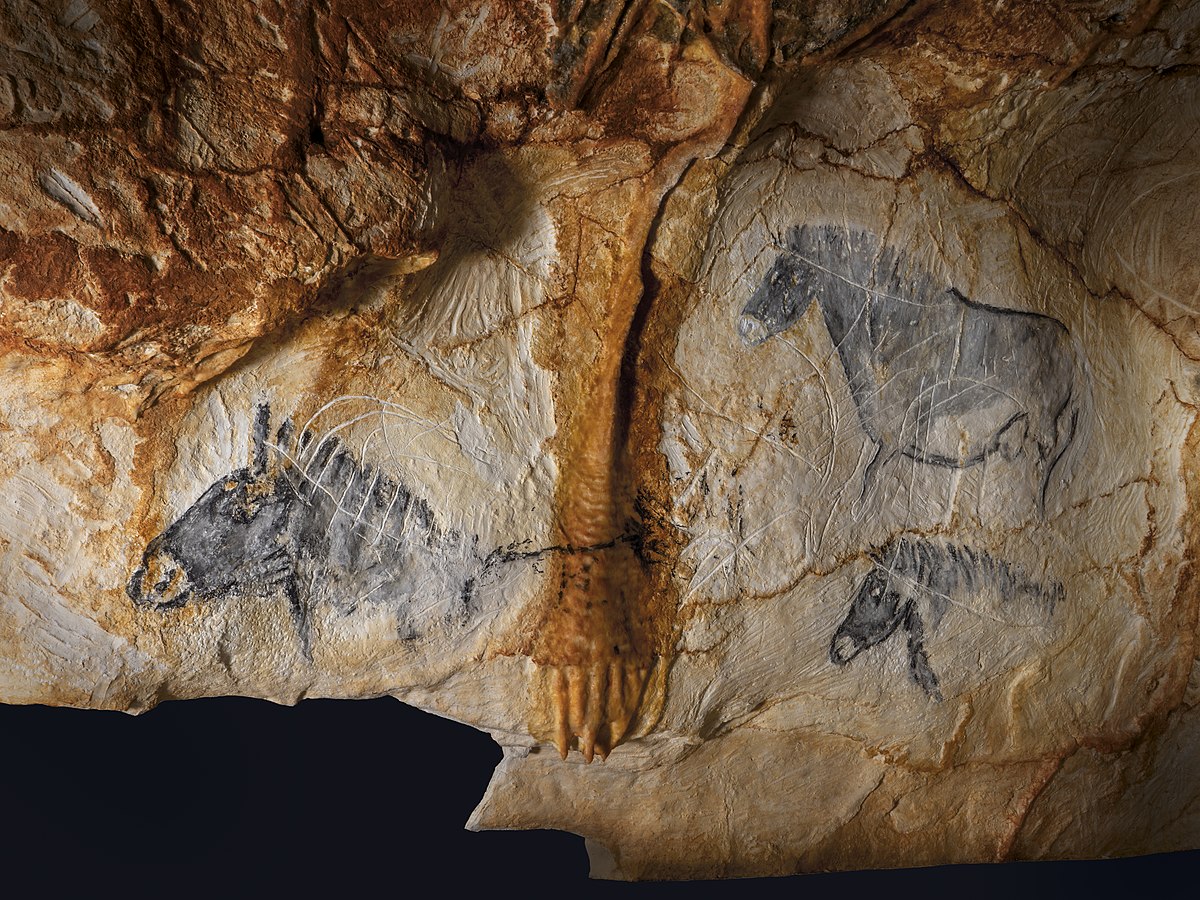
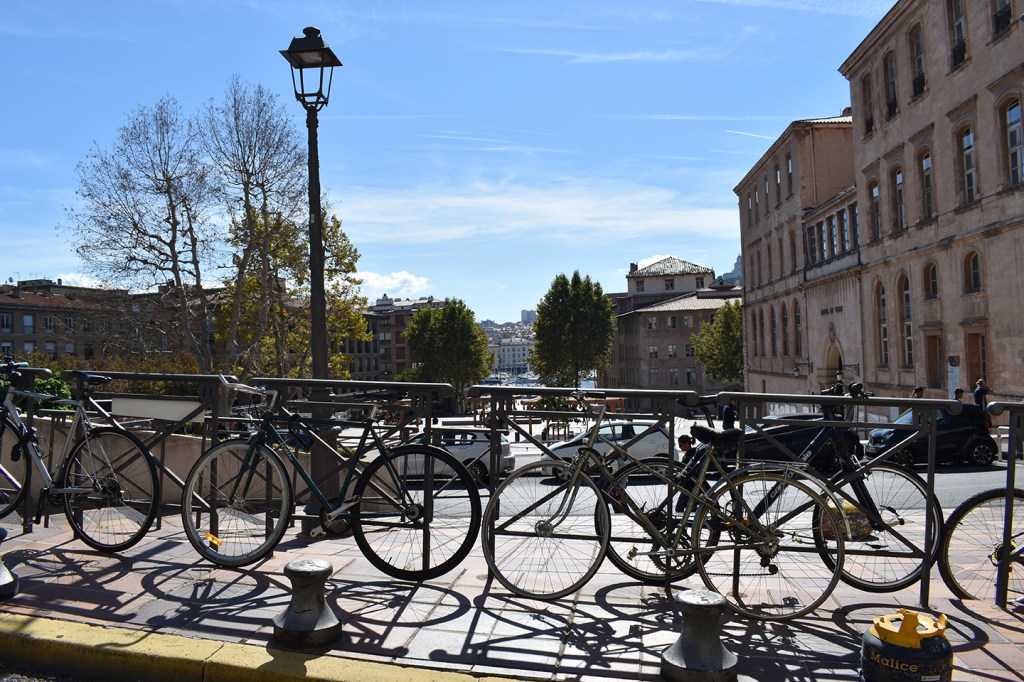
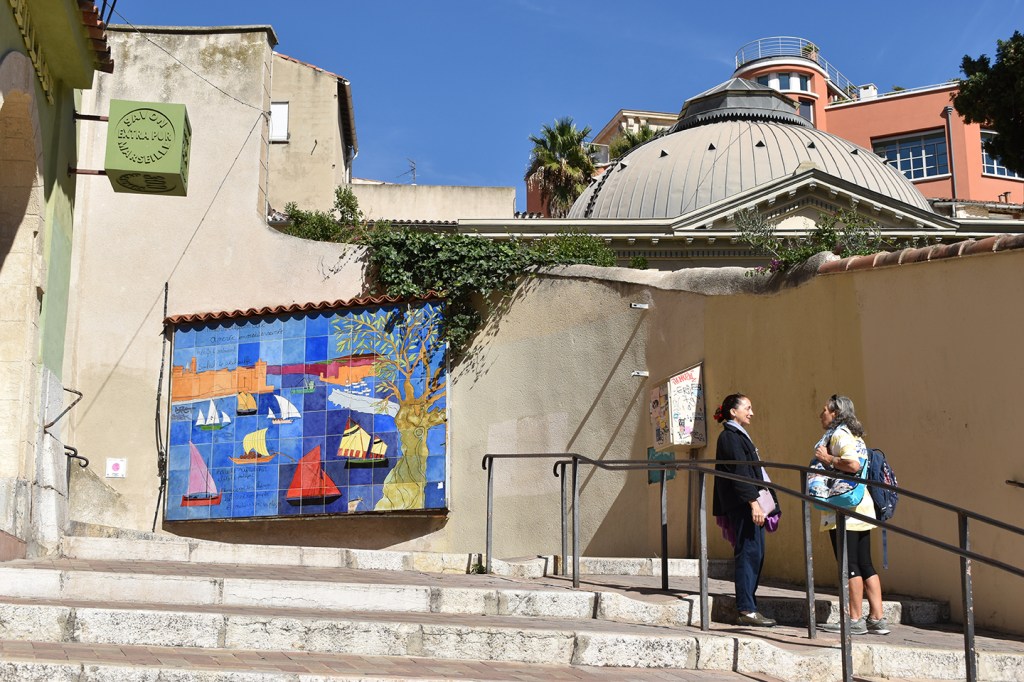
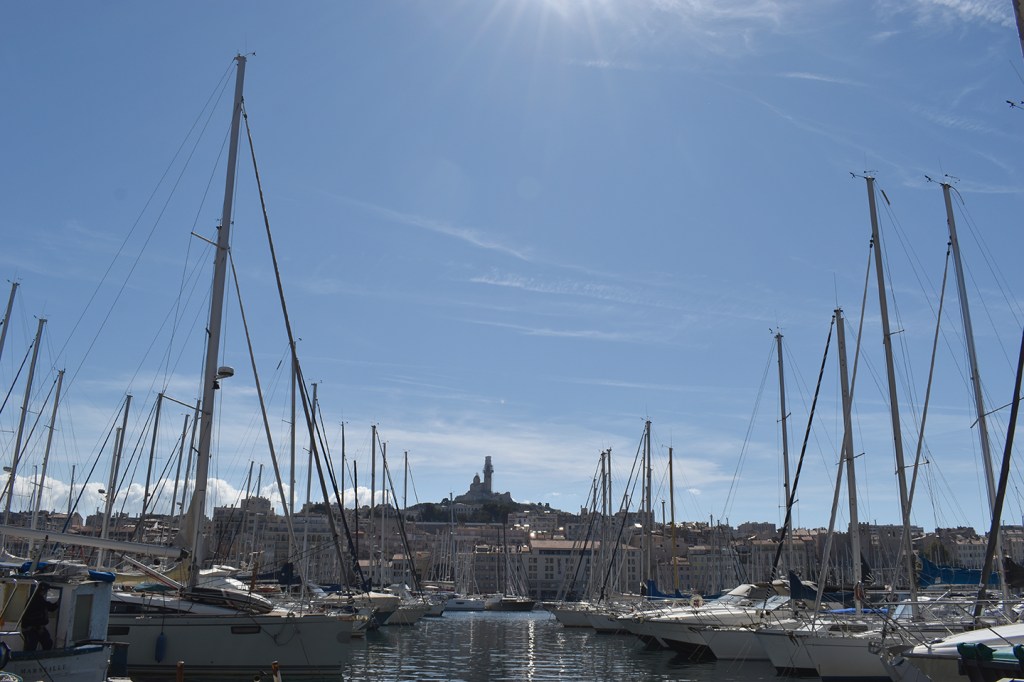
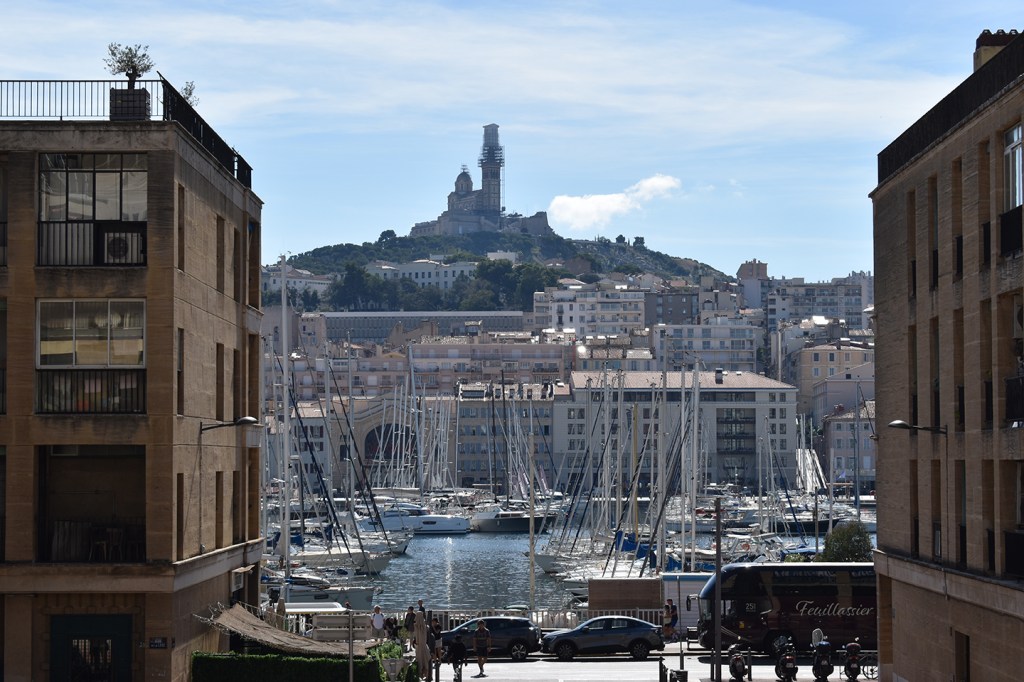
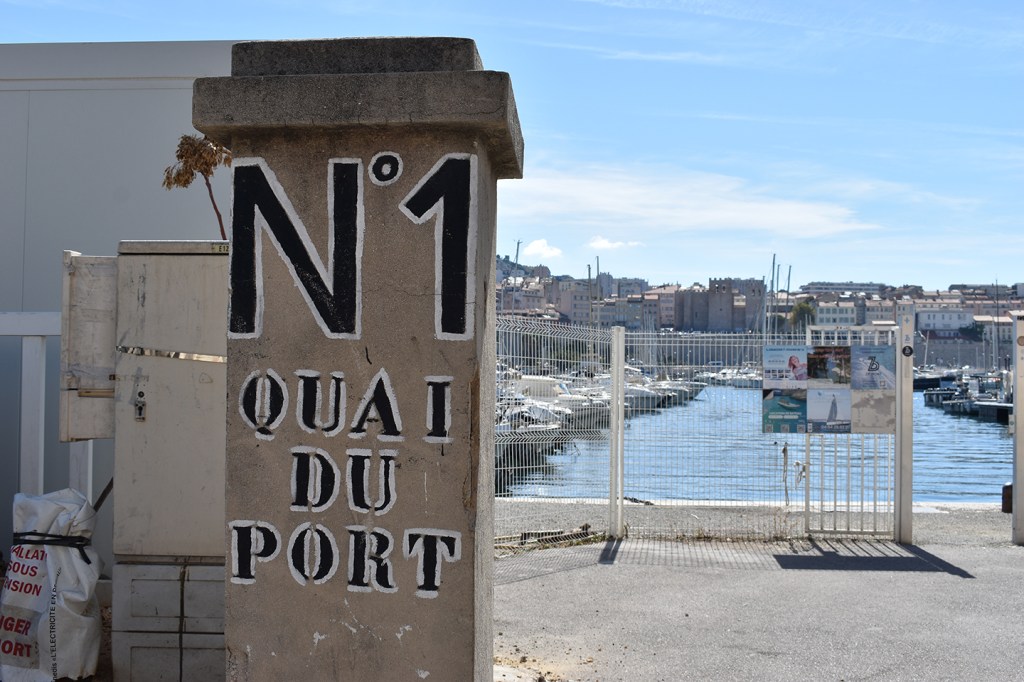
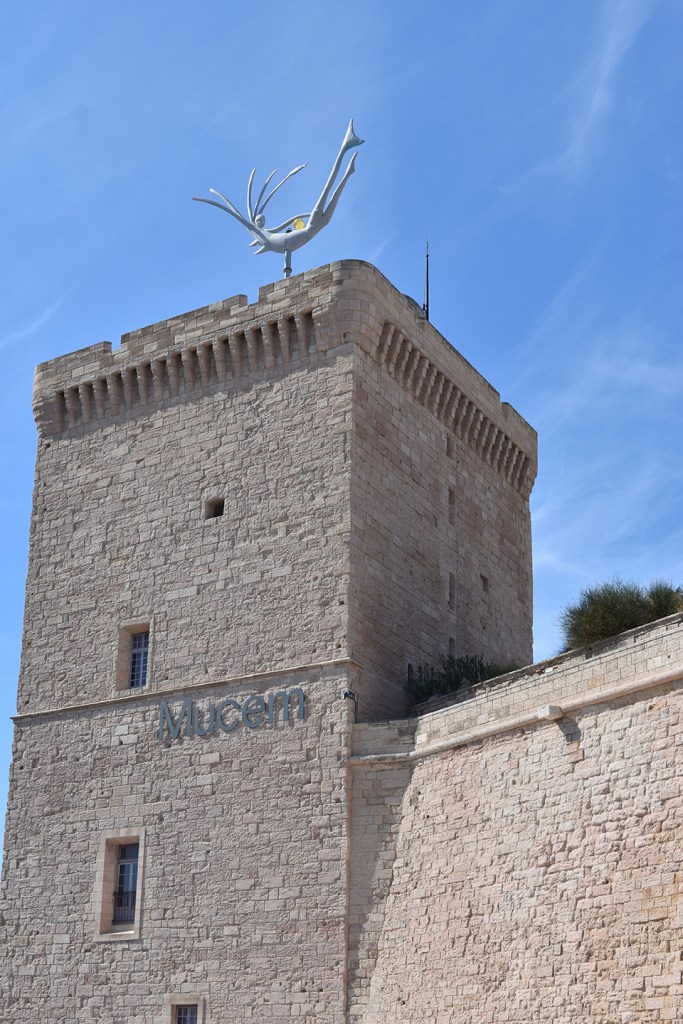
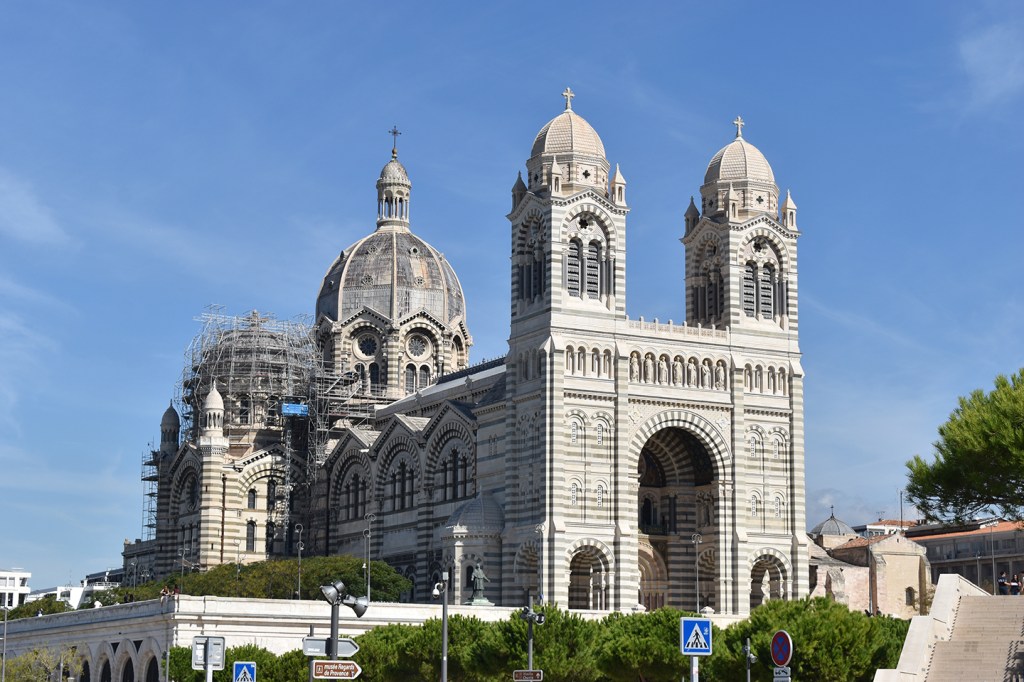
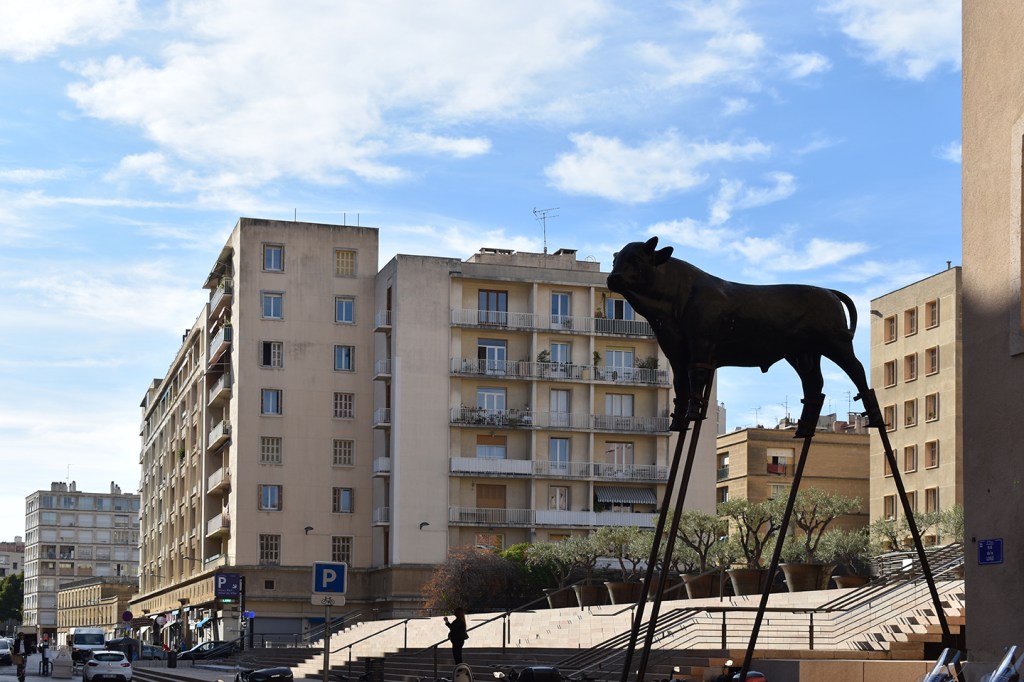
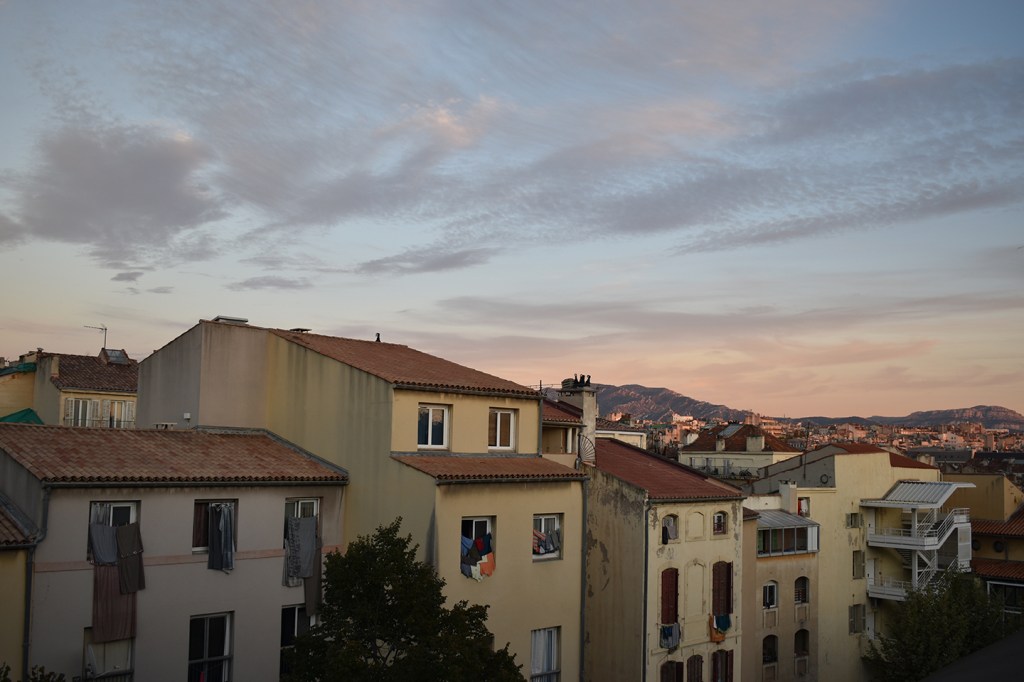
I had been through Marseille decades ago while visiting French towns where Impressionist artists had painted (links below), but it was just a train connection. This time I had a day to wander and visit one more ancient cave painting site. My wanderings were planned to take me to the Cosquer cave on the Mediterranean Sea, but there were some interesting sights along the way as I descended the hill from my hotel.
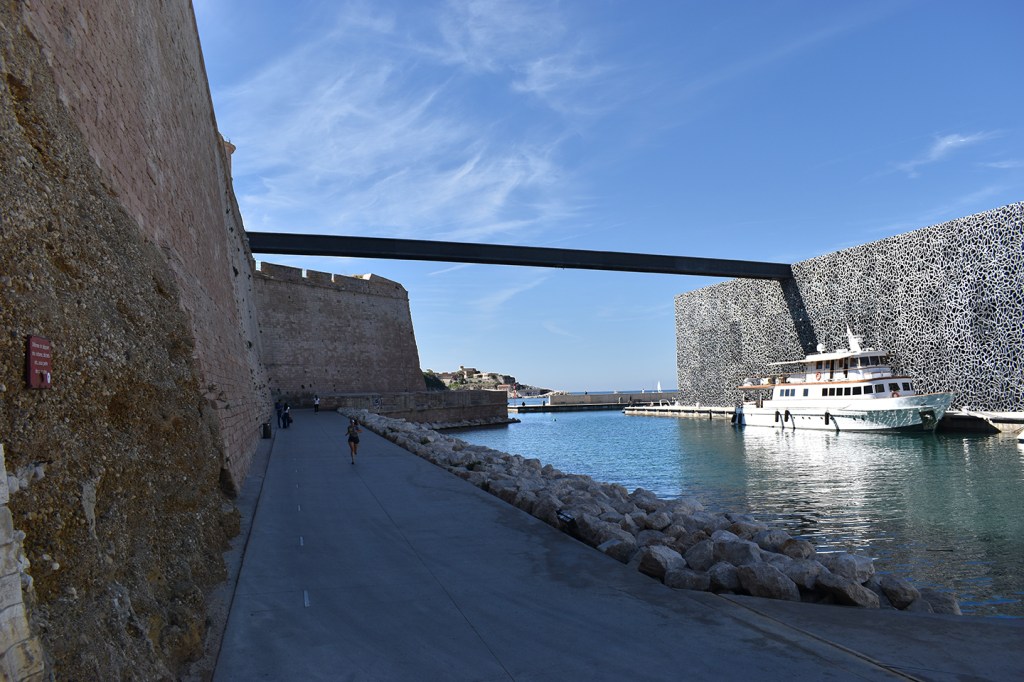
Not part of the tour I took the week before that covered five prehistoric painted caves (links below), I found Cosquer on my own. As with several of the larger, newly discovered, painted caves in the south of France, a replica has been constructed, opened in 2022, to preserve the original cave. Cosquer is unique in that it is underwater, about 37 meters (121 feet) below sea level. The entry was inside a building where one boards a boat designed to move through the constructed cave. A further complication is that the sea is rising and beginning to submerge some of the images on the actual cave walls, so it was critical to create the copy.
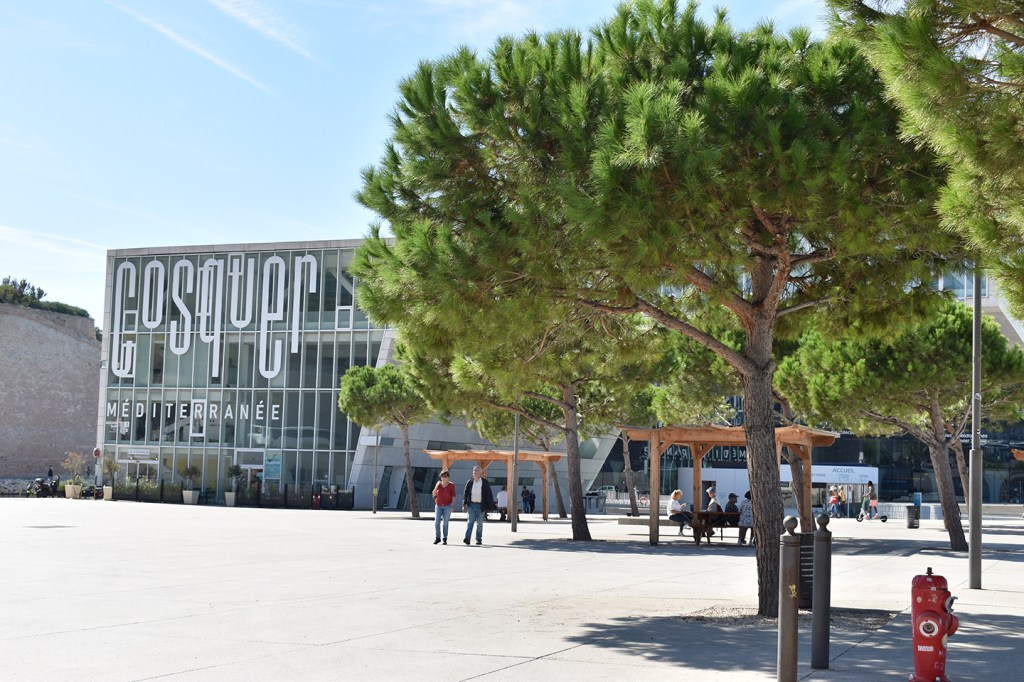
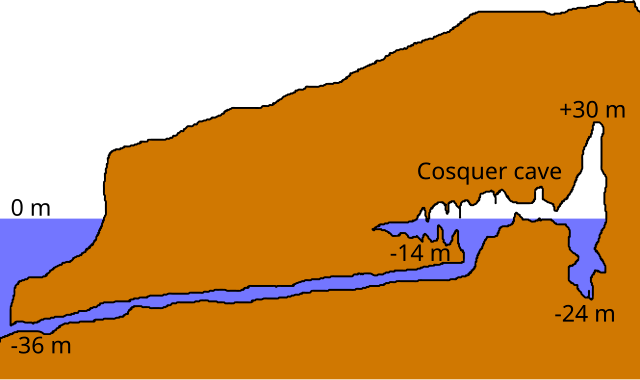
Henri Cosquer, a professional diver and director of a diving school nearby, explored connected caves along the cliffs and shoreline. In 1985, he discovered a small hole that led to a cave with beautiful stalactites and stalagmites, which he visited several times. Moving through the tunnel in 1991, he found a stencil of a human hand in red, leading to the discovery of the larger cave complex with drawings and engravings. A few months later, a group of other divers looked for the cave with insufficient equipment, got lost, and three of them died. Cosquer retrieved their bodies and notified authorities. The site was soon authenticated by Jean Clottes at the Ministry of Culture, and protections put in place.
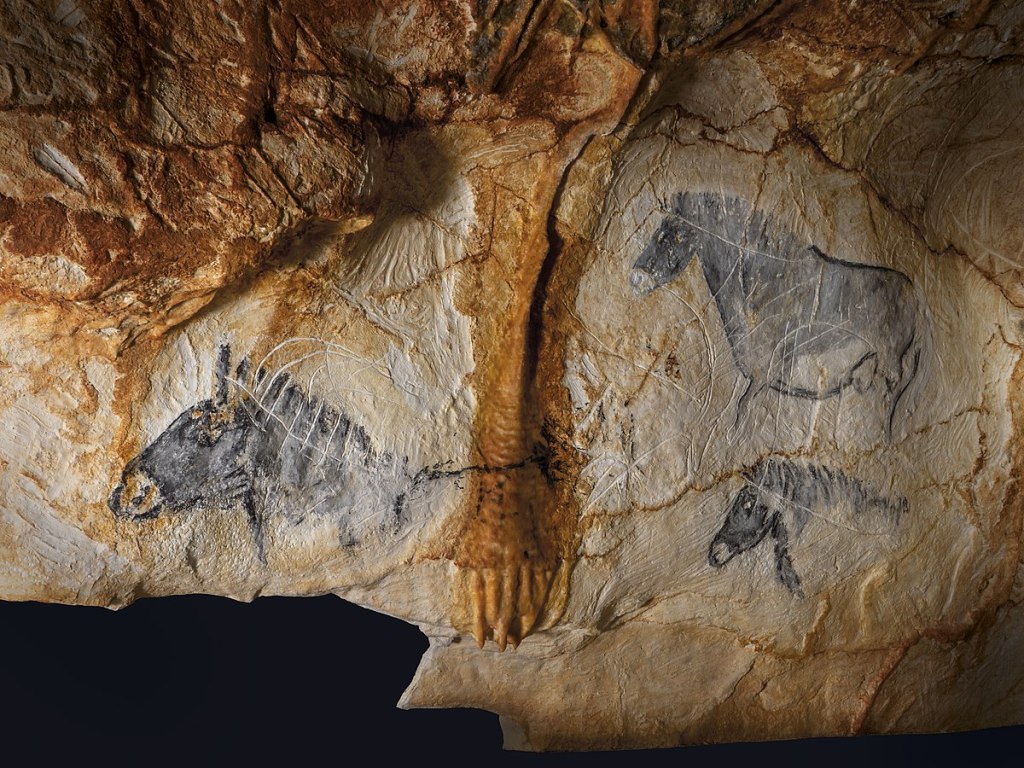
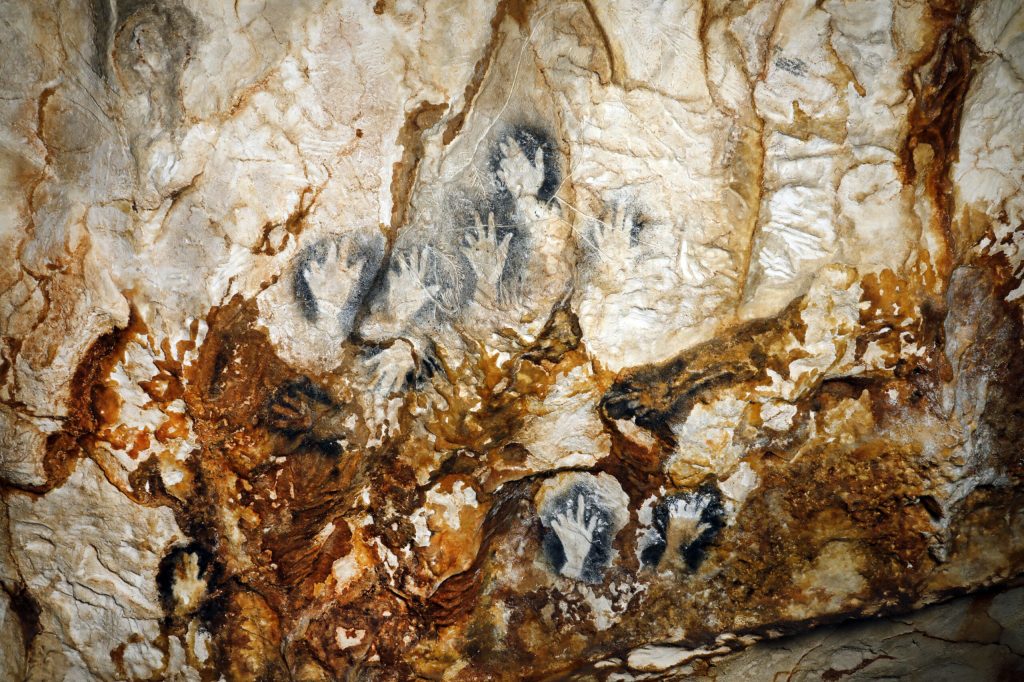
Homo sapiens created the Cosquer art as long ago as 30,000 years. There are about five hundred drawings and engravings, two hundred animal figures, and seventy hand prints. In the photo below, notice that the two left-side fingers are shorter; historians have interpreted that as perhaps a clan symbol rather than an injury, since there are other similar images with variations found in other caves.
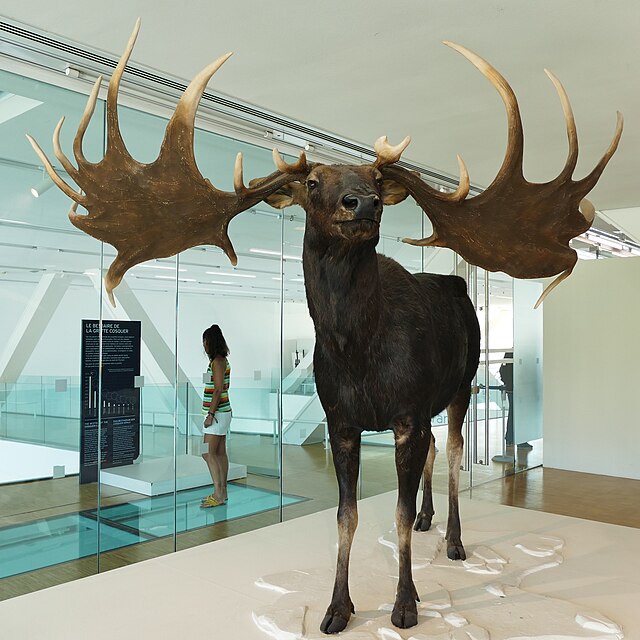
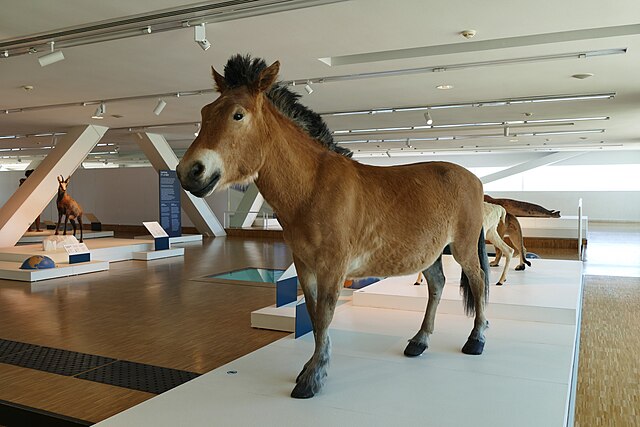
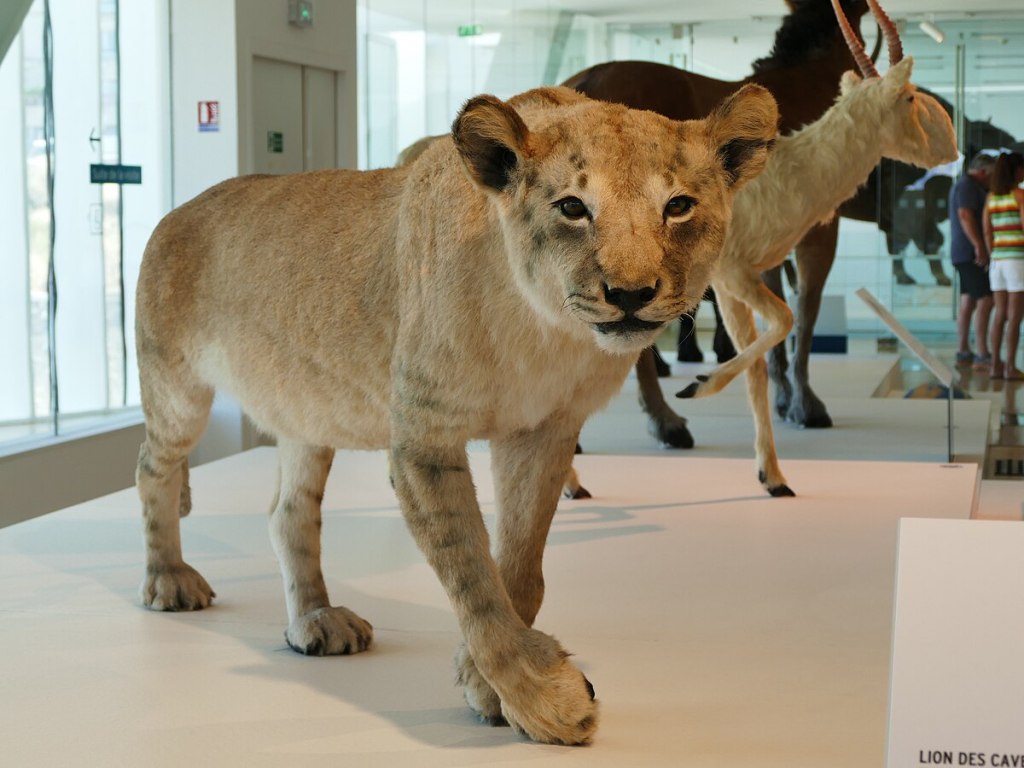
Note: I didn’t take photos in the caves or the museum. The following images are from Wikimedia Commons, an Internet source of photos in the public domain.
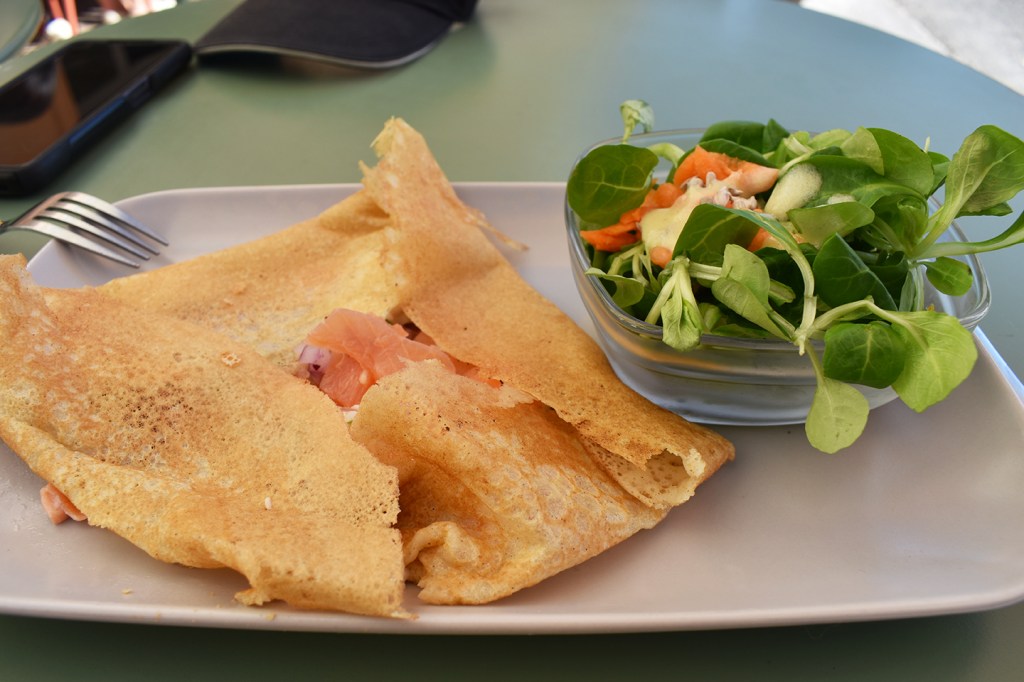
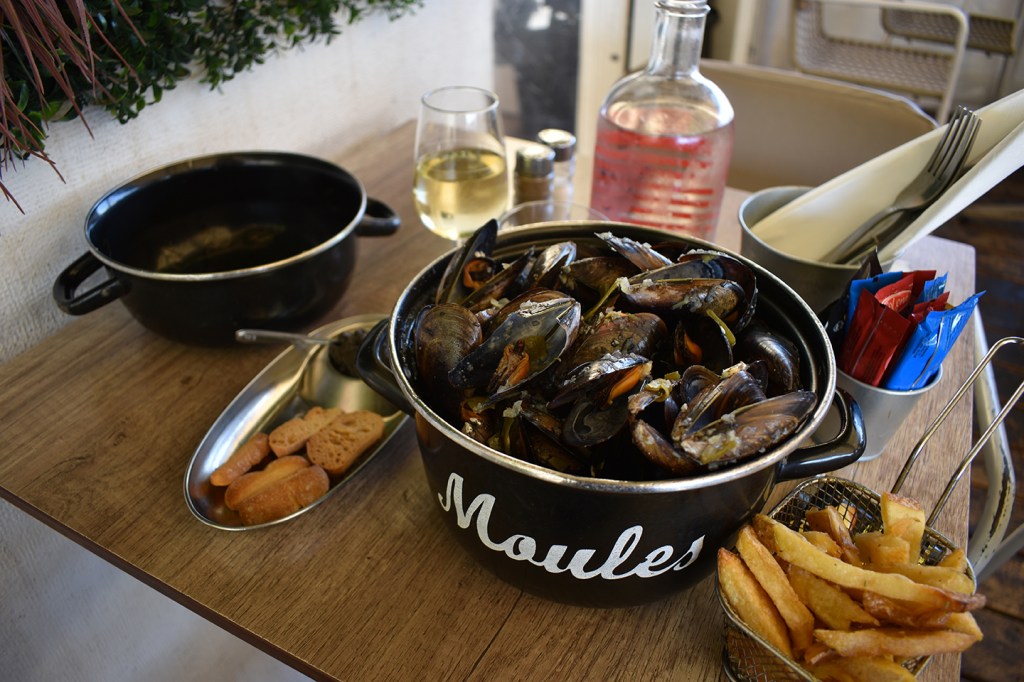
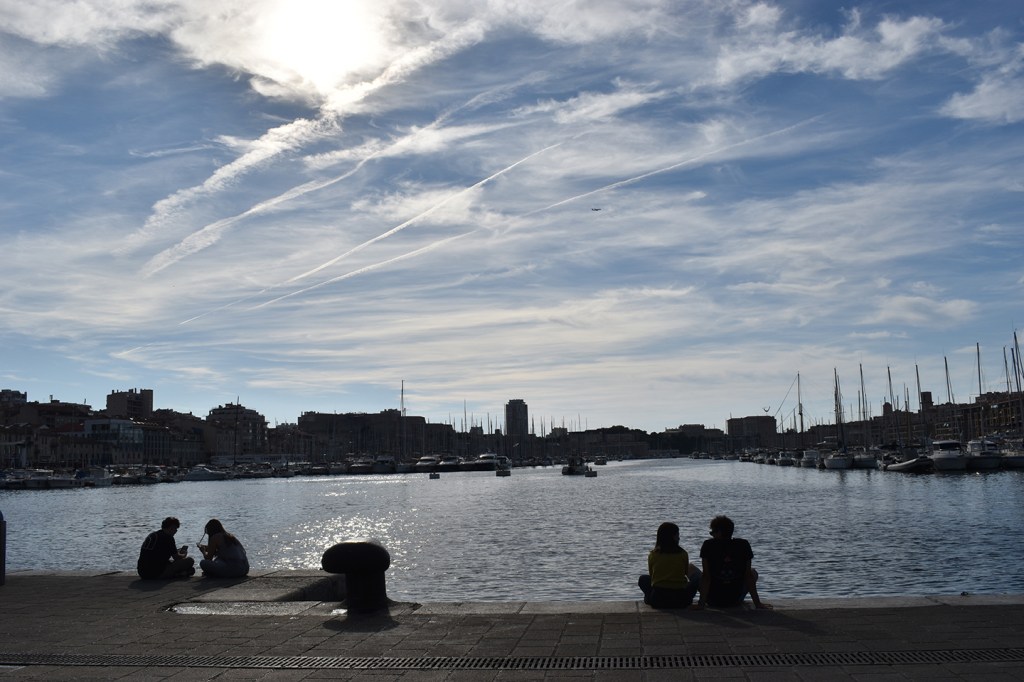
My last day by the sea, I took advantage of the fresh seafood restaurants along the shoreline.
South of France trip: Saintes, Saint-Césaire, Les Eyzies, Font-de-Gaume cave, Lascaux, Les Combarelles, Pech-Merle caves, L’Aven d’Orgnac, Sarlot, Chauvet, Montpellier, Arles, Marseille, Cosquer
Impressionist artists in France trip (2021): Cézanne in Aix-en-Provence, Paris as a base, Van Gogh in Auvers, Rouen and Le Havre, Monet in Giverny
Please do not download or reproduce images from this site. ©
Your comments are welcome!
Popular posts/stats/categories/map
Email me at: Ruth@RuthRosenfeld.com
Follow me on: Facebook Instagram BlueSky Blog


Wonderful post! Those photos are great. I would love to see that cave too. It’s so fascunatung to see how we humans have changed overtime through art work. We sometimes get so lost in our present age that we forget the wonder of the past—our humble beginnings.
LikeLiked by 1 person
Thanks so much, Lina! It was amazing to me how detailed and accurate these images were so long ago. Good to know art has been a part of human lives from prehistoric times.
LikeLiked by 1 person
Hi. Amazing caves. Creativity is encoded in our species’ DNA.
LikeLiked by 1 person
This certainly proves it! Thanks
LikeLiked by 1 person
An interesting place; a lot worth seeing…and eating.
LikeLiked by 1 person
Thanks for your visit and comment, Paddy! I don’t always take food photos but these were worth sharing.
LikeLiked by 1 person
Oh, food photographs don’t interest – you can’t eat them!
LikeLiked by 1 person
I always enjoy both your pictures and your commentary. Thanks for sharing! Barbara
>
LikeLiked by 1 person
Thank you, Barbara! I appreciate your comments.
LikeLike
Such a fascinating cave, and what a location. So sad that the original is slowly being covered by rising waters. I assume the cave entrance was originally above the water. Do they know when it started to flood? Maggie
LikeLiked by 1 person
I found a reference that said the Mediterranean was about 300 ft lower at the time those paintings were made. I’m sure it was a gradual rise. Thanks, Maggie.
LikeLiked by 1 person
I didn’t realize that Marseille was so eclectic. Everything looks so engaging and interesting. I had to grin at the bull on stilts.
LikeLiked by 1 person
My walks didn’t take me to the inner city center, but I did find it engaging. I always enjoy being near a shoreline.
LikeLiked by 1 person
Lovely. And I love those savoury breakfast crepes, they are so delicious 🙂
LikeLiked by 1 person
I do too, and missing them already. We don’t see many crepes in my country. Thanks, Hannah!
LikeLike
I love the photo of the moored sailboats. So idyllic.
LikeLiked by 1 person
Thank you! The lines of the masts spoke to me.
LikeLiked by 1 person
Wow! This is fantastic. I’ve visited Marseille a couple of times, but both times were before 2022– therefore, I did not know about Cosquer and the pre-historic caves right in the middle of the city. Looks fascinating, sort of like the Lascaux caves. I’ll have to return to Marseille to see Cosquer some time!
LikeLiked by 1 person
Glad you enjoyed this. Lascaux, Chauvet, and Cosquer were the three reconstructed caves and the largest and most beautiful, discovered in modern days. We are fortunate to be able to preserve and visit them. Thanks, Rebecca!
LikeLiked by 1 person
We once had a day exploring Marseille after a football match but didn’t get beyond the harbour area and old town. We’ve been saying we’d like to go back for a proper look around one day – if we do I’ll definitely make a point of visiting Cosquer as it sounds amazing! Thank you for sharing it 🙂
LikeLiked by 1 person
My pleasure, Sarah! It’s worth the trip, and it’s much closer to you than me. 😊
LikeLiked by 1 person
Glad you got a chance to return to Marseille to wander around for the day and explore more ancient cave paintings. Interesting to hear that Cosquer cave is underwater and how it was discovered.
LikeLiked by 1 person
I was fortunate to get to Cosquer just a few years after it opened. It was quite fascinating. Thanks.
LikeLiked by 1 person
A fascinating location and window into pre-historical human existence. I love all the art too, naturally. That was certainly one memorable dive for Cosquer: what an amazing discovery. Your food looks really delicious.
LikeLiked by 1 person
Thanks so much for your visit and comment, Leighton! Glad you enjoyed this one, it was quite an amazing place. I’ve been off blogging for the summer, involved in other projects, but hope to be back soon.
LikeLike