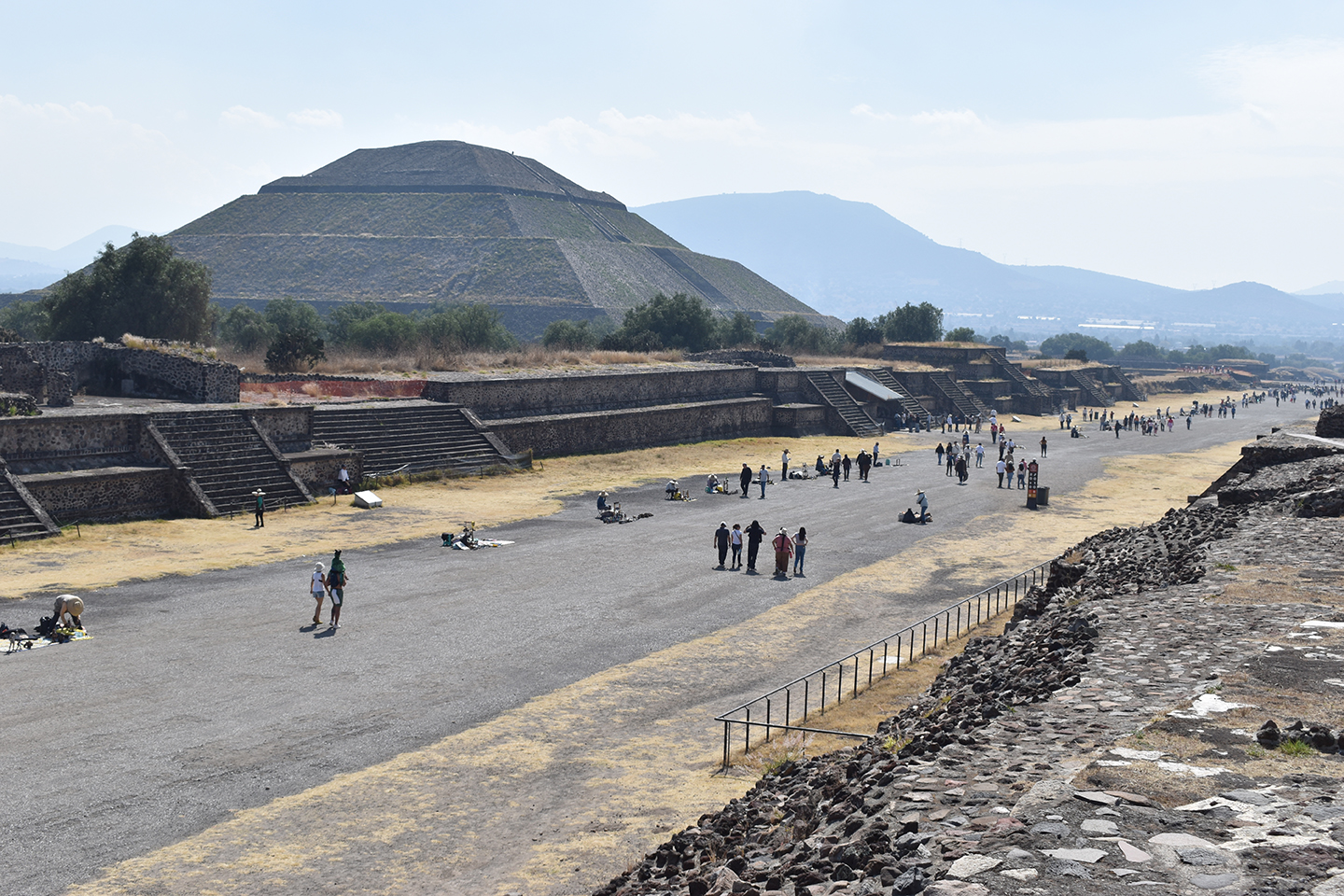
The archaeological ruins of Teotihuacán lie just thirty miles (50km) northeast of Mexico City. Although people lived in the area before then, the civilization developed in the first century CE, along the San Juan River, and grew to become the largest city in the Americas, home to over 100,000 people and covering 7.7 square miles (20 sq kilometers). Paved roads led out in a grid from the center, with stone houses adorned with painted murals. Many of its temples and main buildings were burned in the sixth century, and it soon declined.
The Mexicas (Aztec) rediscovered the abandoned city more than one thousand years after it was built. They named it Teotihuacán, meaning “Birthplace of the Gods” or the “Place where time began.” The Spanish never found the site. Some of its main structures were not excavated until well into the twentieth century.
A local guide led us around the UNESCO World Heritage Site, telling stories of the history of the complex and what is known of its indigenous inhabitants. Entering from the southern entrance, my first sight was of the Temple of the Feathered Serpent, also called Temple of Quetzalcoatl, rising in the Citadel, an ancient ceremonial plaza. I climbed its stone steps, to find, hidden on the other side, the stone heads of the mythical feathered serpent diety. More than a hundred victims were found buried beneath this temple, discovered in the 1980s, believed sacrificed for the creation of the structure.

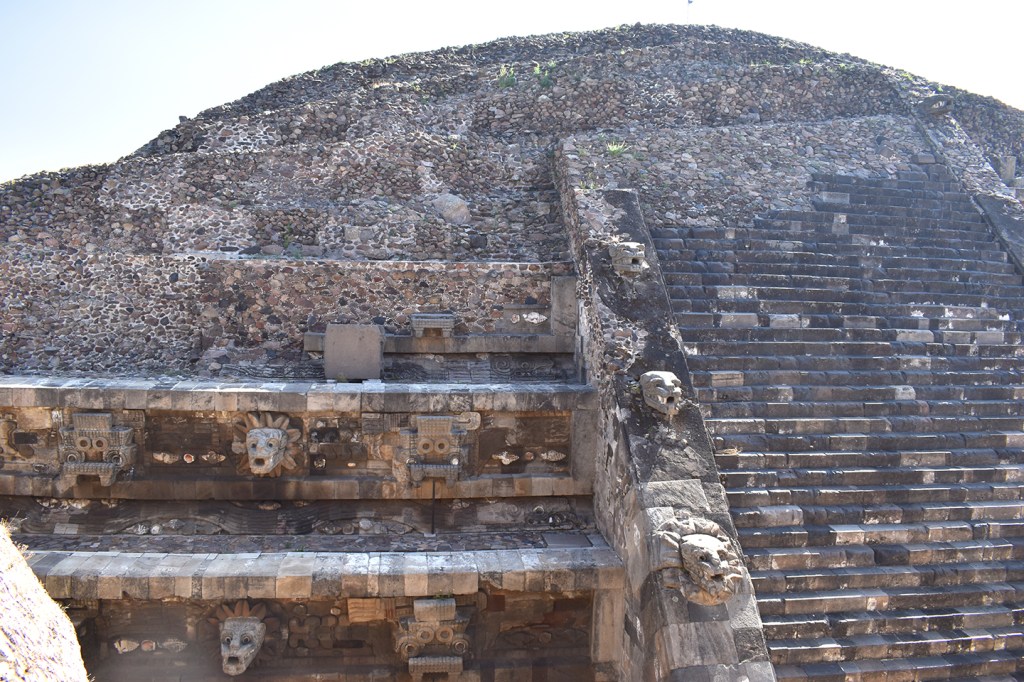


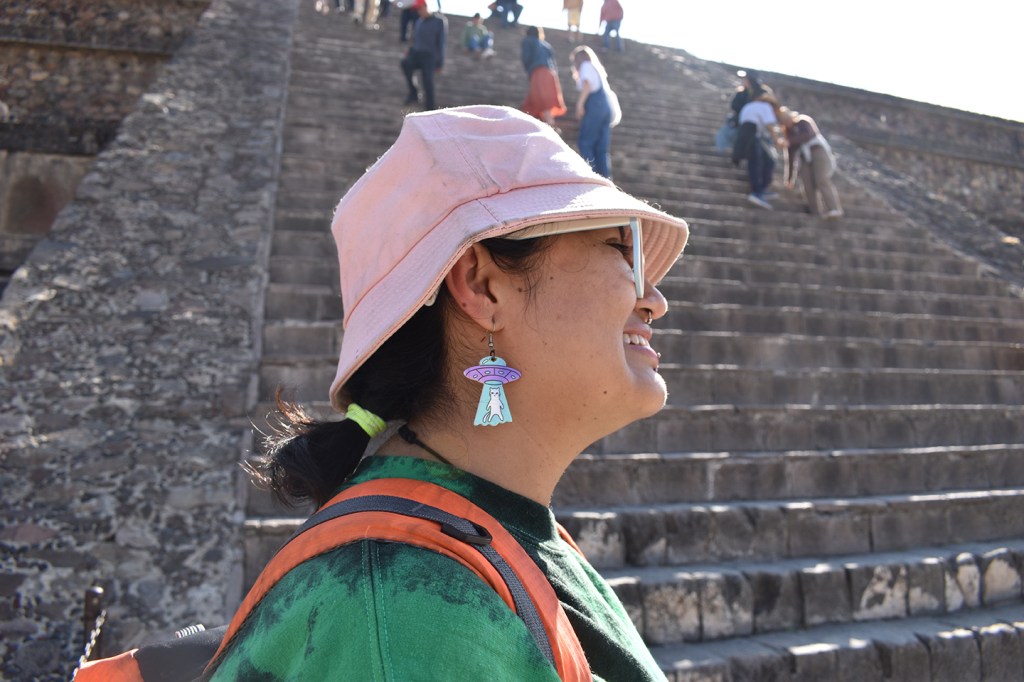
The Temple was at one end of long avenue of unearthed structures comprising a well planned city. It’s called The Avenue of the Dead because it was first thought that the buildings housed royal tombs. Further excavation discovered caves and tunnels underneath, and no skeletal remains. The Pyramid of the Sun and Pyramid of the Moon tower over the Avenue. The Pyramid of the Sun was the largest building in area of its time, built around 200 CE, named by the Mexicas who believed it was built to honor the sun god; and the Pyramid of the Moon, to honor the moon god. No written language remains from the Teotehuacáns, so there is no record of their original intent. The mountain, Cerro Gordo, rises in the distance.

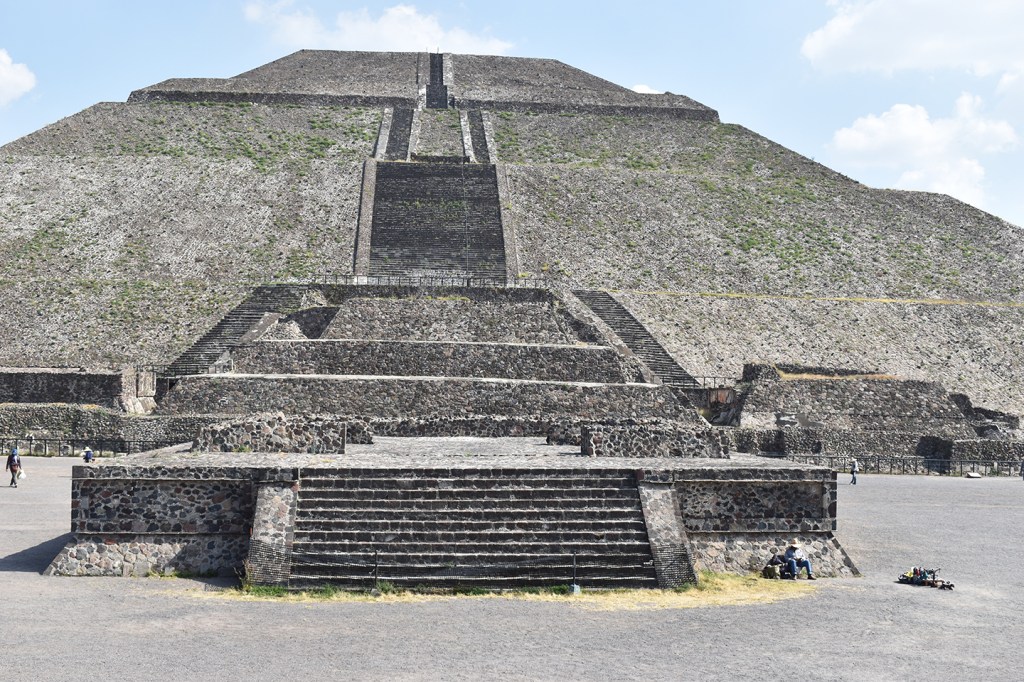

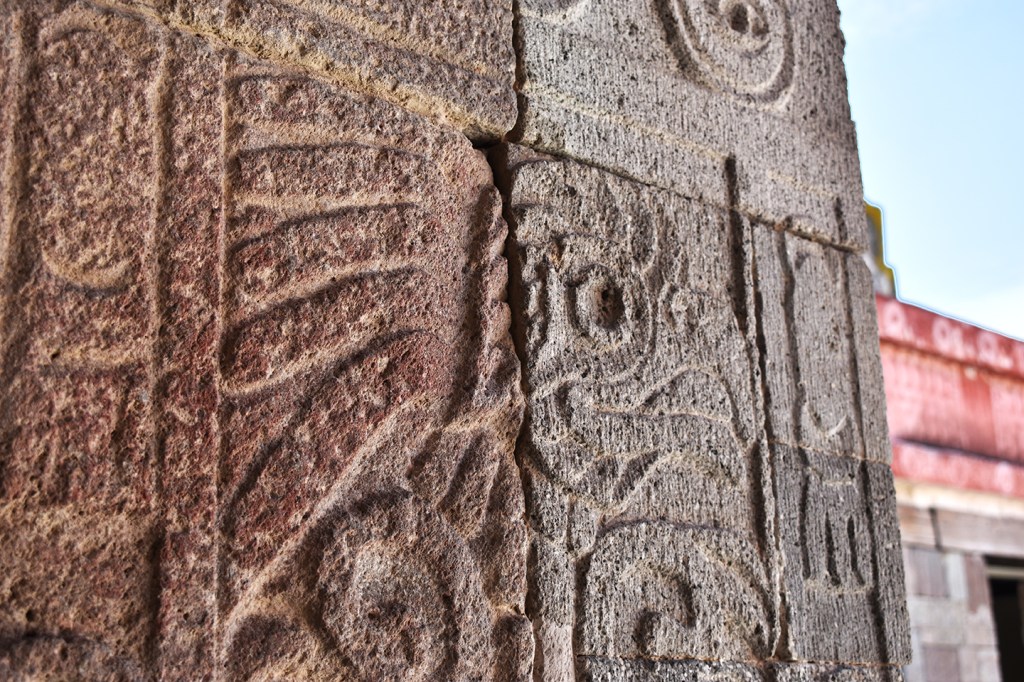
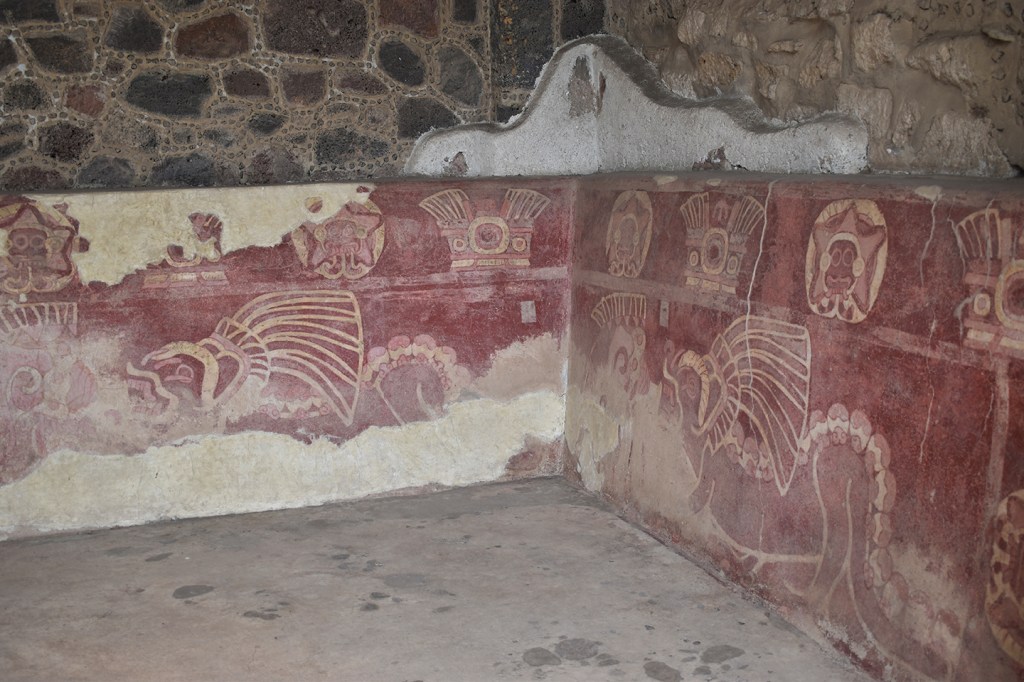
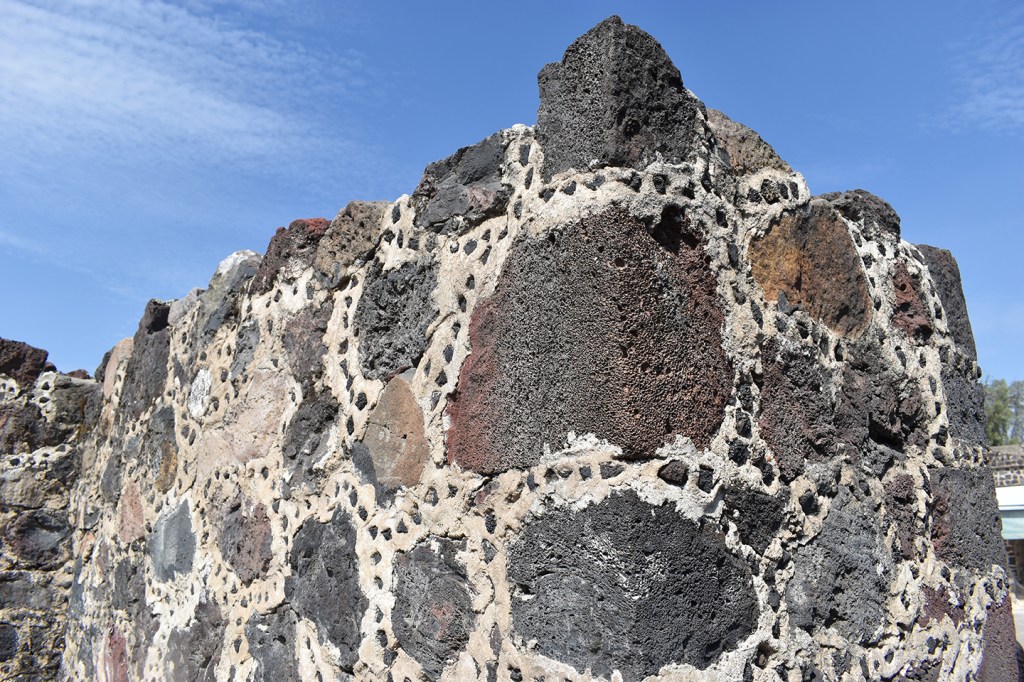
Details in adjoining and nearby structures show murals of gods, jaguars, feathered serpents, and other images. Dotted stones between larger rocks indicate where walls were reconstructed.




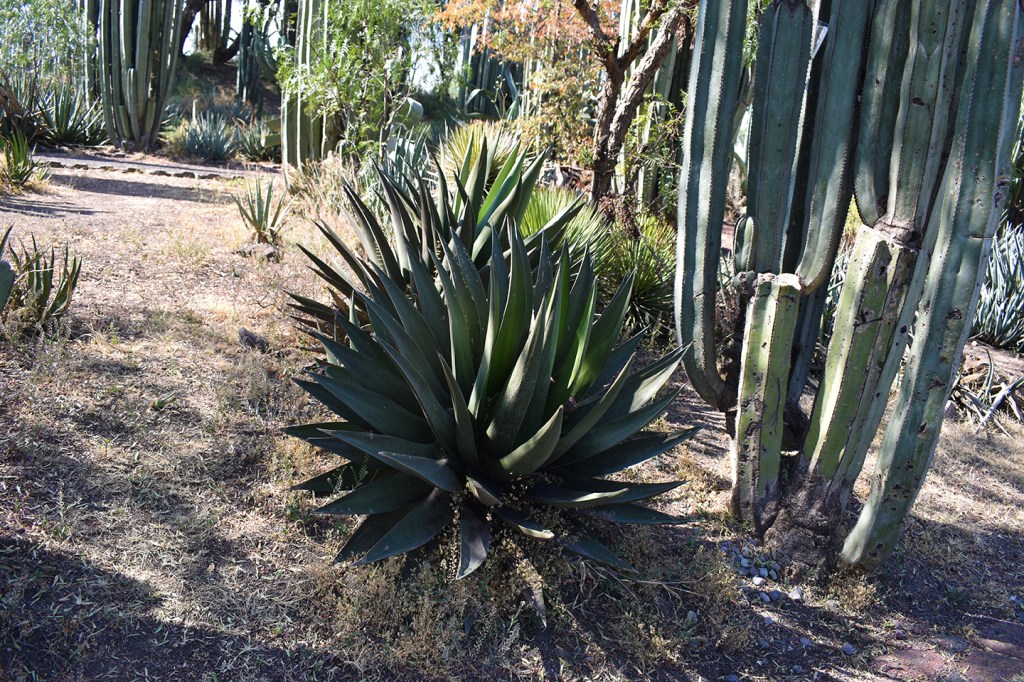
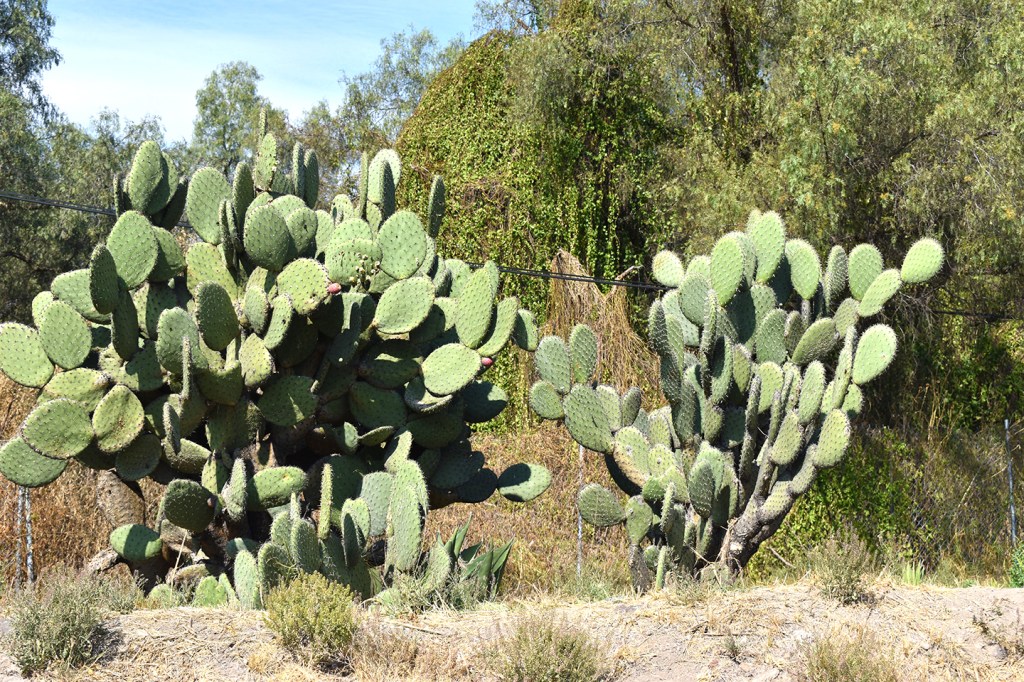
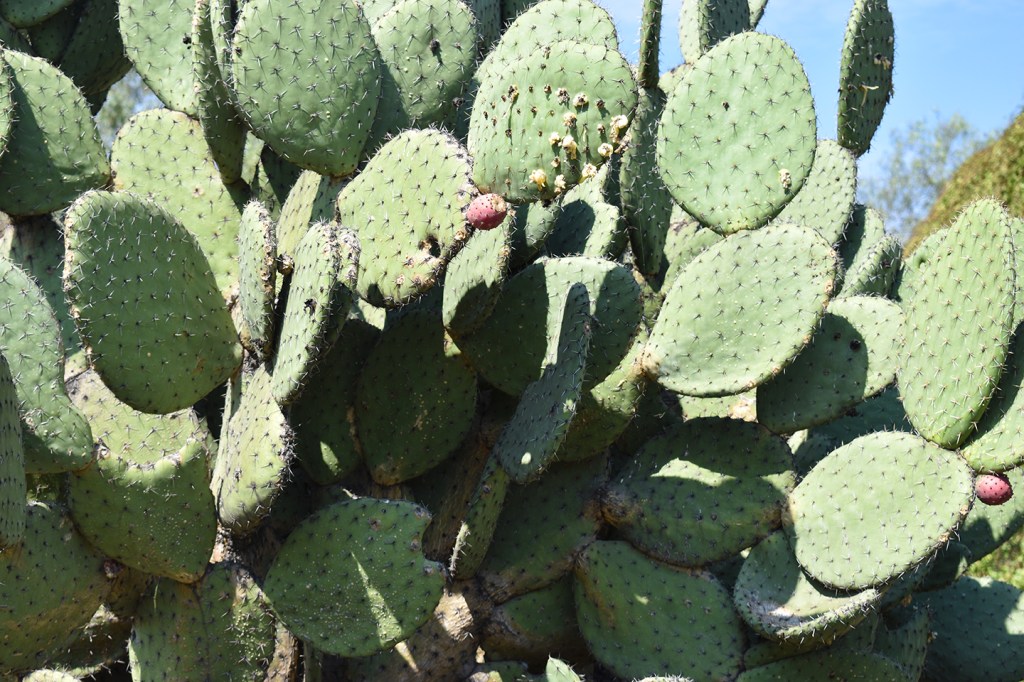
Desert landscaping at the entrance

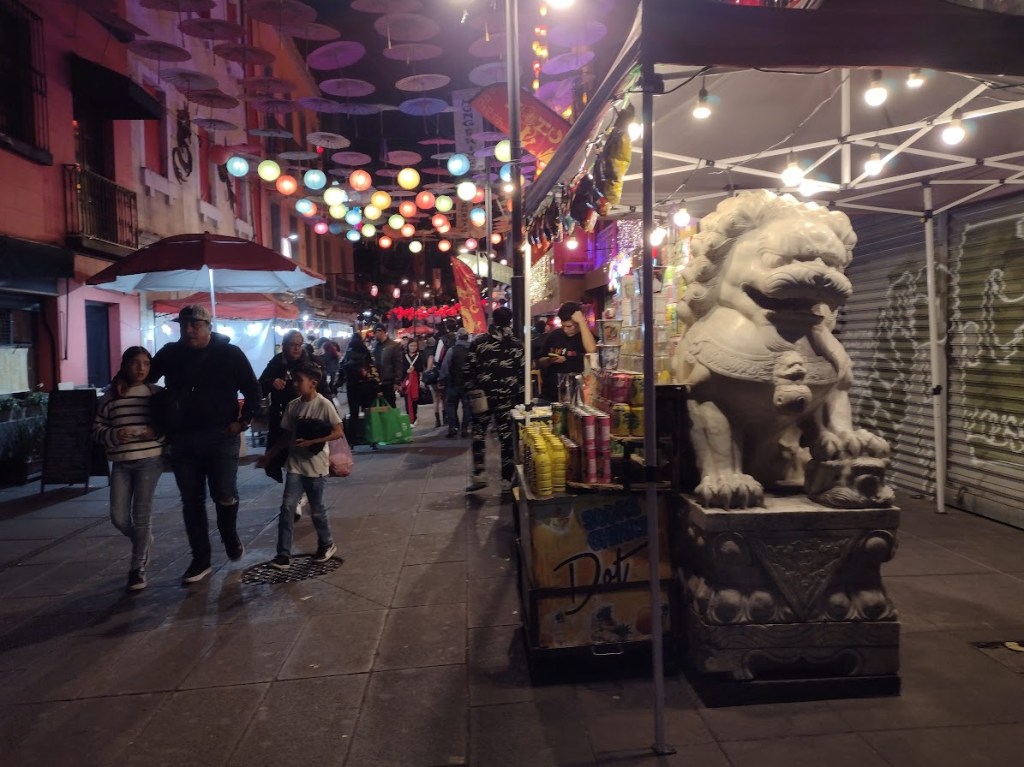
Night in Mexico City


Mexico: Mexico City, Teotehuacán, Tlahuac, Puebla, Cholula, Oaxaca, Monte Alban, Crossing Oaxaca, Sumidero Canyon, San Cristobal, Chamula, Agua Azul, Palenque, Campeche, Mérida, Uxmal, Chichen Itzá, Playa del Carmen
Please do not download or reproduce images from this site. ©
Your comments are welcome!
Popular posts/stats/categories
Email me at: Ruth@RuthRosenfeld.com
Follow me on: Facebook Instagram BlueSky Blog
 Ruth Rosenfeld
Such a monumental complex! The murals and carvings are also impressive. Have they recently been restored because they look so new 🙂
LikeLiked by 1 person
Thanks so much for reading, Len. They were restored in the 19th and 20th century, and I believe they have been well maintained since then.
LikeLiked by 1 person
Ruth, I always enjoy your photos and travels. I just returned from a Mayan journey to El Salvador, Honduras, Guatemala and Belize. Where did you live in Guatemala?
Bonnie
LikeLiked by 2 people
Hi Bonnie, I lived in Guatemala City, Zone 10 (Zona Viva) and spent a lot of time in Antigua. Were you traveling with Intrepid?
LikeLike
Hi Ruth. This post and the previous one are an interesting parallel with the Route of the Maya Bonnie refers to. A good friend of mine just completed that tour a week ago (with OAT) so I’ve been hearing about and seeing their photos as they’ve been traveling. Tikal, outside of Peten, seems to be on the same scale as Teotehuacan. They said there was far more to see in Tikal than they had time for, but they described similar facilities and shrines. I wonder where the concept of the feathered serpent came from?
LikeLiked by 1 person
Tikal is stunning, I’ve been there several times. Back then, you could climb one of the towers for sunrise, a moment I’ll never forget – up above the rainforest canopy with the howler monkeys calling. There are many paths of less excavated buildings, not as large. It was interesting to see some with trees still growing through them.
LikeLiked by 1 person
I’m glad you saw Temple of the Feathered Serpent. When we visited not many people went to it, the groups seemed to stay at the other end. It is an impressive complex isn’t it Ruth?! Maggie
LikeLiked by 1 person
The whole area is so impressive. You get the feeling of a huge city, spread out, and can almost picture people in their indigenous dress walking the streets.
LikeLiked by 1 person
This is amazing! I can’t believe how well preserved it all is, especially the colors. Imagine designing and building this city without modern day technology, and creating something that would endure for so long? I can scarcely imagine the amount of time and effort that went into it.
LikeLiked by 1 person
Absolute world treasures. What can I say that hasn’t already been lauded about these monuments?
LikeLiked by 1 person
It really makes you imagine what the city was like back in the day, so long ago. Thanks for reading, Jay.
LikeLike
A great reminder of our own visit to Teotehuacán last year! We toured in the opposite order to you, so it was interesting to follow your route through the site 🙂
LikeLiked by 1 person
It’s an unforgettable site, no matter which end you start from. Thanks, Sarah!
LikeLiked by 1 person
What memorable photos. The Aztec were very impressive!
LikeLiked by 1 person
Thanks, Carol! Actually the pyramids were built by the people who came before the Aztecs, and were later discovered by them. Amazing, isn’t it?
LikeLike
Desert scenery and ancient ruins. Mexico has it all!
LikeLiked by 2 people
And interesting cities too.
LikeLiked by 1 person
Such a fascinating site!!! Great captures!!
LikeLiked by 1 person
Thanks so much!
LikeLiked by 1 person
I’ve heard of Teotihuacán before, but wow! What fascinating ruins. This is a part of Mexico I haven’t explored yet, and I can imagine the long and rich history of the region going back thousands of years. Thanks for sharing, Ruth!
LikeLiked by 1 person
You’re welcome, Rebecca! I have always wanted to explore these and other ruins across Mexico. They are quite remarkable and bring to mind truly sophisticated ancient civilizations.
LikeLiked by 1 person
Thank you so much for sharing this fascinated article, well documented and accompanied by fabulous photos! 🙏🌹🙏
LikeLiked by 1 person
Thanks for reading, Luisa! It is a fascinating plan.
LikeLiked by 2 people
place
LikeLike
Truly my pleasure, Ruth💗
LikeLiked by 1 person
I wonder why Teotihuacan was abandoned. It’s incredible how many of the structures are still in such great shape.
LikeLiked by 1 person
There are theories about why people left this and other sites, most have to do with lack of rain or other climate changes. The site is well maintained and some areas have been carefully restored.
LikeLiked by 1 person
It’s amazing how well maintained it is; looks like a fascinating place.
LikeLiked by 1 person
It is well taken care of and many signs talk about the restoration efforts.
LikeLike
It looks like a fascinating place, you got some great photos too!
LikeLiked by 1 person
Thank you, Jason! Of all the ruins I visited on this trip, this one impressed me most. It had the feel of the city it once was.
LikeLiked by 1 person
Wow, what a truly incredible place to visit to experience something truly unique and unforgettable! The archaeological ruins of Teotihuacán are one of the most fascinating archaeological sites where you can learn about the fascinating history of Teotihuacan and the people who lived there, as well as the significance of the many structures and artifacts found at the site. Thanks for sharing, and have a good day 🙂 Aiva xx
LikeLiked by 1 person
My pleasure, Aiva This was a place with a feel for the city it had once been, so well excavated and preserved.
LikeLiked by 1 person
Some fantastic history of this region. Also appreciate the photos showing the length and details of the structures and unique art of the people of the region.
LikeLiked by 1 person
Thanks for reading and your comment! It is well excavated and maintained, and truly communicates the feel of a great population center and civilization.
LikeLiked by 1 person
You’re welcome!
LikeLiked by 1 person