
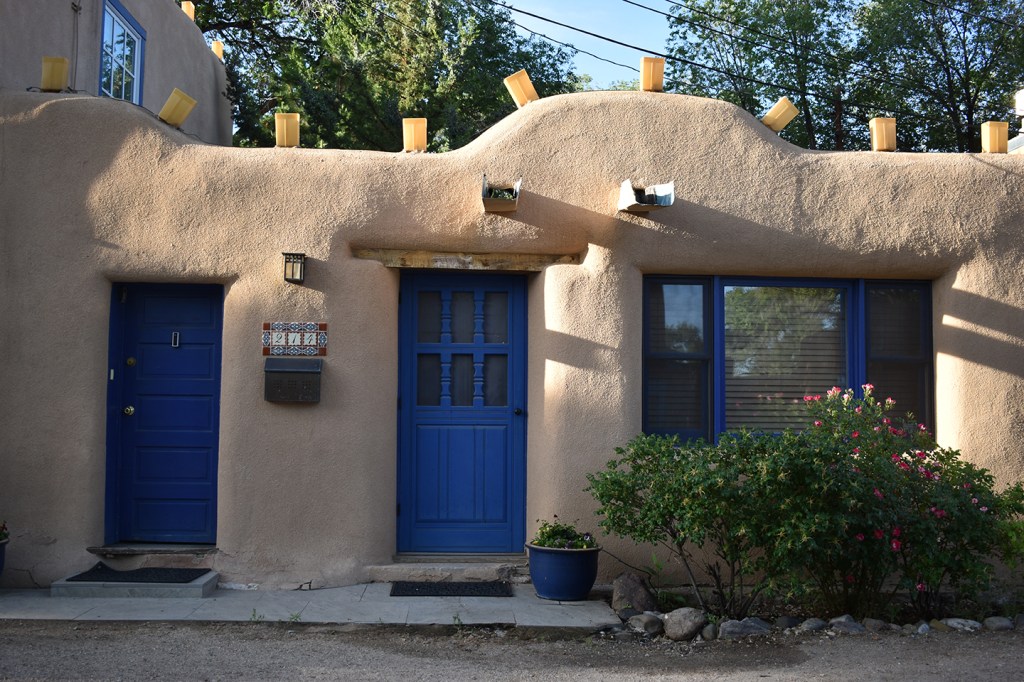
I headed south to New Mexico, a road trip before the summer events in my little town got in full swing. The desert-colored adobe buildings and its vibrant artist community, similar to Santa Fe yet much smaller and less expensive, steep the area in a warm welcoming atmosphere.
For centuries an area of trade between native tribes, Spanish conquistadors first came to Taos and environs in 1540, looking for mythical cities of gold. It was established as a town by the Spanish in 1615, and grew in the late 1700s as more Europeans arrived and settled. Mexico ceded New Mexico to the United States in 1848 after the Mexican-American War, and it became a state in 1912.
I had been in Taos a few times for an afternoon visit with a friend who lived in southern Colorado. And spent a few days there with my artist friend Barbara, who died a few years ago, when we visited artist friends of hers and made a few other interesting stops along the way and back. I’ve added some photos from those visits to this and the following post.
Along the way
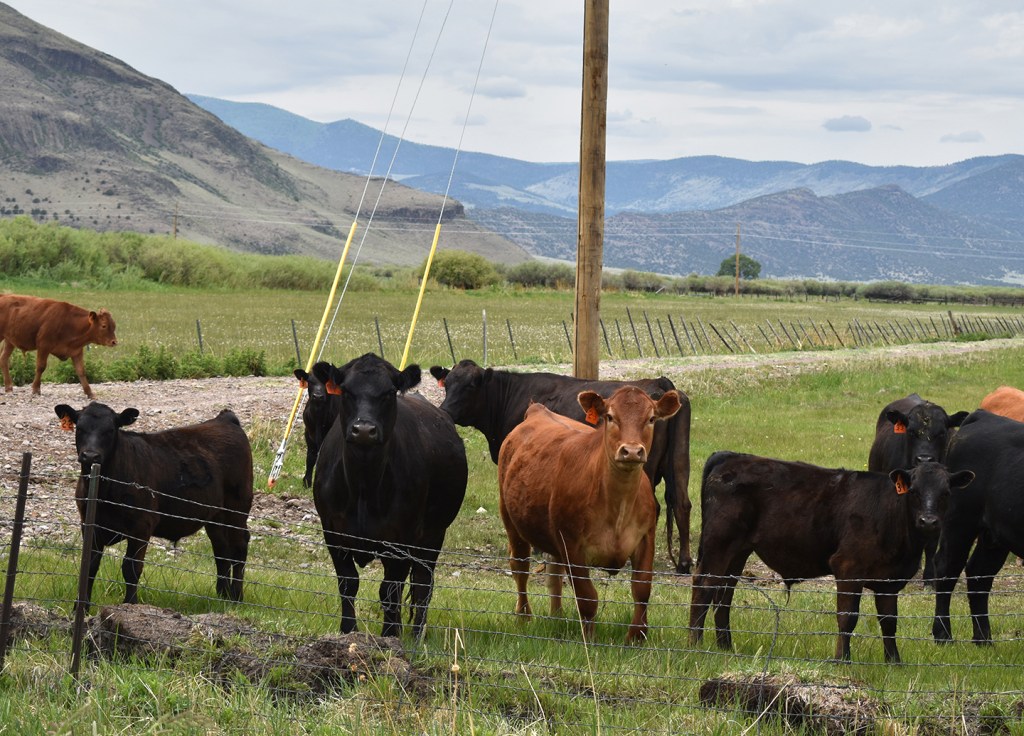
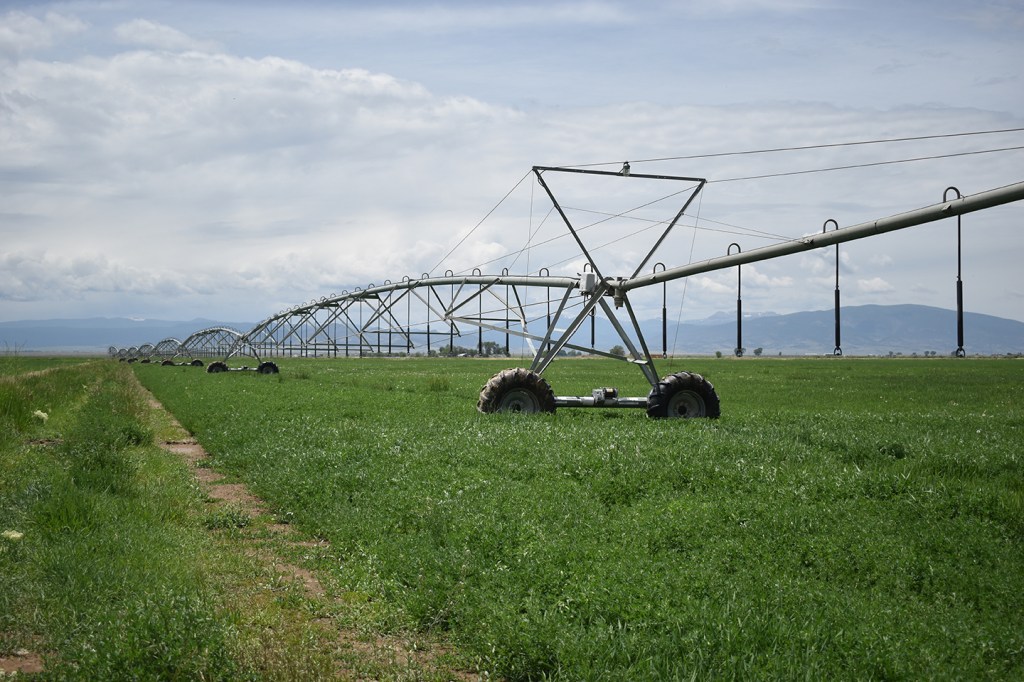

This time I was traveling solo and could wander where I liked, looking for places to explore and interesting images that catch my eye. Like the days I spent in Santa Fe recently, Taos was very walkable. Mornings were for walking, walking, walking, admiring the adobe architecture, poking into a few galleries and shops, sitting around in the plaza people-watching, and eating Mexican, Tex-Mex, or New Mexican (not sure how they all differ) food in restaurants.
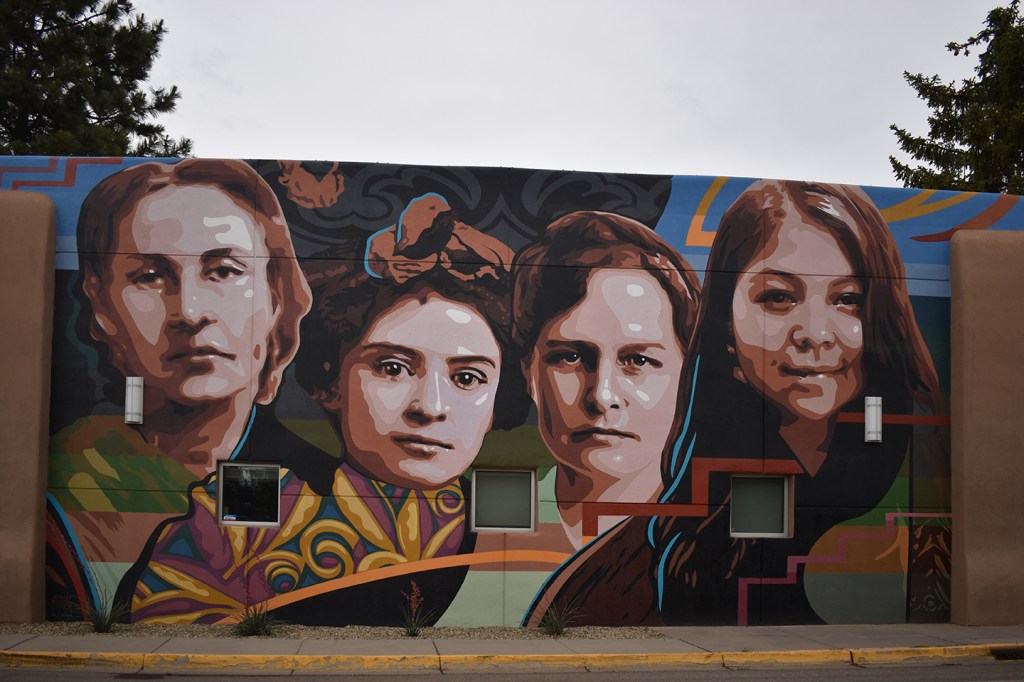
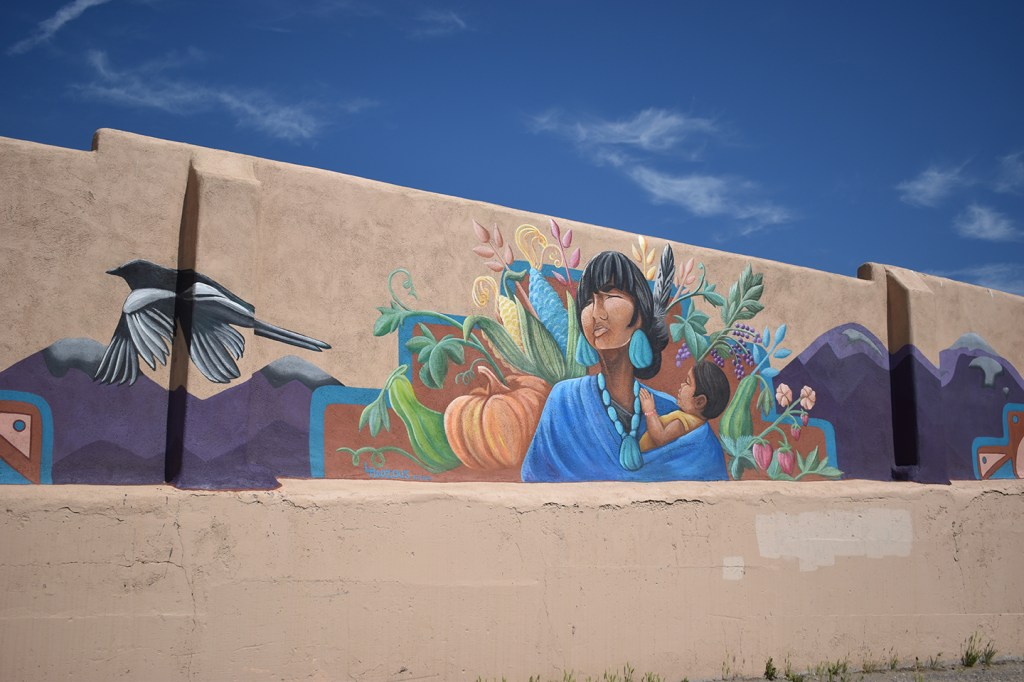
My first stop, after driving by on my way into town and gasping at the sight, was to find the Historical Women of Taos mural by Jenny Ustick on the University of New Mexico Taos campus. The four women featured were chosen by the community of Taos and Taos Pueblo in 2022 to celebrate women and the diversity of the community. To quote from an article about the piece, they are:
“DeAnna Autumn Leaf Suazo, a Taos Pueblo and Diné contemporary 2D artist; Maria Rosa Villalpando, ancestral matriarch of several prominent Taos families and one of the historic women of the Santa Fe Trail; Cleofas Martinez Jaramillo, historic preservationist of northern New Mexico’s Spanish culture; and Helene Wurlitzer, philanthropist who started a pivotal artist residency in Taos.”
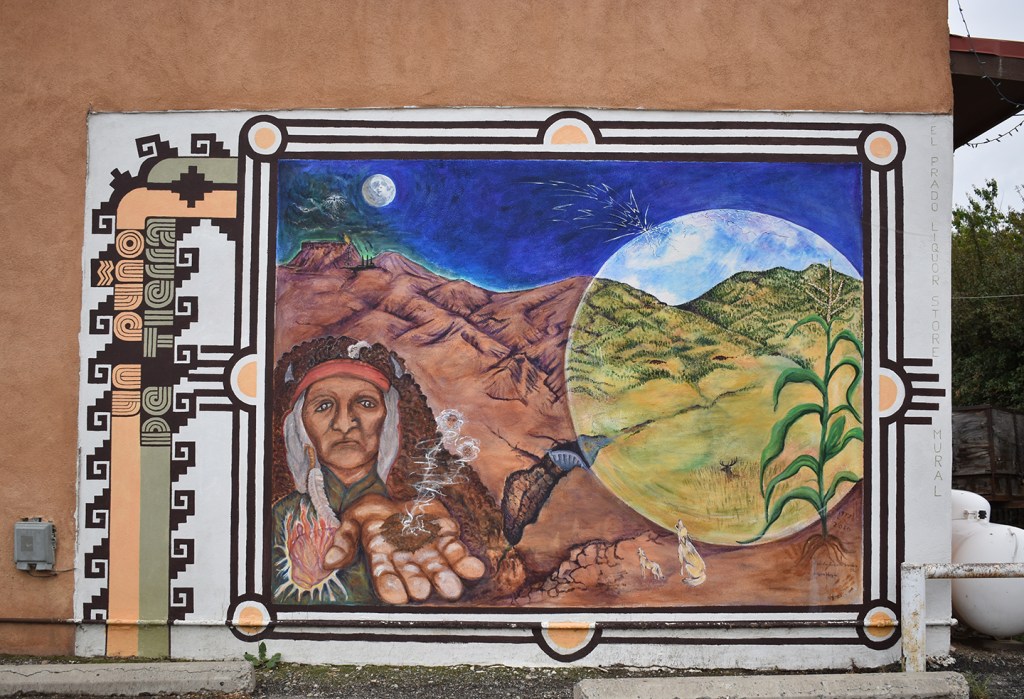






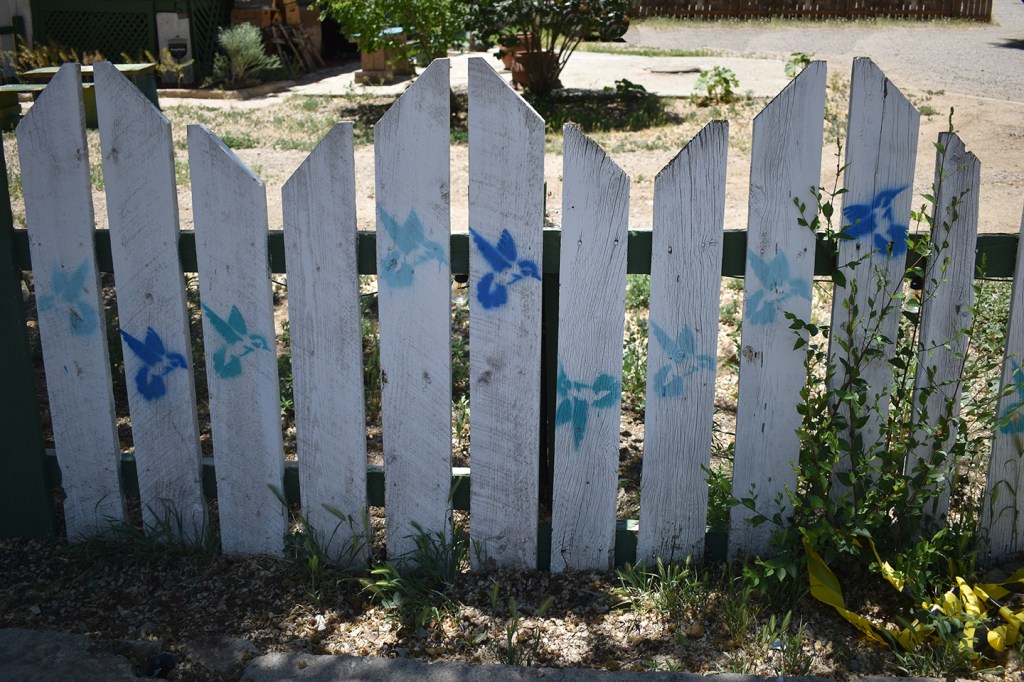
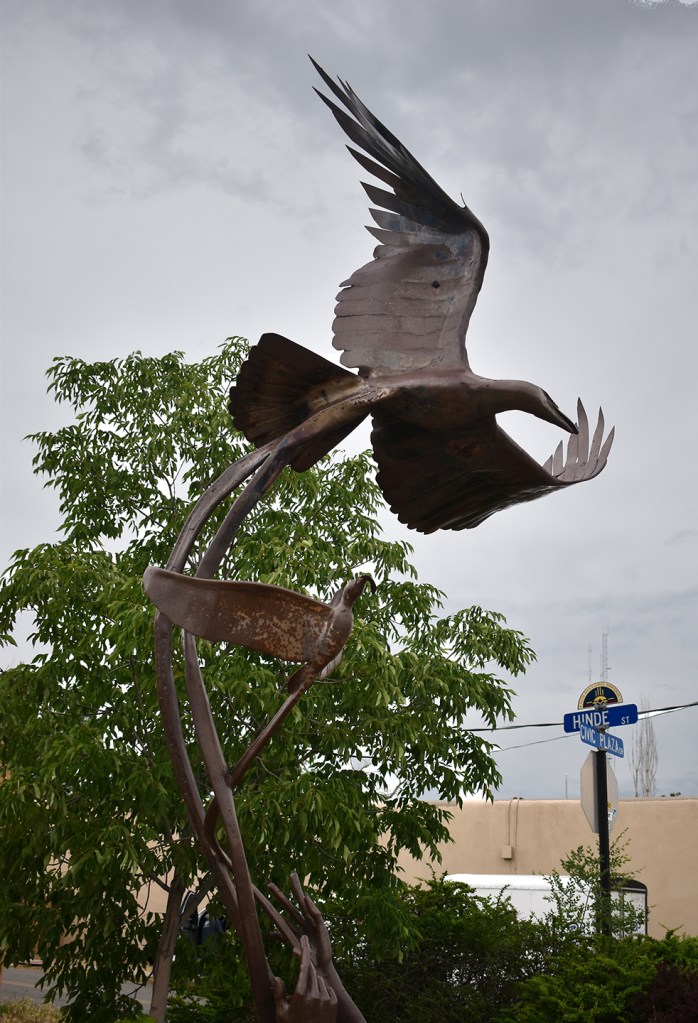


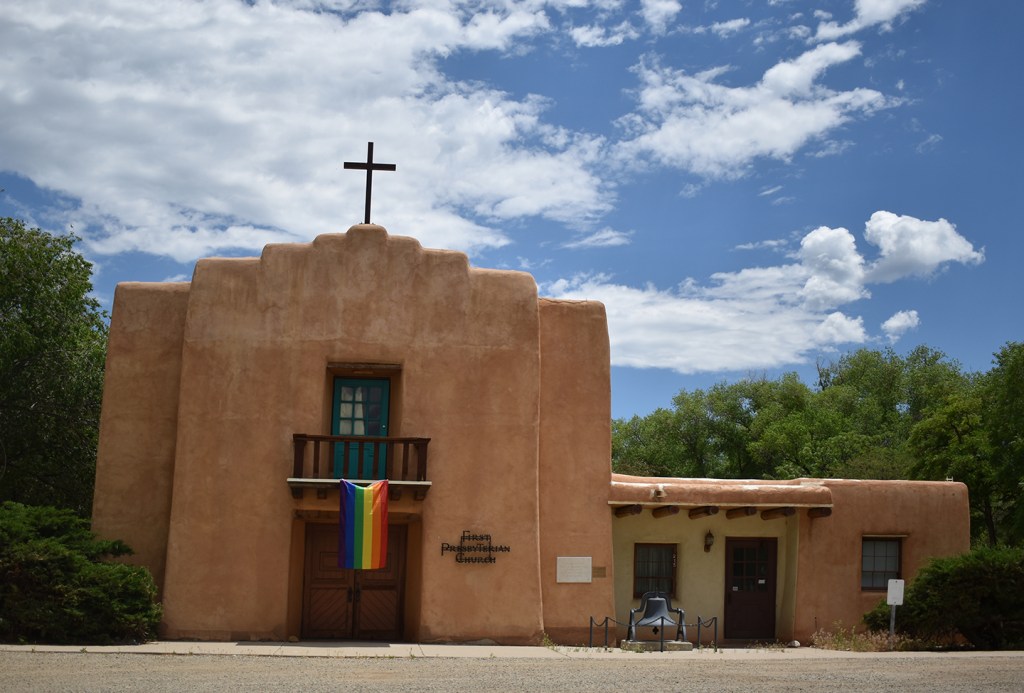

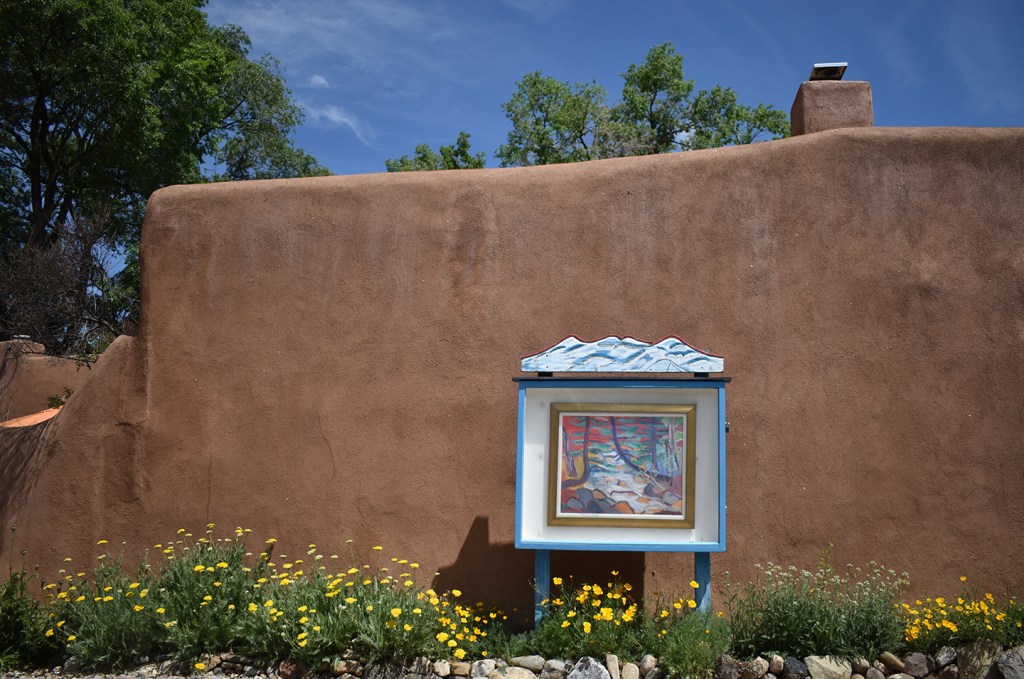


Afternoons, when the temperature soared and the sun was relentless, were good times to visit museums—more walking, but in the museums. I don’t usually take photos inside of museums, so perhaps these descriptions will entice you to visit someday and explore on your own.
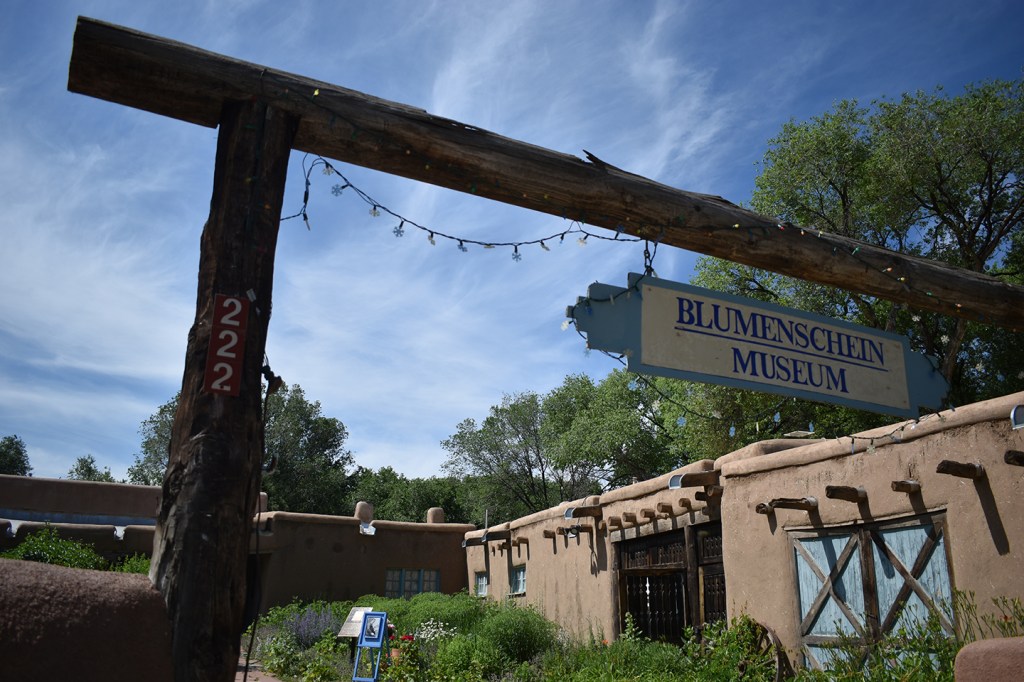
Artists Ernest Blumenschein, one of Taos’ early colorful characters, and Bert G. Phillips, recently returned from Paris, were on a sketching trip from Denver to Mexico in 1898 when a wheel broke on their surrey in northern New Mexico. After a coin toss to see who would go, Ernest journeyed to Taos on horseback for repairs and fell in love with the spectacular landscape. They settled there and invited other artists, founding the Taos Society of Artists. His home, with rooms added on and joined to other small houses, became a museum with a homey mix of a place to live and a gallery of historic Taos paintings and art of his descendants on its walls.

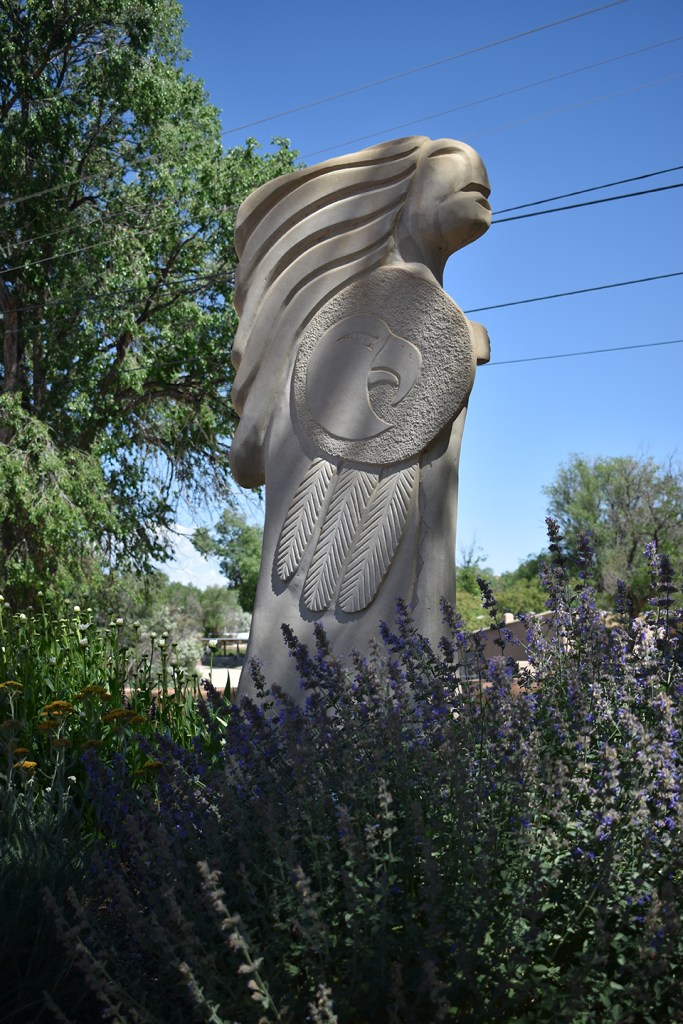
Next door to the Blumenschein House is this modern style gallery displaying contemporary and older work by Taos artists, with exhibits of Hispanic and native American art with stories to tell. It was probably my favorite of the museums I visited. “Raven Chacon: Three Songs!” was a huge captivating multimedia project showing three indigenous women drumming and singing Chacon’s songs with translations subtitled: sad stories of historic massacres, displacement, or relocation of tribal people, sung in sites where those events happened. It was difficult to tear myself away from that room.
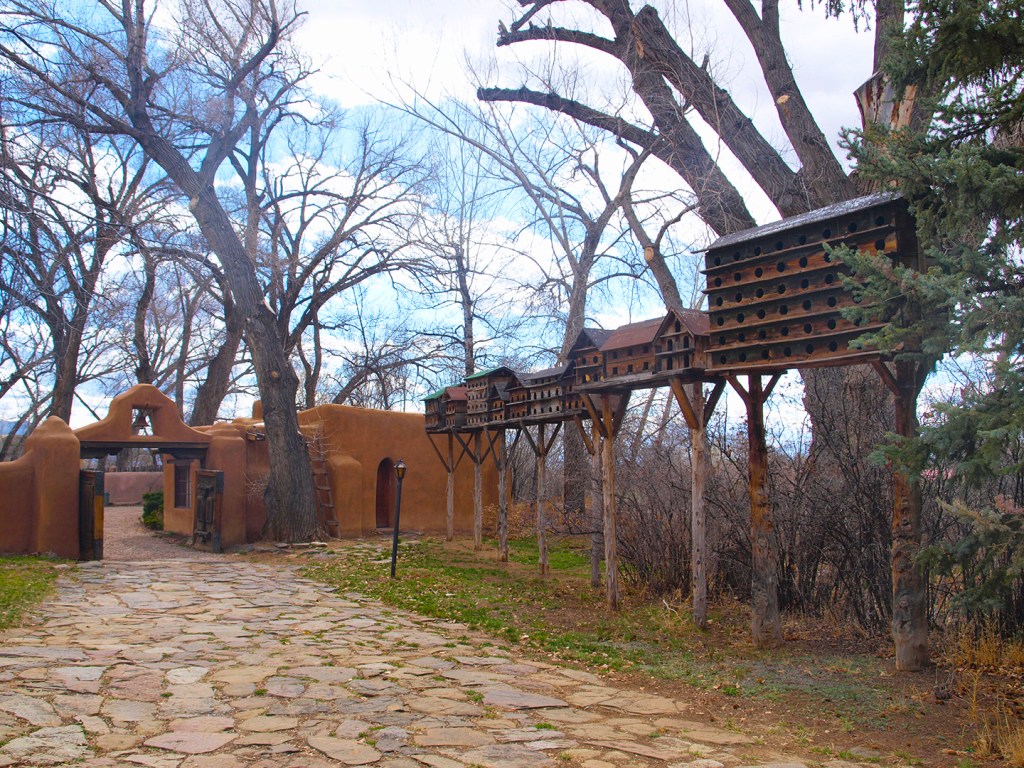
Now a bed and breakfast, the home of artist Mabel Dodge Luhan, known as an artistic salon in the Southwest, also showcases Taos artists. Georgia O’Keeffe, D.H. Lawrence, Ansel Adams, and Martha Graham stayed there, among others. As the website notes: “One can only imagine the tantalizing conversations that must have taken place within these walls.” I visited the Luhan house when I came to Taos with my friend Barbara, although we weren’t staying there. When we left and came out to the parking area, we met Virginia, another artist friend from Colorado, unloading her car and coming to stay for a few days!

In 1926, Russian-American artist Nicolai Fechin (pronounced “fay-shin”) and his family, came to Taos at the invitation of Mabel Dodge Luhan and decided to stay. He expanded and modernized an adobe house, now painted white, with tall beautiful windows of natural light and carved woodwork by his son, that now serves as a museum featuring his collection of Taos area artists and contemporary works.
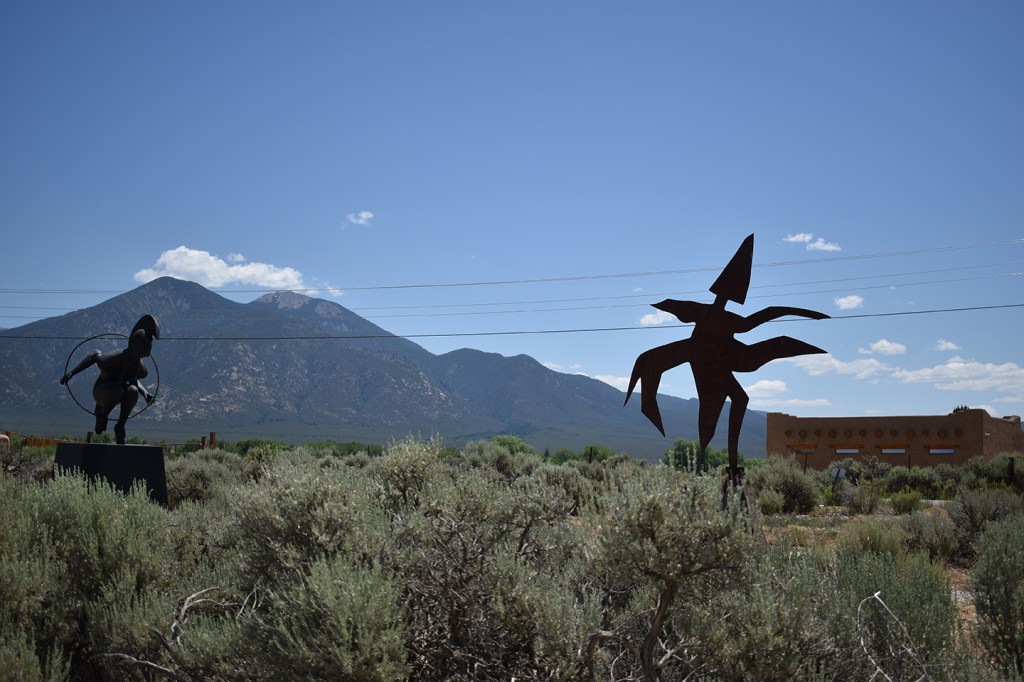
On the north end of town, down a rural road, hides this multi-cultural museum of artworks and antiques from the collections of Millicent Rogers and her mother, Mary B. Rogers, who donated many of the first pieces of Taos Pueblo art. Millicent, a designer of fashion and jewelry, was an interesting figure in her own right. I was drawn there to see the extensive display with detailed historical notation of the ceramics of Maria Martinez of San Ildefonso Pueblo, one of the most famous potters of the twentieth century, internationally known. Using traditional techniques, she crafted black-on-black pottery with stunning designs created by Maria and her family and descendants. I was a potter in earlier days and had always wanted to visit her pueblo, but read that the Rogers Museum had a definitive exhibit, so it was a must-stop for me. I read every word in that room.
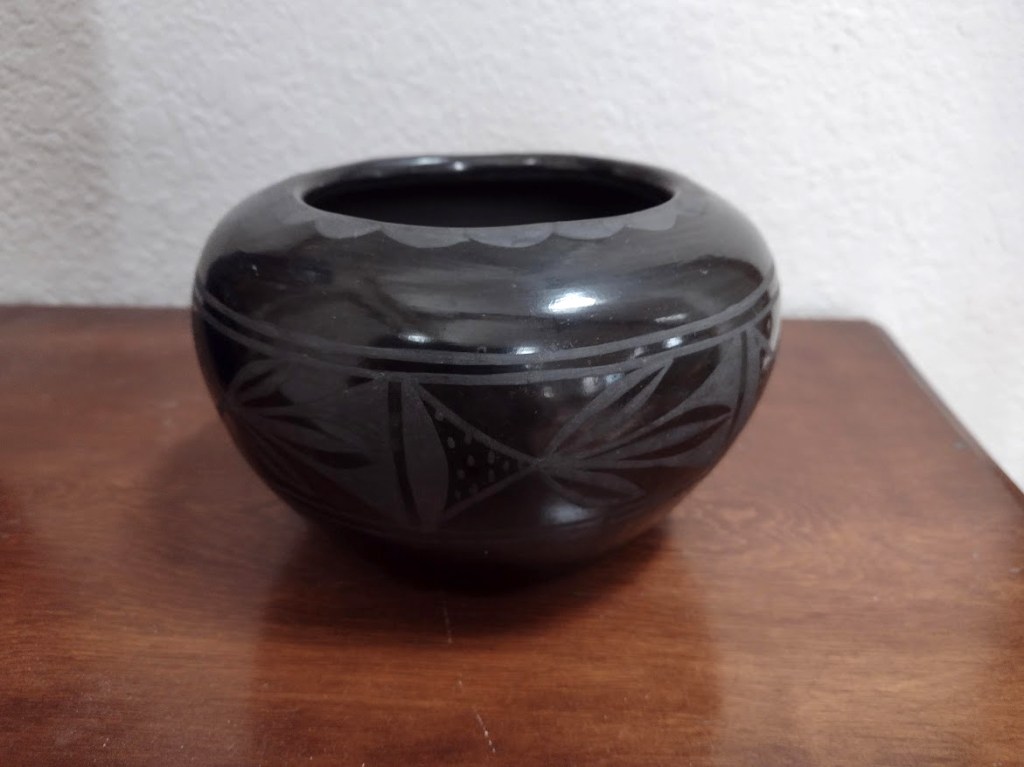
Although I didn’t take photos of Maria’s pots, I bought this treasured bowl when I first came out west in the 70s from an artist sitting on a blanket at the Santa Fe Plaza. She signed it Marie Pacheco, Santa Clara Pueblo. She used a similar clay body, and forming, painting, and firing techniques.
More to come: North of Taos
Other New Mexico posts: New Mexico towns, Walking Santa Fe, Santa Fe Landmarks, Ghost Ranch, Bandelier National Monument
Please do not download or reproduce images from this site. ©
Your comments are welcome!
Popular posts/stats/categories
Email me at: Ruth@RuthRosenfeld.com
Follow me on: Facebook Instagram BlueSky Blog
 Ruth Rosenfeld
We’ve always liked Taos and its quikiness, but we have no ties to it. I liked reading about your personal experiences and connections. Maggie
LikeLiked by 1 person
Thanks, Maggie. New Mexico and the southwest are not so far from where I live, and are always so interesting, so it’s always calling me to do a road trip.
LikeLike
Thanks for the tour and the info. The photos are terrific.
LikeLiked by 1 person
Thank you, Neil!
LikeLiked by 1 person
Lovely! Never made it to Taos while in New Mexico (only been to Albuquerque), but I love seeing the blend of Southwestern history and modern art in Taos through your post. Thanks for sharing, Ruth!
LikeLiked by 1 person
It’s a picturesque area, desert-y and historic but contemporary in terms of the art world. Thanks for reading, Rebecca!
LikeLiked by 1 person
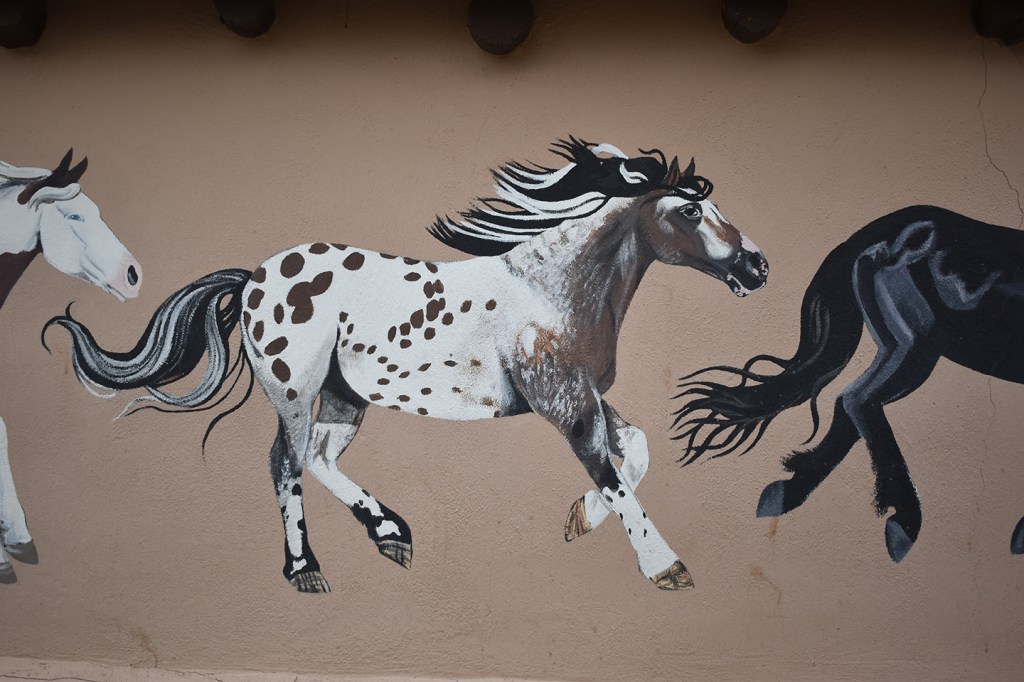
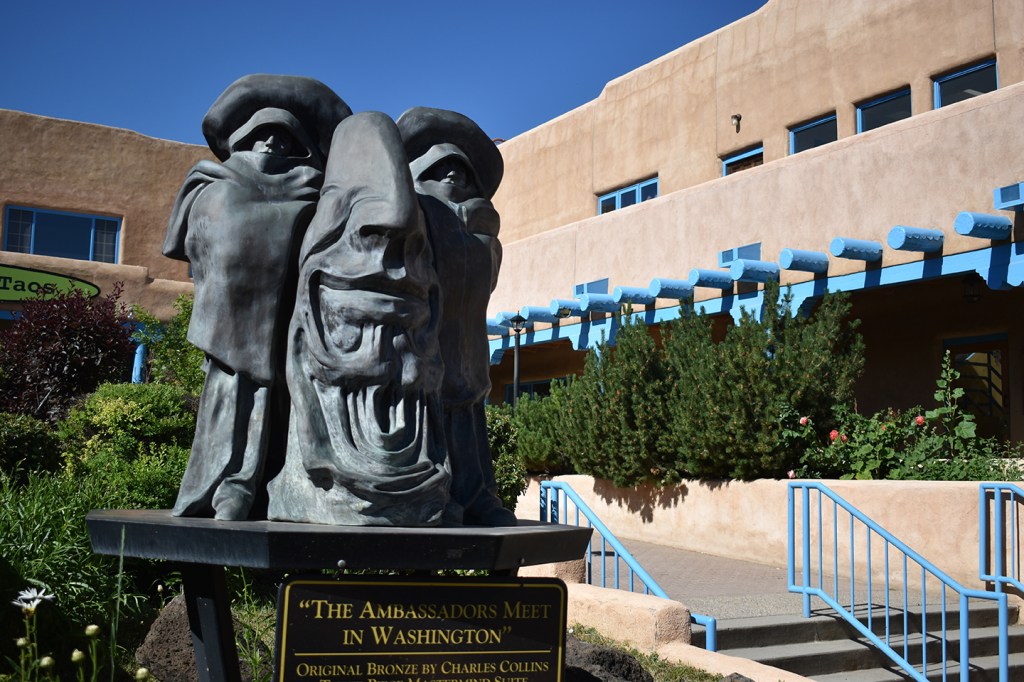
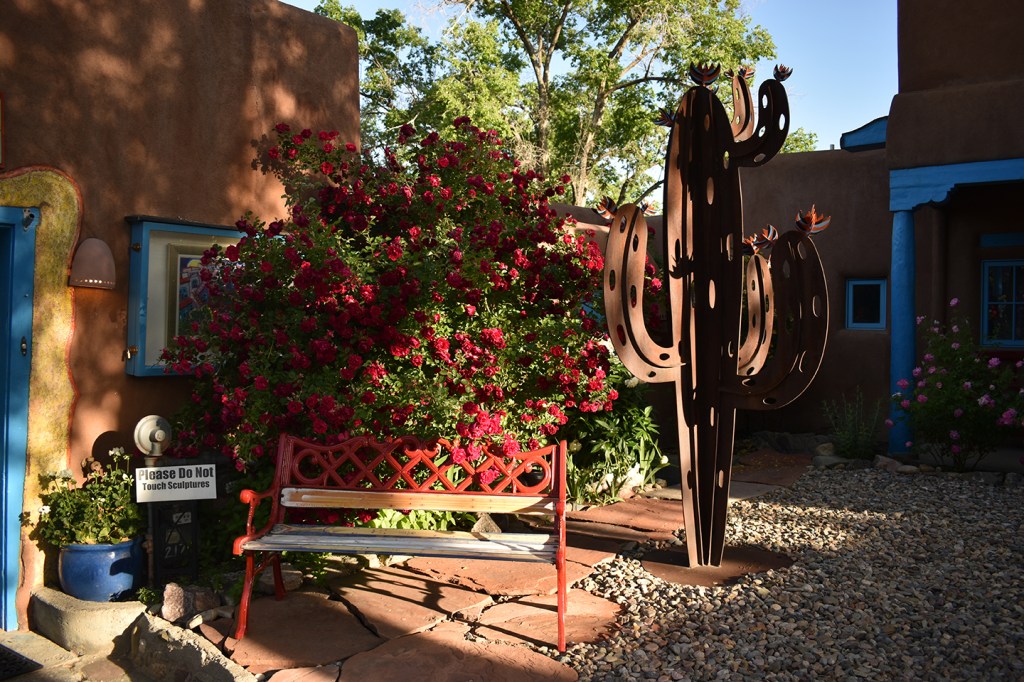
The street art of Taos are fascinating.
LikeLike
A fantastic array of art including those distinctive buildings. I particularly like the Historical Women of Taos, all new names to me and plenty online to bring their stories and contributions to life. I think there is an intoxicating mix here between the modern and traditional which always helps to make a place special. We could spend days wandering around the various museums.
LikeLiked by 1 person
The names of those women were new to me as well, although they are quite well known locally. I like your word “intoxicating” – it’s appropriate. Thanks, Leighton.
LikeLiked by 1 person
I love Taos and I love your photos of its art. Thanks for sharing.
LikeLiked by 1 person
Thank you, Jay. It sounds like you’ve been there. Glad to spark some memories.
LikeLiked by 1 person
Yes, I enjoyed that area of New Mexico. The rich blue sky enhanced my visit, too.
LikeLiked by 1 person
Toas looks so neat and I like that it’s walkable. I love all the street art and adobe buildings, especially the San Francisco de Asis Church. Fabulous pictures.
LikeLiked by 1 person
Thanks so much. The Asis church is iconic and appears in many famous paintings and photos.
LikeLiked by 1 person
I loved revisiting Taos through your images and words, I have many good memories of our short stay there 😀 I have to say I liked it much more than Santa Fe – I enjoyed the latter but felt it was more self-consciously pretty and working a bit too hard to please compared to effortless laid-back Taos. ANd of course we had to visit the San Francisco de Asis Church and pay tribute to Ansel Adams by trying (and of course failing) to capture it as he did!
LikeLiked by 1 person
Thanks, Sarah. It is smaller and more laid back than Santa Fe, and less expensive too. It definitely has a different vibe. The Asis church appears in many of the older Taos paintings too, quite iconic.
LikeLiked by 1 person
Wow, Toas looks amazing. I particularly love the Historical Women of Taos mural
LikeLike
I’ve been to Taos a couple of times, but never for more than a day, I don’t think. I’d love to revisit and spend more time there. Such a beautiful place, and adobe architecture is so interesting. You really feel like you’re someplace different when you see adobe.
LikeLiked by 1 person
This was the first time I spent a few days there and it was worth it. It is someplace different with a southwest desert feel.
LikeLiked by 1 person
Our neighbor’s house in northern Colorado Springs: squat, squarish, and pale stucco with soft edges, always looked completely out of place amidst the larger, more western look of surrounding horse ranches. Your photos confirm what I always believed; the house would’ve fit perfectly in Santa Fe or Taos. The style of architecture is much more appropriate in the landscape of New Mexico.
LikeLiked by 1 person
There are some adobe style houses here and there in Denver, although not typical of Colorado architecture. Did you have a horse ranch, Dave?
LikeLiked by 1 person
Yes to the horse ranch, and still do. It’s a tough sell with the large acreage and facilities, and the changing identity of the Colorado Front Range. The buyer really should be all about horses, even though the arena could be repurposed for another use. The right people will come along; we just have to be patient.
LikeLiked by 1 person