
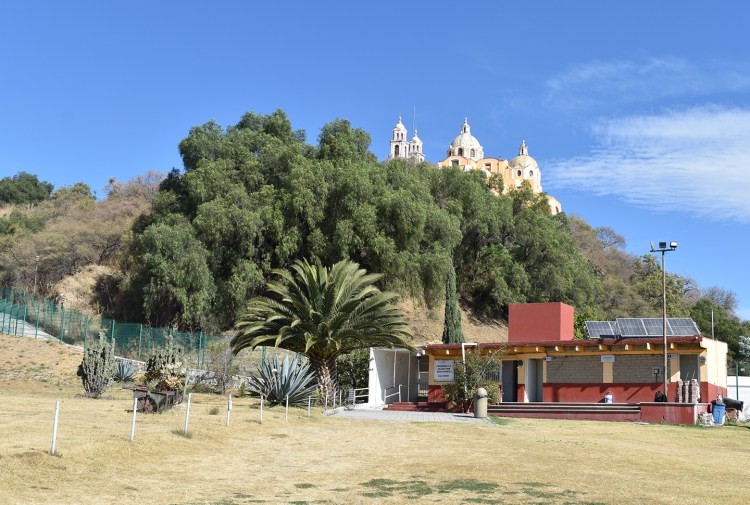
On the outskirts of the town of Puebla, Mexico, is an unusual historic site. Not the uncovered ruins of a former city, although parts of the Cholula site have been excavated, but the Great Pyramid of Cholula lies beneath a hill covered with earth and vegetation, the way the Spaniards found it. They built a church on top and it stands to this day, so the pyramid itself has never been uncovered.
The name Cholula means “Place of those who fled” or “Water that fall in the place of flight.” The first inhabitants date from 500 to 800 CE, concurrent with Teotihuacán. Under the Great Pyramid is believed to be over eight kilometres (five miles) of tunnels. Several theories have been put forward as to why the Great Pyramid was abandoned; many other temples were constructed around it. Considered a sacred city with its temples, Cholula was visited by pilgrimage from peoples throughout Mesoamerica. The Olmecs-Xicalancs came from 850 to 1520, and later the Tolec-Chichimecs.

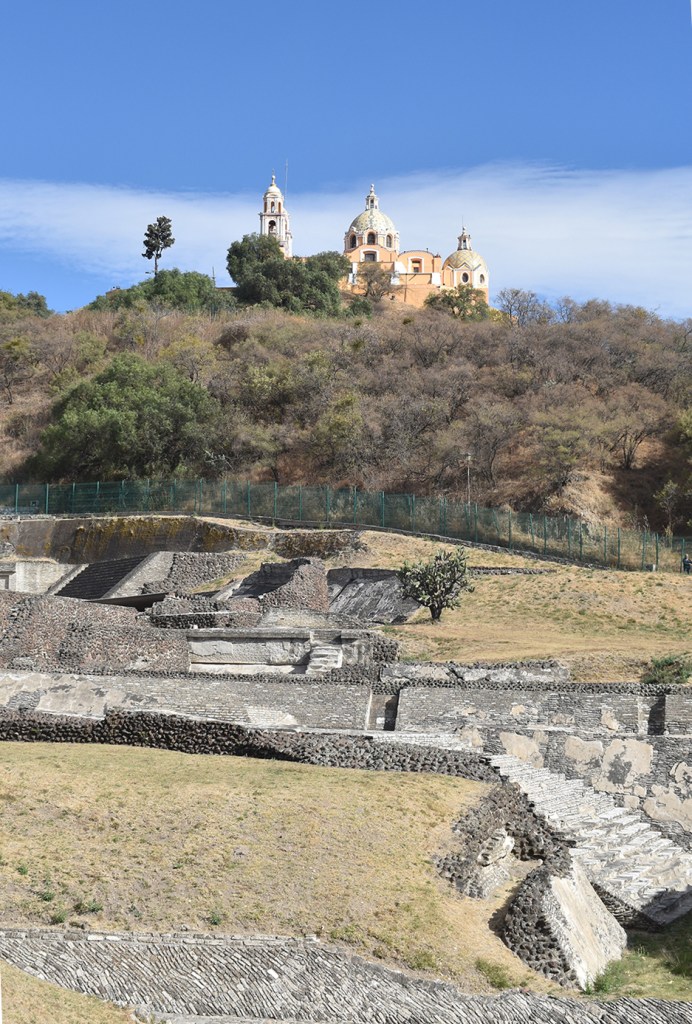
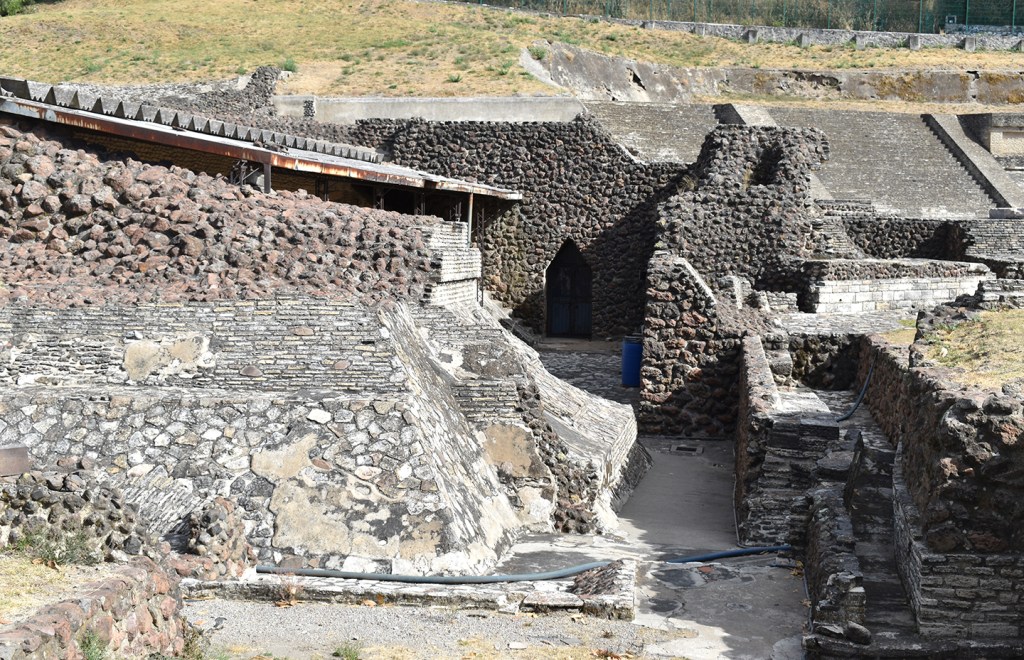
Most of the excavated areas are below the current level of the land. Murals lined walls in some buildings. They were not open to the public when I visited, but could be seen in the accompanying museum. An altar was built in a time of draught where children were sacrificed, because it was believed they could then ask the god Tlaloc for water for the people.
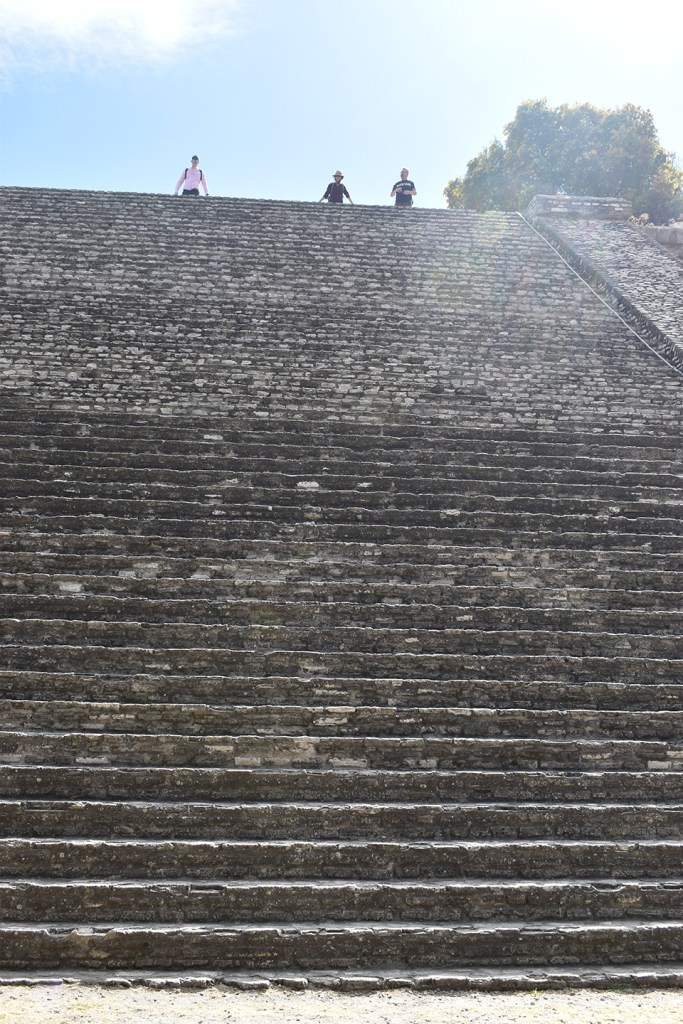
By the time the Spanish arrived, the Great Pyramid was no longer visible. In 1519, Hernan Cortes called a meeting in the courtyard; the people were ambushed and murdered, their homes set on fire. The Spaniards slaughtered thousands in Cholula including rulers and priests. Seeking to replace the gods of local religion, they built the Sanctuary of the Virgin of the Remedies, Virgen de los Remedios, on the peak.
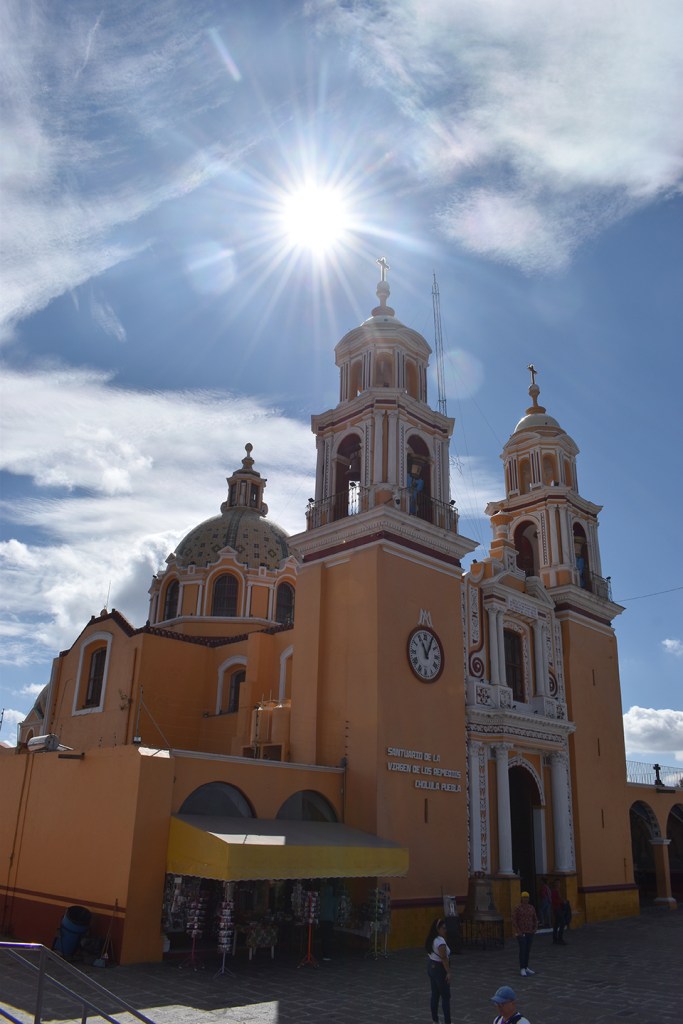
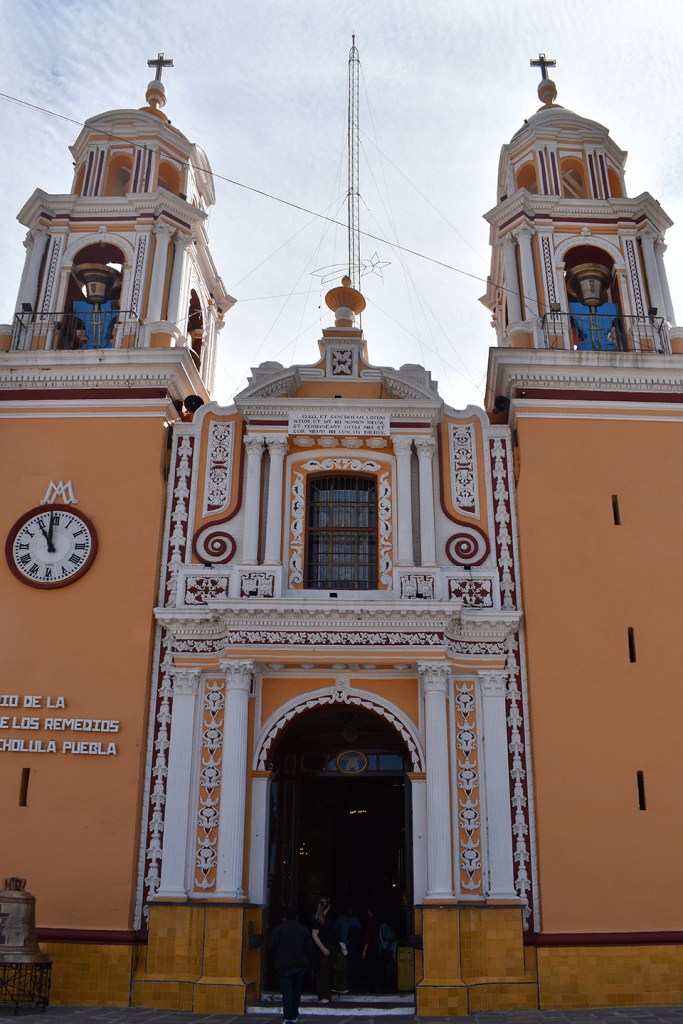
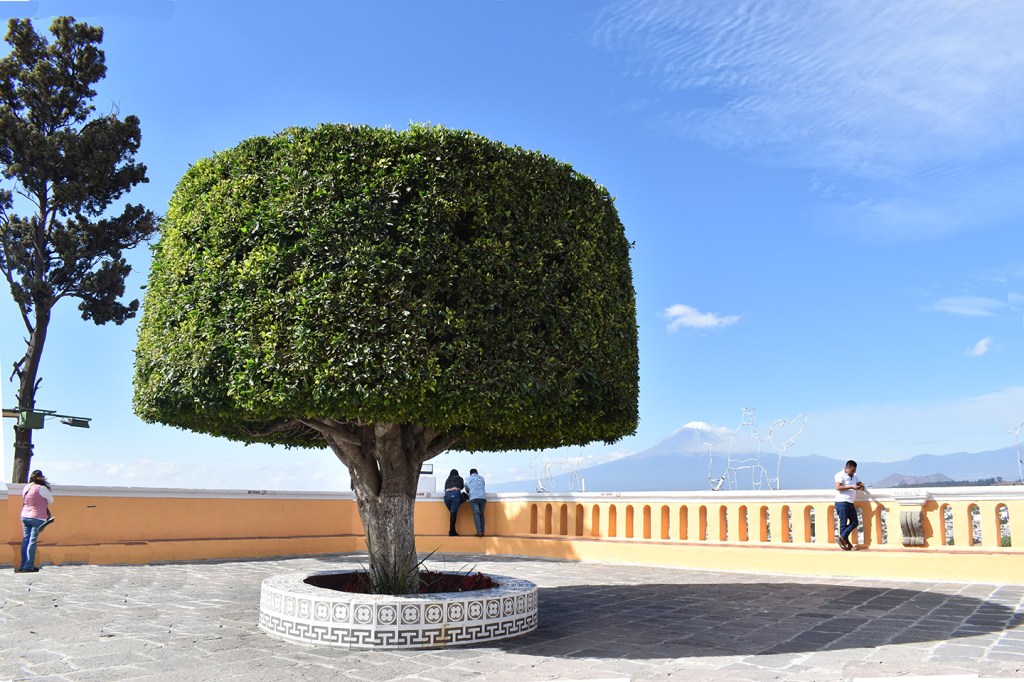
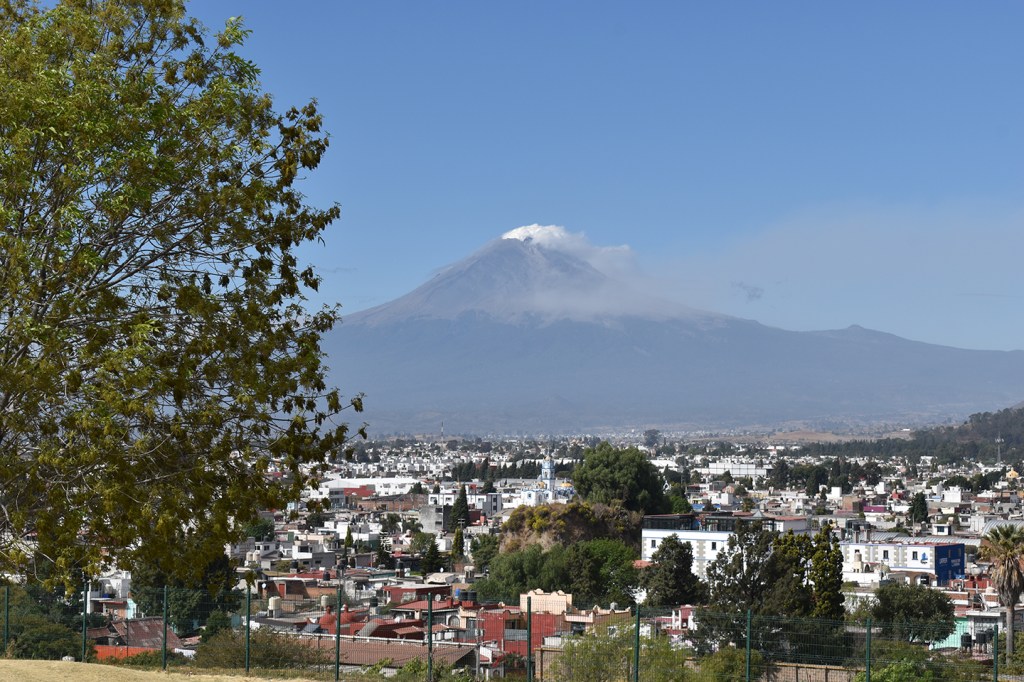
From the church, the volcano Popocatepetl looms over the town, letting off steam while I was there.
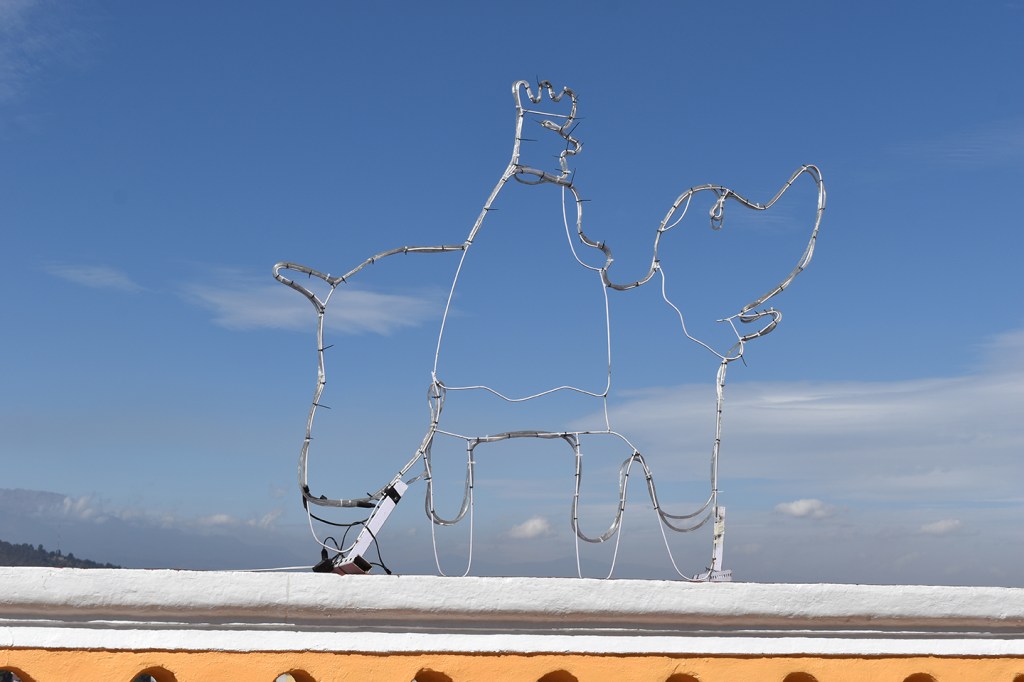
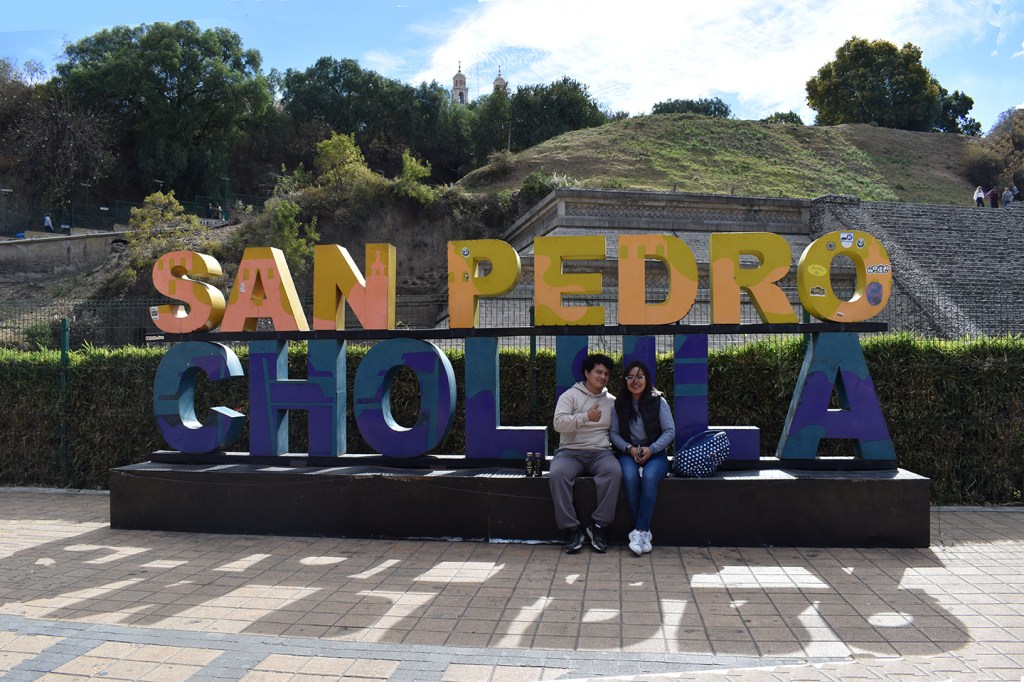
Many cities and towns in Mexico use their Spanish name followed by their indigenous name.
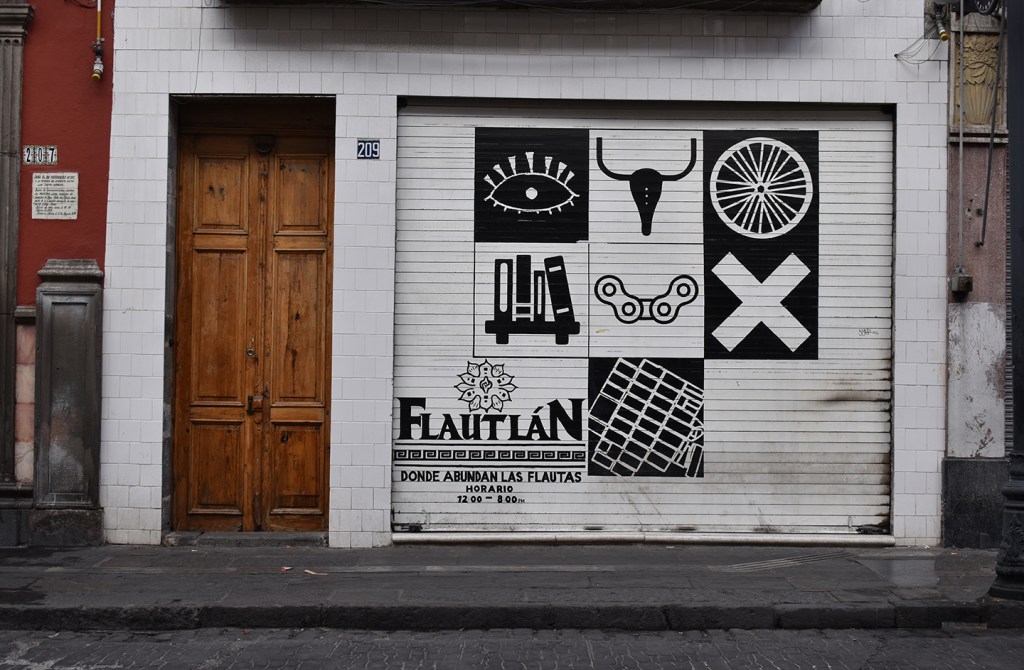
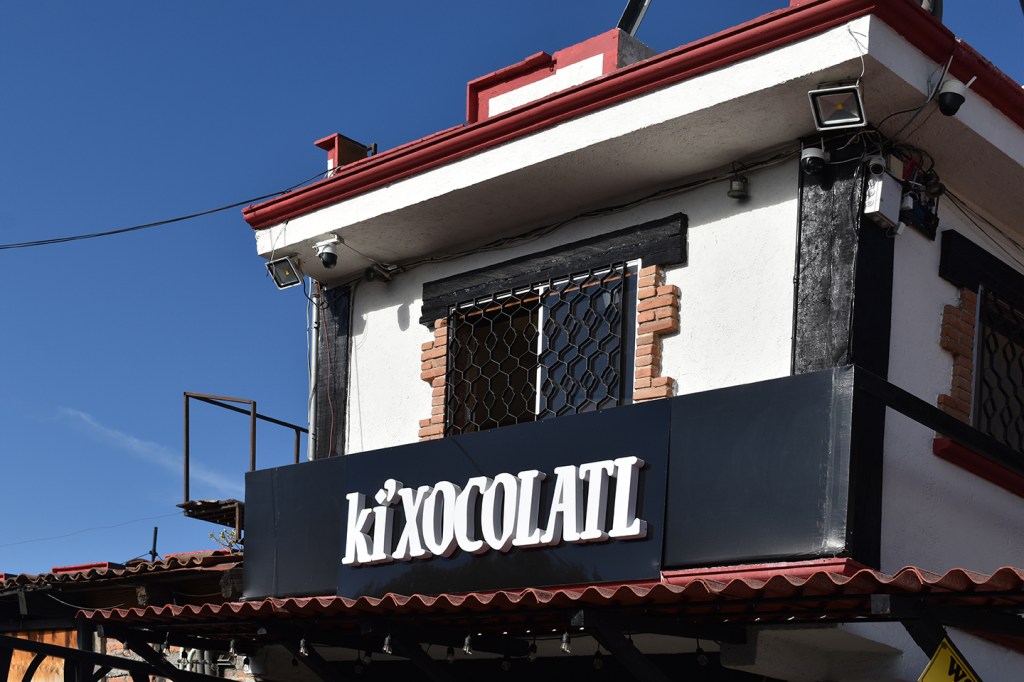
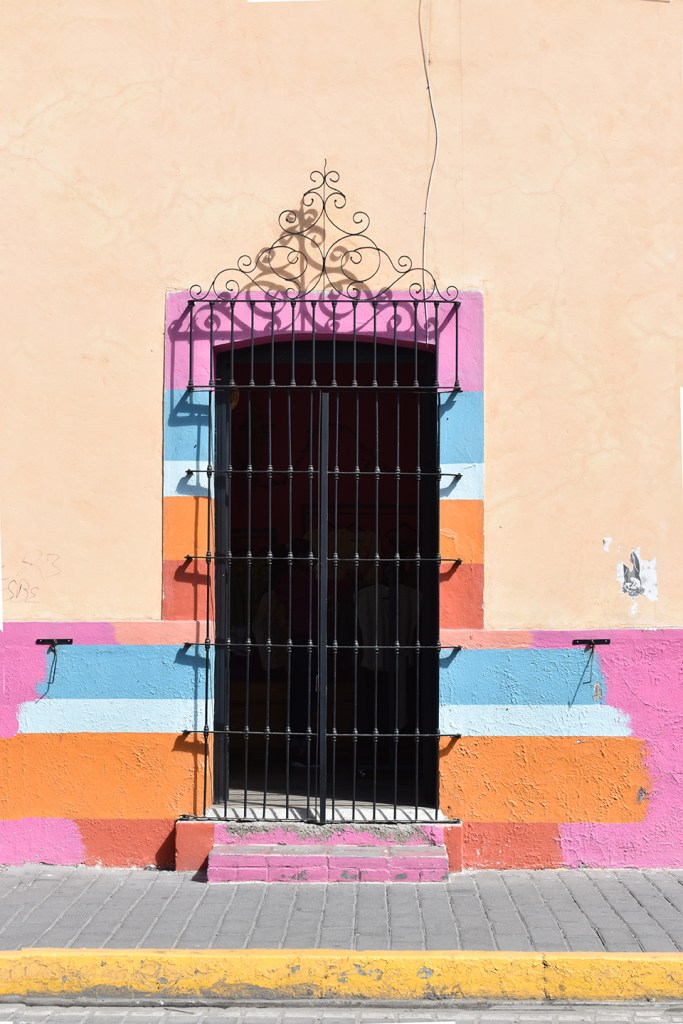
A walk through a few town streets

Mexico: Mexico City, Teotehuacán, Tlahuac, Puebla, Cholula, Oaxaca, Monte Alban, Crossing Oaxaca, Sumidero Canyon, San Cristobal, Chamula, Agua Azul, Palenque, Campeche, Mérida, Uxmal, Chichen Itzá, Playa del Carmen
Please do not download or reproduce images from this site. ©
Your comments are welcome!
Popular posts/stats/categories
Email me at: Ruth@RuthRosenfeld.com
Follow me on: Facebook Instagram BlueSky Blog
 Ruth Rosenfeld
Yet another fascinating town with a long history, a pyramid and colourful streets
Too bad we missed this one. Maggie
LikeLiked by 2 people
I wouldn’t have known about Cholula if I hadn’t been on the tour. I chose this tour because of the emphasis on ruins and was not disappointed! There were some drawbacks, but it was definitely worth doing.
LikeLiked by 1 person
What a beautiful place with such a sad history. Colonialism is truly a dark part of human history, but it’s good the indigenous population of Cholula are being recognized today. Thanks for sharing, Ruth.
LikeLiked by 2 people
Mexico is doing a commendable job of recognizing their historic civilizations and their current day indigenous populations.
LikeLiked by 2 people
Thanks for sharing, Ruth. The history of Cholula is both fascinating and tragic.
LikeLiked by 2 people
Thanks for reading. It’s a sad story, but happened so many places in the world where conquerors killed indigenous peoples.
LikeLiked by 1 person
The uncovered pyramid and its mysteries await some future time when archeologists figure out how to excavate without disturbing the old church. Perhaps a type of x-ray or ultrasound device. I’d be itching with curiosity about that site.
LikeLiked by 1 person
Lidar is used in many places now to map out underground cities, but I don’t imagine they can actually uncover the pyramid with current technology.
LikeLiked by 1 person
What an interesting, if violent, history. It’s amazing what archaeologists can piece together and theorize about without having seen the thing they are talking about.
LikeLiked by 1 person
They have learned more recently with today’s technology. I’m glad they are telling that sad story. It’s important to face the past tragedy.
LikeLiked by 1 person
Peaceful scenes in a place that once saw such violence. It’s a pattern around the world that conquerors first slaughter, then impose their religion as a way of dominating those left alive. The symbolism of building the church on top of the indigenous people’s pyramid can’t have been lost on them.
LikeLiked by 2 people
I’m glad they are telling the story of that tragedy. True, religion has so often been used to subjugate and erase cultures. After reading the placards around the dig area, it was with mixed feelings that I climbed up the mountain to the church.
LikeLiked by 1 person
As if they built a church on top of the pyramid – symbolic of those idiots erasing an entire culture. The history is really brutal to read about, but what an incredibly unique place to be able to learn about it.
LikeLiked by 1 person
This story is true in so many places, including around the world. Thanks for reading, Hannah.
LikeLike
Heartbreaking history, but thank you for sharing because it’s important to know the truth.
LikeLiked by 1 person
I agree. Few sites will tell these stories. In Mexico, they revere their older civilizations and their indigenous people are very much part of today’s culture.
LikeLiked by 1 person
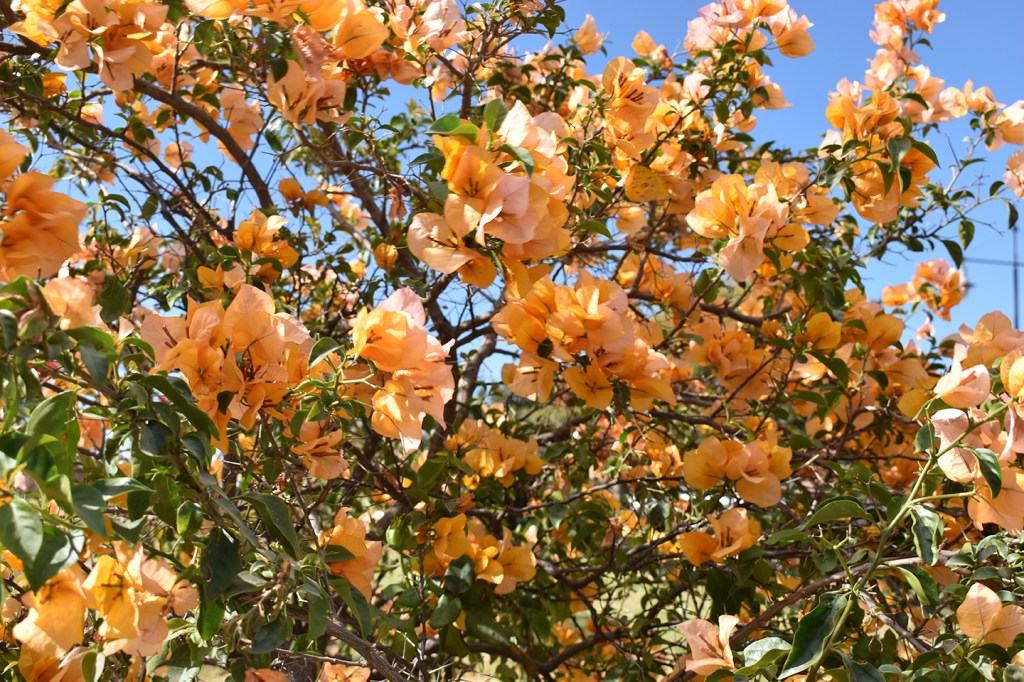
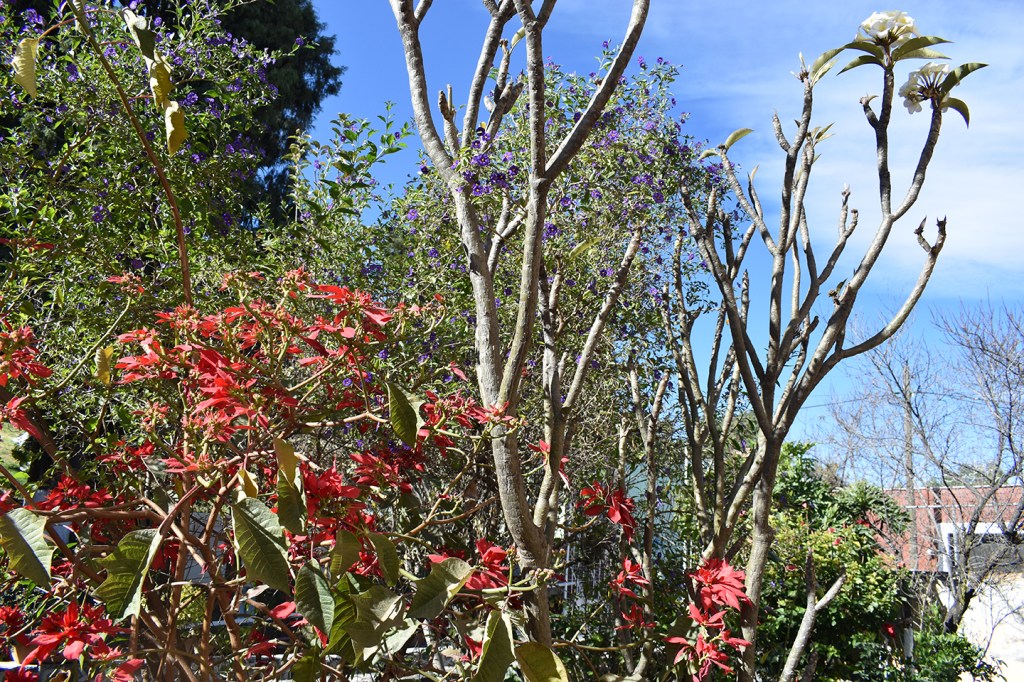
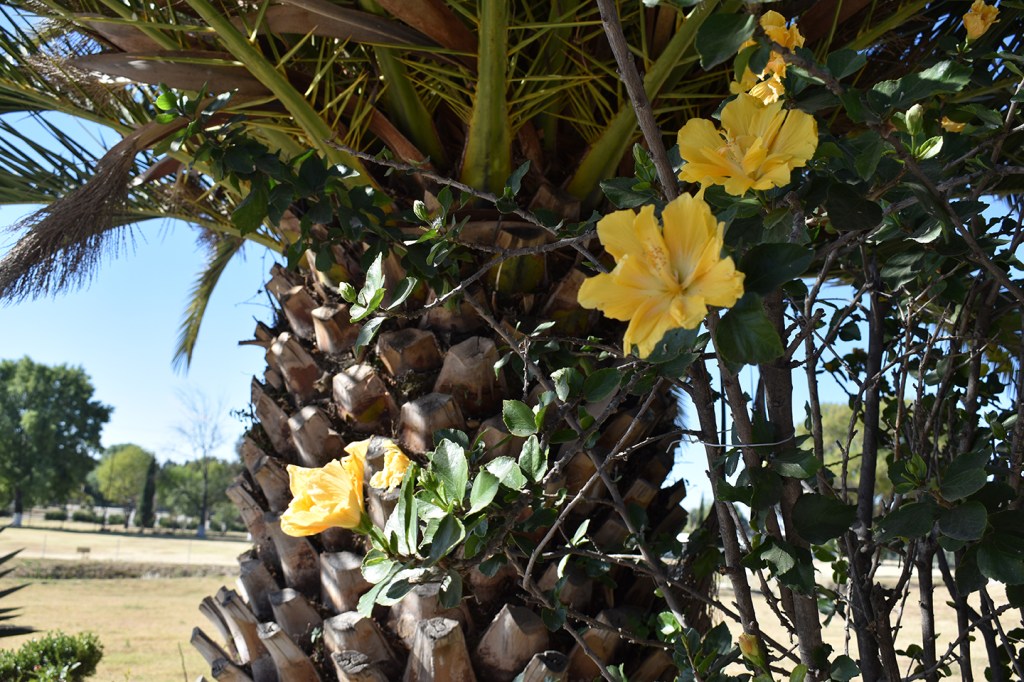
It’s interesting to learn more about the history of Cholula. Beautiful captures. The flowers are really pretty.
LikeLiked by 1 person
Thank you. Those tropical blossoms must be the inspiration for the deep colors on buildings and clothes.
LikeLiked by 1 person